
How to read Certificates of Analysis and why they matter for your cannabis experience
Understanding Cannabis COAs: Your Guide to Lab Testing and Safety
When you pick up a cannabis product at a licensed dispensary, you are not just buying flower, an edible, or a concentrate. You are buying a product that has been rigorously tested for safety, potency, and quality. The document that proves this is called a Certificate of Analysis, or COA.
A cannabis COA is a detailed lab report from a third-party testing facility. It tells you exactly what is in your product and, just as importantly, what is not. For consumers in New York and across the country, understanding how to read a COA is one of the most valuable skills you can have. It empowers you to make informed choices, verify product claims, and ensure you are getting a safe, high-quality experience.
In this guide, we will break down what a COA is, how to read each section, and why it matters for your cannabis journey.
What Is a Certificate of Analysis (COA)?
A Certificate of Analysis is an official document provided by an accredited, independent laboratory. It confirms that a specific batch of cannabis has been tested for a range of chemical and biological markers. Think of it as a report card for your cannabis product. It verifies potency, safety, and compliance with state regulations.
In New York, the Office of Cannabis Management (OCM) requires that every legal cannabis product sold in the state undergo testing at an OCM-licensed laboratory before it ever reaches a dispensary shelf[^1]. This is not optional. It is a core part of the state’s commitment to public health and consumer protection.
Testing is conducted by third-party labs that have no financial stake in the product’s sale. This independence is critical. It ensures that the results are objective and trustworthy. Labs must hold accreditations such as ISO/IEC 17025, which verifies their competence in testing and calibration[^2].
The global cannabis testing market is growing rapidly, reflecting the industry’s increasing focus on safety and standardization. The market, valued at approximately $1.8 billion in 2024, is projected to reach $4.0 billion by 2029 at a compound annual growth rate (CAGR) of over 17%[^3]. This growth is driven by stricter regulations and rising consumer demand for transparency.
How to Read a Cannabis COA
At first glance, a COA can look intimidating. It is often a multi-page document filled with charts, chemical names, and numerical values. But once you know what to look for, it becomes a powerful tool. Here is how to read each major section.
Product and Sample Information
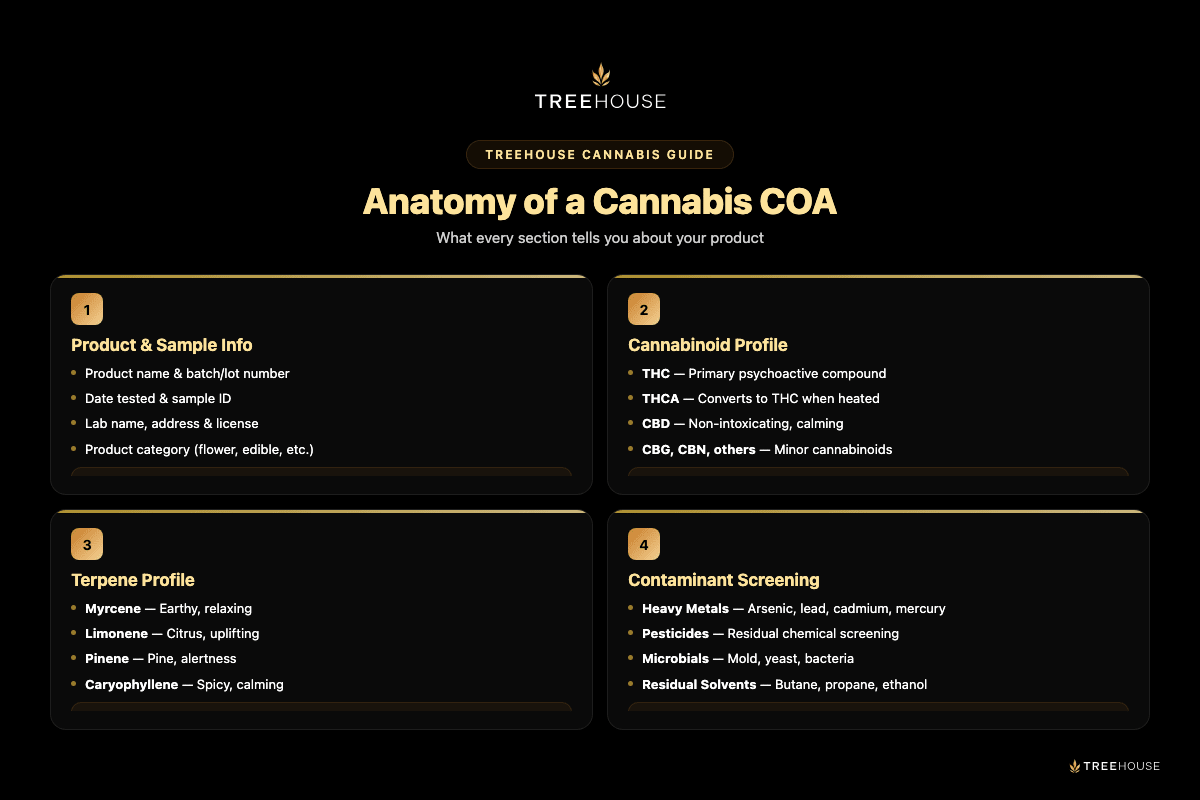
The top of every COA contains basic identifying information. This includes:
- Product name and batch or lot number
- Date tested and sample ID
- Testing laboratory name, address, and license number
- Product category (flower, edible, concentrate, etc.)
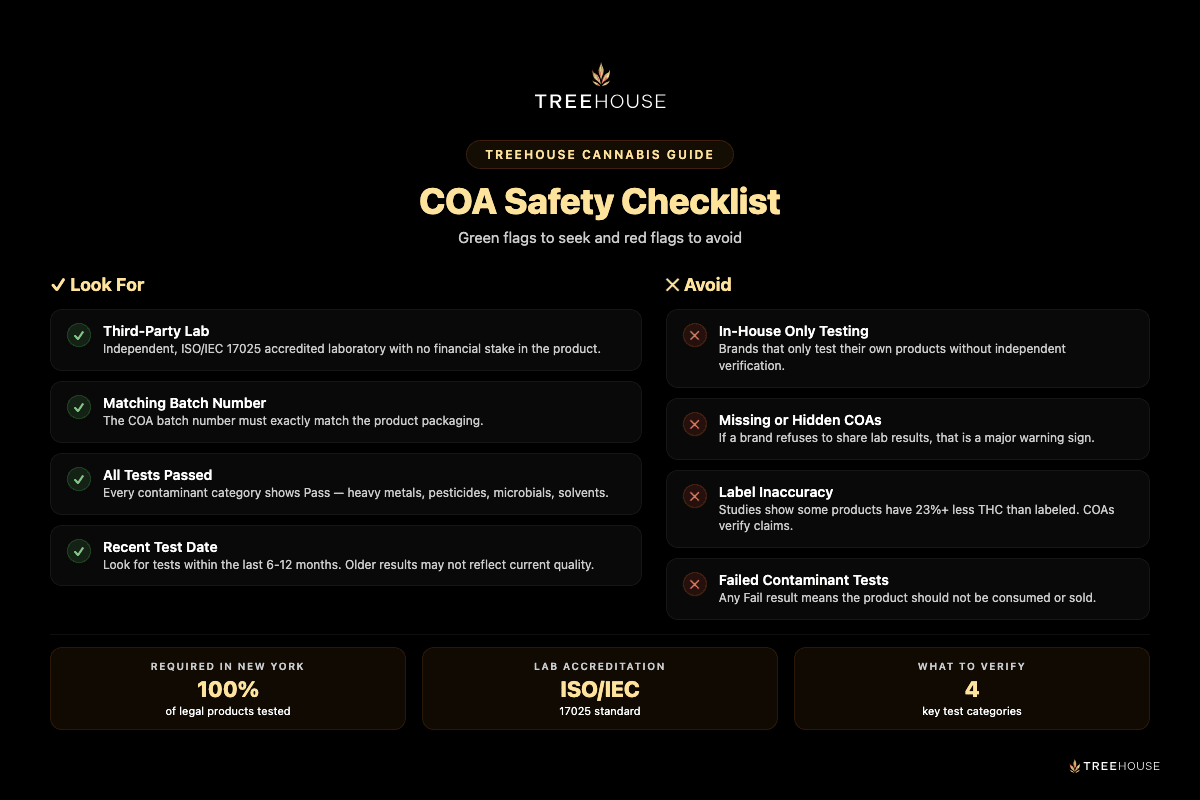
Always verify that the batch number on the COA matches the batch number on your product packaging. This ensures the report corresponds to the exact item you are holding.
Cannabinoid Profile
This is the section most consumers look at first. It lists the concentrations of various cannabinoids found in the product, typically expressed as a percentage of total weight or in milligrams per gram.
The most common cannabinoids you will see are:
- THC (Delta-9-Tetrahydrocannabinol): The primary psychoactive compound. This is what produces the euphoric or "high" effect.
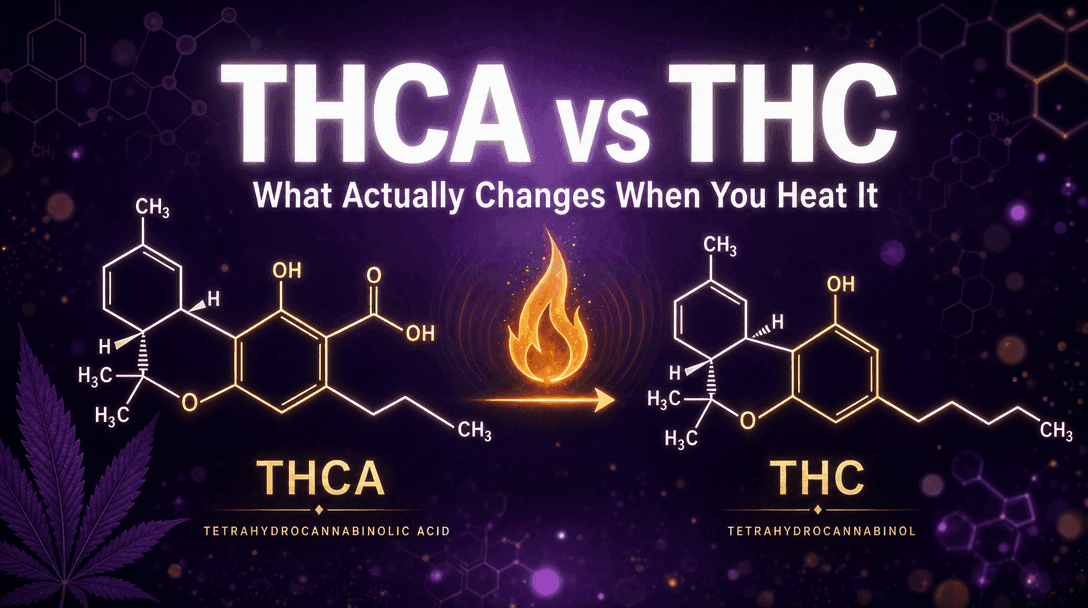
- THCA (Tetrahydrocannabinolic Acid): The acidic precursor to THC. When heated (through smoking or vaping), THCA converts to THC. Total THC is often calculated as THC + (THCA × 0.877).
- CBD (Cannabidiol): A non-intoxicating cannabinoid often associated with calming and balancing effects.
- CBDA, CBG, CBN, and others: Minor cannabinoids that contribute to the overall experience through the entourage effect.
Understanding the cannabinoid profile helps you predict the product’s effects. A strain with high THC and low CBD may feel more intense, while a balanced ratio may offer a more mellow experience.
Terpene Profile
Terpenes are aromatic compounds that give cannabis its distinctive smell and flavor. They also play a significant role in shaping the product’s effects. The terpene profile on a COA lists the dominant terpenes and their concentrations.
Common terpenes include:
- Myrcene: Earthy, musky aroma; often associated with relaxing effects.
- Limonene: Citrus scent; linked to uplifting, mood-enhancing qualities.
- Pinene: Pine-like aroma; may promote alertness and clarity.
- Caryophyllene: Spicy, peppery notes; interacts with the body’s endocannabinoid system.
- Linalool: Floral scent; commonly associated with calming properties.
A robust terpene profile indicates a well-cured, high-quality product. It also helps you identify strains that align with your desired experience.
Contaminant Screening
This is the most important section for safety. Contaminant testing ensures the product is free from harmful substances. A comprehensive COA will include results for:
Heavy Metals Cannabis plants can absorb heavy metals from contaminated soil. Labs screen for arsenic, cadmium, lead, and mercury. Even trace amounts can be dangerous over time, so strict limits are enforced[^4].
Pesticides Pesticides are used in agriculture to protect crops, but residual chemicals on cannabis can be harmful when inhaled or ingested. Testing checks for a broad spectrum of pesticide compounds to ensure they fall below regulatory thresholds[^5].
Microbial Contaminants This includes mold, yeast, bacteria such as E. coli and Salmonella, and mycotoxins (toxic compounds produced by certain molds). These can pose serious health risks, especially for immunocompromised individuals.
Residual Solvents Concentrates and extracts are often produced using solvents like butane, propane, or ethanol. Residual solvent testing ensures these chemicals are fully purged from the final product.
Each contaminant category will show a Pass or Fail result, often alongside the specific detection limits. If any category fails, the product cannot be sold legally.
What the Test Results Mean for You
Potency and Expected Effects
The cannabinoid and terpene profiles work together to shape your experience. This is known as the entourage effect the idea that the full spectrum of compounds in cannabis produces a more nuanced effect than any single compound alone.
When reading potency, pay attention to total THC rather than just THC alone. This gives you a more accurate picture of the product’s strength. For edibles, potency is usually listed in milligrams per serving, making it easier to dose consistently.
Safety and Red Flags to Watch For
A legitimate COA should always come from an accredited, third-party lab. Be cautious of brands that only provide in-house testing or refuse to share COAs altogether. In 2026, there is no legitimate reason for a licensed brand not to publish third-party lab results[^6].
Another issue to watch for is label inaccuracy. Research has shown that some products contain significantly less THC than advertised on the label. One study analyzing dispensary products found that average THC content was over 23% lower than the lowest reported label value[^7]. A COA lets you verify that what is on the label matches what is in the product.
If a COA shows a Fail on any contaminant test, do not consume the product. Reputable dispensaries will not stock failed batches, but knowing how to read the COA adds an extra layer of protection.
Why COAs Matter at Treehouse Cannabis
At Treehouse Cannabis, we believe transparency is the foundation of trust. Every product on our shelves comes from licensed producers and has passed rigorous third-party lab testing required by New York State. We do not carry untested or unverified products.
When you shop with us, you can ask to see the COA for any product. Our team is trained to help you read and understand the results. Whether you are looking for a specific cannabinoid ratio, a particular terpene profile, or simply want the peace of mind that comes from knowing your product is clean, we are here to guide you.
We are proud to serve the Nyack and Rockland County community with lab-tested, compliant cannabis. Your safety and satisfaction are our top priorities.
Frequently Asked Questions
Do all cannabis products have a COA? Every legal cannabis product sold in New York must have a COA from an OCM-licensed lab. If a product does not have one, it may be from the unregulated market.
Can I request a COA at the dispensary? Yes. Licensed dispensaries should be able to provide COAs upon request. Some brands also make them available online via QR codes on product packaging.
What is the difference between THC and THCA? THCA is the raw, non-psychoactive form of THC found in unheated cannabis. When exposed to heat, THCA converts to THC, which produces intoxicating effects.
Are COAs required for hemp-derived products too? Yes. Hemp products, including CBD oils and edibles, should also come with third-party COAs verifying cannabinoid content and safety.
What happens if a product fails testing? Failed batches cannot be sold legally. They must be destroyed or remediated by the producer. Dispensaries should never stock failed products.
Conclusion
A Certificate of Analysis is more than a piece of paper. It is a guarantee of quality, safety, and transparency. Learning how to read a cannabis COA empowers you to make smarter purchasing decisions, verify product claims, and ensure you are consuming something that meets rigorous health standards.
At Treehouse Cannabis, we are committed to providing our community with only the best lab-tested products. Stop by our dispensary in Nyack, New York, and let our team help you find the perfect product for your needs. And remember, if you ever want to see the COA, just ask. We are happy to share the results.
This article is for educational purposes only and does not constitute medical advice. Cannabis products are for adult use only. Must be 21+ with valid ID. Consume responsibly.
About Treehouse Cannabis
Treehouse Cannabis is a licensed adult-use dispensary located in Nyack, New York. We serve the Rockland County community with a curated selection of premium flower, edibles, concentrates, and accessories. Every product we carry is sourced from licensed producers and tested by independent laboratories to ensure safety, potency, and quality. Our knowledgeable team is here to help you navigate the world of cannabis with confidence. Visit us today and experience the Treehouse difference.
Sources
- New York State Office of Cannabis Management - Laboratory Testing Guidance for AU Licensees
- CannDelta - Cannabis Testing Licenses in New York: An Overview
- Markets and Markets - Cannabis Testing Market Strategic Analysis
- PMC - Comparison of State-Level Regulations for Cannabis Contaminants
- Washington State Liquor and Cannabis Board - Cannabis Pesticide Testing Research Brief
- The Haze Connect - How to Read a COA: Understanding Cannabis Lab Results in 2026
- PMC - A Clinical Framework for Evaluating Cannabis Product Quality and Safety

Shop our products

Shop All

Flower

Pre-rolls

Vaporizers

Edibles

Drinks

Concentrates
Tinctures

Topicals

CBD

Pet CBD

Accessories