
Learn the basics of cannabis cooking — from decarboxylation to infused oils and butters you can use in any recipe.
Cannabis Cooking 101: Infused Oils, Butters, and Beyond
Cannabis Cooking 101: Infused Oils, Butters, and Beyond
Cannabis cooking is the process of infusing cannabis into fats like butter and oils to create edible products. This guide covers everything you need to make reliable, flavorful cannabis-infused creations at home — from decarboxylation and temperature control to fat selection and storage tips.
What is Decarboxylation and Why Do You Need It Before Cooking with Cannabis?
Decarboxylation is the process of heating cannabis to convert non-psychoactive THCA into psychoactive THC — without it, your edibles simply won't produce any effects. Leafly To decarboxylate cannabis at home, spread ground bud evenly on a baking sheet and bake at 220-245°F for 30-40 minutes. Ovens can fluctuate roughly ±20°F, so using an oven thermometer is essential to avoid burning cannabinoids above 300°F. Leafly The key signs of proper decarboxylation are a light golden-brown color and a nutty, toasty aroma.
Raw cannabis flower contains almost entirely THCA, which is non-psychoactive. The heat applied during decarboxylation removes a carboxyl group from the molecule, activating the THC that produces the classic cannabis experience. Skipping this step is the most common reason homemade edibles fail to deliver any effects.
Key decarboxylation parameters:
- Temperature: 220-245°F
- Time: 30-40 minutes
- Goal: Light golden color, nutty aroma
- Critical ceiling: Never exceed 300°F
When shopping for cannabis to cook with at your local Rockland County dispensary, ask about the THC percentage — higher potency flower means you can use less material while achieving the same results. Shop Flower at Treehouse — THC 26.4%, $99.99/28g
How Do You Make Weed Butter at Home?
To make weed butter (cannabutter), combine ground, decarboxylated cannabis with butter and water in a saucepan using a 1:1:1 ratio by volume. Leafly Simmer on low heat between 160-200°F for 2-3 hours, stirring occasionally, then strain through a fine mesh sieve or cheesecloth into a jar and refrigerate. The water layer at the bottom of the jar protects the butter from scorching on the stovetop. Leafly
The water doesn't absorb THC — the cannabinoids bind exclusively to the fat in the butter. Once cooled, the butter solidifies on top while the water stays below, making them easy to separate. This method is more forgiving than dry techniques because the water acts as a temperature buffer.
Basic weed butter steps:
- Decarboxylate 7-10g of ground cannabis at 220-245°F for 30-40 minutes
- Combine 1 cup butter, decarbed cannabis, and 1 cup water in a saucepan
- Simmer on low heat (160-200°F) for 2-3 hours, stirring occasionally
- Strain through cheesecloth or fine mesh sieve into a jar
- Refrigerate until solid, then discard the water
For Rockland County customers picking up flower for cooking, look for high-quality, lab-tested strains — the flavor and potency of your starting material directly affects your final product. Shop Blue Dream at Treehouse — THC 24.84%, $156.99/28g
What is the Best Ratio of Cannabis to Butter for Edibles?
The standard beginner ratio is 7-10 grams of cannabis per 1 cup (227g) of butter — this produces a mildly potent butter suitable for most home recipes. calc420 Lab testing shows 45-60 minutes of stovetop infusion achieves 80-90% cannabinoid extraction efficiency, so longer isn't always better. Food52 If you prefer a stronger experience, increase to 14g per cup, but note that final potency will vary based on the THC percentage of your starting material.
Cannabis-to-butter ratio guide:
- Mild (beginner): 7g per cup butter
- Moderate: 10g per cup butter
- Potent: 14g per cup butter
A cup of finished butter contains roughly 3.3mg THC per gram, though individual results vary based on starting material potency. calc420 It's worth noting that up to 35% additional THC activation can occur during the baking step when you cook with your finished butter, so potency continues to build in your final recipe. Food52
Start low and go slow — you can always add more infused butter to a recipe, but you can't remove it once it's mixed in.
Which Carrier Oil or Fat is Best for Cannabis Cooking — Butter, Coconut Oil, or MCT?
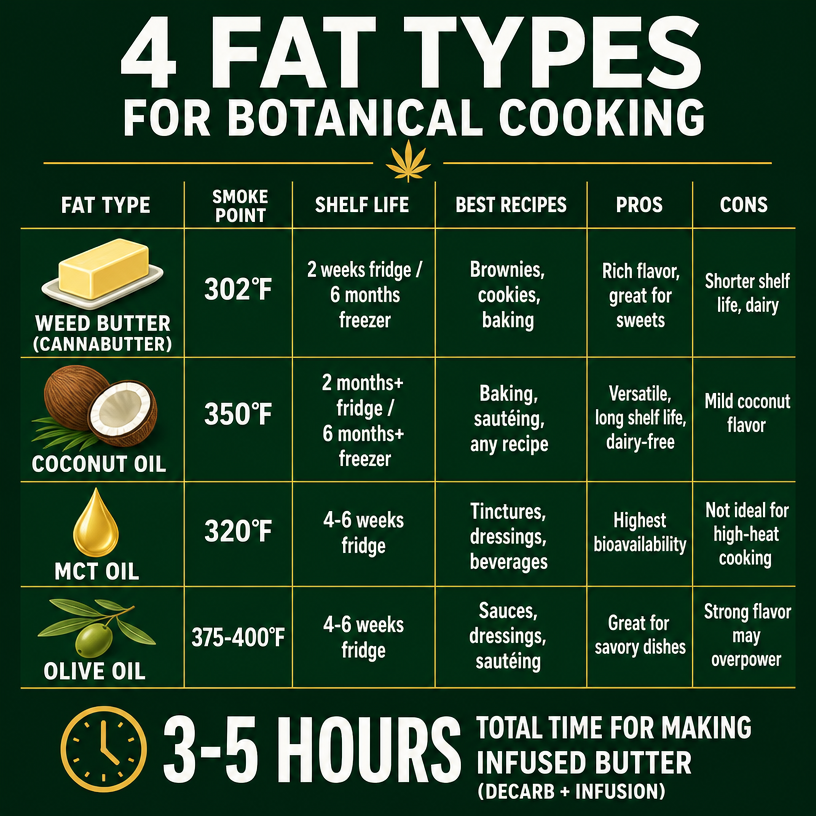
Coconut oil is generally the best all-around carrier for cannabis cooking — it has a high smoke point (350°F), excellent shelf stability, and works in both sweet and savory recipes. Since THC binds to fat, using insufficient fat will result in weak, uneven infusion. Emily Kyle Nutrition MCT oil offers the highest bioavailability for THC absorption but lacks the versatility of coconut oil for baking. Butter adds rich flavor but has a lower smoke point (302°F) and shorter shelf life. For savory dishes, olive oil is a solid choice with a higher smoke point (375-400°F). Emily Kyle Nutrition
Carrier fat comparison:
| Fat | Smoke Point | Shelf Life (Fridge) | Best For |
|---|---|---|---|
| Coconut Oil | 350°F | 2+ months | Baking, sautéing, versatile |
| Butter | 302°F | 2 weeks | Baking, rich flavor |
| MCT Oil | 320°F | 4-6 weeks | Tinctures, beverages |
| Olive Oil | 375-400°F | 4-6 weeks | Sauces, dressings, savory |
Coconut oil is particularly popular because its neutral flavor won't overpower your recipes, while butter's dairy notes work beautifully in sweets but limit its versatility. If you're following a recipe that calls for a specific fat, cannabis-infused versions can typically substitute 1:1.
How Long Does It Actually Take to Make Weed Butter?
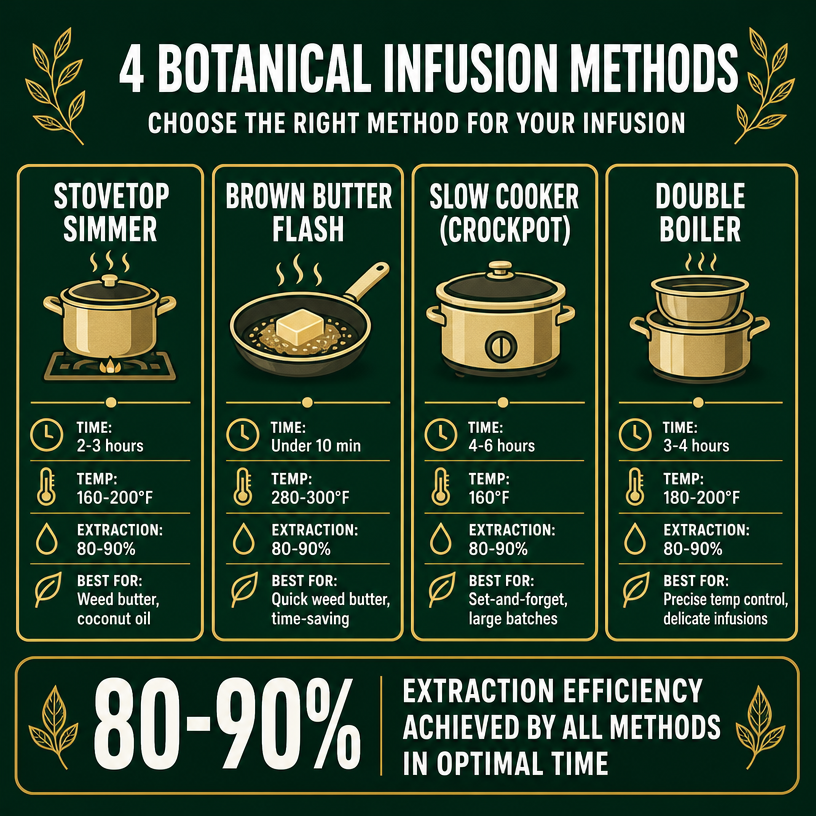
Plan for 3-5 hours total to make weed butter at home — roughly 30-40 minutes for decarboxylation, 30-60 minutes for the actual infusion, plus straining and cooling time. Food52 The stovetop method takes 2-3 hours on low heat, though the brown butter method (where you cook butter until foaming before adding cannabis) can reduce infusion time to under 10 minutes while achieving the same 80-90% extraction rate. Food52
Cannabis Cooking Infusion Methods Compared
| Method | Time | Temperature | Extraction | Best For |
|---|---|---|---|---|
| Stovetop Simmer | 2-3 hours | 160-200°F | 80-90% | Weed butter, coconut oil |
| Brown Butter Flash | Under 10 min | 280-300°F | 80-90% | Quick butter, time-saving |
| Slow Cooker (Crockpot) | 4-6 hours | 160°F | 80-90% | Set-and-forget, large batches |
| Double Boiler | 3-4 hours | 180-200°F | 80-90% | Precise temperature control |
An important note: up to 35% additional THC activation occurs during the baking step when you cook with your finished butter, so potency continues to build in your final recipe. Food52 This means that brownies or cookies baked at 325-350°F are getting a secondary decarboxylation boost.
For those new to cannabis cooking in the Rockland County area, the slow cooker method is often recommended because it requires minimal attention and produces consistent results batch after batch.
What Common Mistakes Do Beginners Make When Cooking with Cannabis?
The most common beginner mistakes when cooking with cannabis: overheating and burning off cannabinoids (never exceed 200°F during infusion), skipping decarboxylation (raw cannabis won't get you high), using too little fat in recipes, not straining properly (which causes grassy taste), and inconsistent dosing (always mix your butter thoroughly before measuring). Trilogy Medicinal Starting with a trusted recipe and proper temperatures is the easiest way to avoid these pitfalls when shopping at your Rockland County dispensary.
Common cannabis cooking mistakes:
- Overheating above 200°F — burns off cannabinoids and terpenes
- Skipping decarboxylation — results in non-psychoactive edibles
- Using insufficient fat — leads to weak, uneven infusion
- Improper straining — leaves plant material and grassy flavor
- Inconsistent dosing — not mixing thoroughly before measuring
The temperature mistake is especially costly because cannabinoids and terpenes begin to evaporate around 300°F, and at sustained temperatures above 400°F they degrade rapidly. A simple candy thermometer or instant-read thermometer is the single best investment for consistent results.
When purchasing cannabis flower for cooking at Treehouse Cannabis, our team can help guide you toward strains that work well for infusion based on your experience level and goals.
How Should You Store Homemade Cannabis Butter and Infused Oils?
Store homemade cannabis butter and infused oils in airtight containers in the refrigerator for up to 2 weeks, or freeze for up to 6 months in sealed containers or ice cube trays for convenient portioning. Emily Kyle Nutrition Keep cannabis butter away from raw meat and other foods, and clearly label all containers to prevent accidental consumption. Coconut oil generally lasts longer than butter in storage due to its higher saturated fat content. Emily Kyle Nutrition As with all cannabis products, store in a cool, dark place away from children and pets.
Storage guide:
- Refrigerator: Up to 2 weeks (butter), 2+ months (coconut oil)
- Freezer: Up to 6 months for any infused fat
- Ice cube trays: Convenient portioning for recipes
- Always label with date and contents
For regular home cooks, freezing in ice cube trays is particularly practical — each cube is roughly one tablespoon, making recipe dosing straightforward and consistent. Simply pop out a cube or two whenever you need to add infused fat to any dish.
Frequently Asked Questions
What is decarboxylation and why do I need to do it before cooking with cannabis?
Decarboxylation activates the psychoactive THC in cannabis by applying low heat (220-245°F for 30-40 minutes). Without this step, your edibles will produce little to no effects because the THCA hasn't converted to THC. It's the essential first step before any cannabis cooking.
What is the best ratio of cannabis to butter for beginners making edibles?
Start with 7-10 grams of cannabis per 1 cup of butter. This produces a mildly potent butter that works well in most recipes. If you prefer stronger edibles, increase to 14g per cup, but be aware that final potency depends on the THC percentage of your cannabis.
How long does it take to make weed butter from start to finish?
Plan for 3-5 hours total: about 30-40 minutes for decarboxylation, 2-3 hours for infusion on the stovetop, plus straining and cooling time. The brown butter method can cut infusion time to under 10 minutes while maintaining the same 80-90% extraction efficiency.
Which carrier oil is best for cannabis cooking — butter, coconut oil, or MCT?
Coconut oil is the best all-around choice for most cannabis cooking — it has a high smoke point, long shelf life, and works in both sweet and savory recipes. MCT oil offers faster THC absorption, while butter adds flavor but has a lower smoke point and shorter shelf life. Olive oil works well for savory dishes.
What temperature should you use to infuse cannabis without burning it?
Keep your infusion temperature between 160-200°F during simmering. Never exceed 200°F or you'll burn off the cannabinoids and terpenes, destroying the potency and flavor. Use a thermometer to monitor temperature, especially since stovetops can fluctuate significantly.
How should you store homemade cannabis butter and infused oils?
Refrigerate cannabis butter and infused oils in airtight containers for up to 2 weeks, or freeze for up to 6 months. Label containers clearly and store away from children and pets. Coconut oil lasts longer than butter in storage due to its higher saturated fat content.
What common mistakes do beginners make when cooking with cannabis?
The biggest beginner mistakes are: overheating above 200°F which burns off cannabinoids, skipping decarboxylation, using too little fat for the infusion, not straining properly (causing grassy taste), and inconsistent dosing. Always use a thermometer and follow a trusted recipe from a reputable source.
Sources
- Leafly — Cannabutter requires a 1:1:1 ratio of butter, cannabis, and water. Decarboxylate
- Leafly — Decarboxylation converts THCA to psychoactive THC. For edibles: 220°F for 30-40
- Food52 — Lab testing showed 45-60 min stovetop infusion achieves 80-90% cannabinoid extra
- Emily Kyle Nutrition — Carrier oils (MCT, coconut, olive, avocado) are essential — cannabis binds to fa
- Trilogy Medicinal — Canna butter and canna oil are the easiest starting points for beginners. Decarb
- calc420 — Free edibles dosage calculator: 1 cup butter (227g) infused with cannabis yields
Treehouse Cannabis is a licensed adult-use dispensary in Rockland County, New York. Must be 21+ to purchase. This content is for informational purposes only and is not medical advice.
About Treehouse Cannabis
Treehouse Cannabis is Rockland County's premier adult-use dispensary, offering a carefully curated selection of premium cannabis products including flower, concentrates, edibles, and more. Our knowledgeable team is dedicated to helping both new and experienced consumers find the right products for their needs in a welcoming, judgment-free environment. Visit us at treehousecannabis.com to learn more about our current selection and special offers.

Shop our products

Shop All

Flower

Pre-rolls
Vaporizers

Edibles
Drinks

Concentrates
Tinctures

Topicals

CBD

Pet CBD

Accessories