
From hot flashes to sleepless nights, more women in their 40s and 50s are turning to cannabis for symptom relief — and the science is starting to catch up.
The Menopause-Cannabis Connection: How Women Are Finding Natural Relief
Cannabis may help manage menopause symptoms by supporting the endocannabinoid system (ECS) — a cell-signaling network that regulates mood, sleep, temperature, and appetite. Harvard Health Publishing Research from Harvard Health and the Menopause Journal suggests nearly 80% of midlife women who use cannabis report meaningful improvement, particularly for sleep and mood disturbances that often disrupt daily life during this transition.
What Is the Connection Between the Endocannabinoid System and Menopause?
Estrogen plays a direct role in the ECS by regulating the FAAH enzyme that breaks down anandamide, your body's main natural endocannabinoid. As estrogen levels fluctuate and eventually drop during menopause, this regulatory relationship changes, affecting CB1 receptor activity in brain regions that govern mood, sleep, and temperature regulation. Project CBD
This bidirectional relationship between estrogen and the ECS helps explain why many women notice symptom changes that align with hormonal shifts.
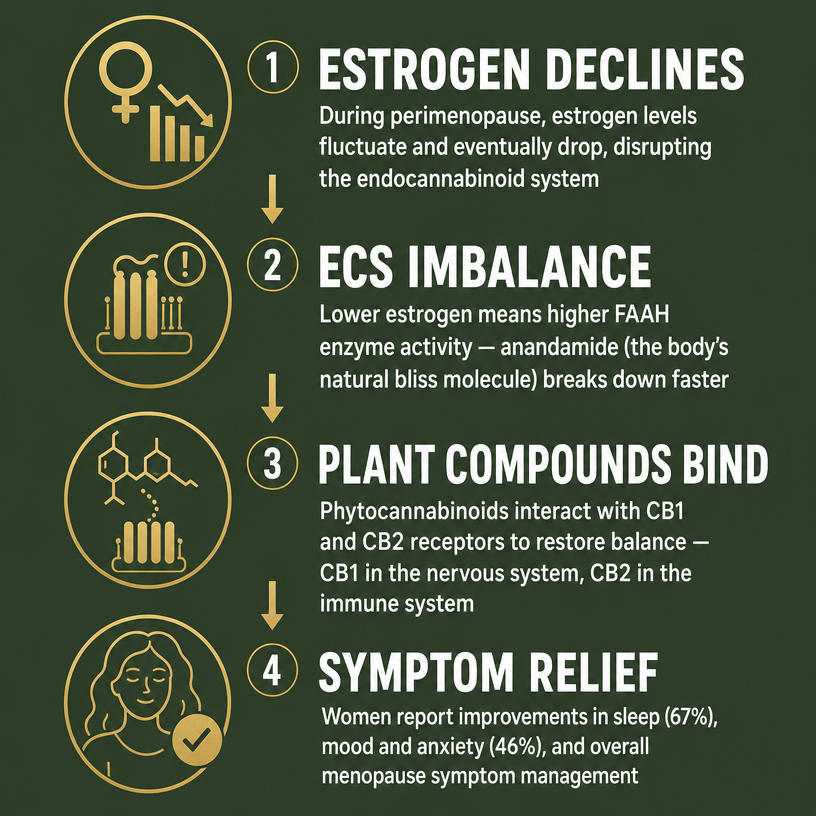
Key ways the ECS and menopause interact:
- CB1 receptor density shifts in brain regions controlling mood and temperature as estrogen changes
- Anandamide levels fluctuate because estrogen's regulatory control over FAAH enzyme activity changes
- ECS support from plant cannabinoids may help modulate these shifts, though research is still preliminary
Which Menopause Symptoms Can Cannabis Help With — and Which It Cannot?
Cannabis appears most consistently helpful for sleep disturbance, mood and anxiety, and muscle or joint achiness during menopause. In survey data from the Menopause Journal, 67% of women reported cannabis helped with sleep disturbance, while 46% reported improvements in mood and anxiety. Menopause Journal (LWW) Similar findings appeared in BMJ Open research, where 74% of current cannabis users reported it was helpful for their menopause symptoms. BMJ Open
The top symptoms women report cannabis helps with include:
- Sleep disturbance — cited most consistently across studies (67% reporting benefit)
- Mood and anxiety — nearly half of users report improvement
- Muscle and joint achiness — about one-third of users
- Brain fog and concentration — a smaller but notable subset
Less consistent evidence exists for vasomotor symptoms like severe hot flashes, where clinical trial data remains inconclusive. HealthCentral Cannabis is not shown to slow, stop, or reverse menopause-related physiological changes — it may help with symptom management, but it does not address the underlying hormonal transition itself.
Women experiencing severe vasomotor symptoms should discuss all available options with their healthcare provider.
CBD vs. THC for Menopause: Which Cannabinoid Works Better for Each Symptom?
CBD and THC work differently on the body, and understanding those differences helps you choose the right product for your symptoms.
| Symptom | CBD | THC |
|---|---|---|
| Anxiety (daytime) | Strong option, no intoxication | May help but can worsen anxiety at higher doses |
| Sleep (nighttime) | Moderate support | More effective for sleep onset |
| Pain relief | Anti-inflammatory benefits | Stronger analgesic effect |
| Mood stabilization | Good for daytime clarity | Can help evening unwind |
| Appetite | Mild support | More effective for appetite stimulation |
CBD is non-psychoactive and widely available, making it a popular choice for women who want symptom support without intoxication — particularly during the day when mental clarity matters. THC provides stronger relief for pain, appetite loss, and sleep onset, but produces a high and can amplify anxiety in some people at higher doses.
Many women find a balanced 1:1 ratio of CBD to THC covers both daytime and nighttime symptom management effectively. For menopause symptom relief, this combination approach tends to work better than using either cannabinoid alone, especially when symptoms span both day and night hours.
Why Does Microdosing Work Better for Hormonal Symptoms Than Standard Doses?
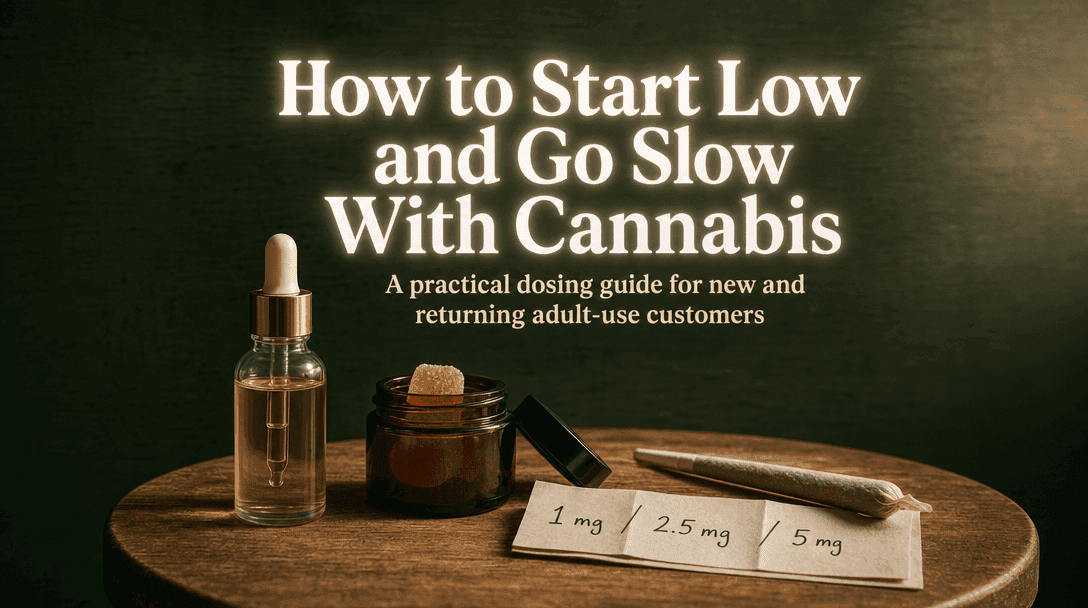
Lower doses of cannabis — often called microdosing (2.5–5mg THC per session) — tend to produce more consistent symptom relief for hormonal issues than higher doses. This is partly due to the biphasic nature of THC: too much can actually amplify anxiety and disrupt sleep, while moderate or low doses support the ECS without overstimulation. Project CBD
For menopause symptoms specifically, which involve fluctuating hormone levels rather than static pain states, smaller repeated doses appear to modulate the ECS more effectively than single large doses. The goal is gentle, consistent support rather than a strong psychoactive effect.
Tips for microdosing during perimenopause:
- Start low — begin with the smallest available dose and increase gradually every 3-5 days
- Track symptoms — keep a simple journal noting symptom intensity before and after each use
- Go slow with THC — if anxiety increases, the dose is too high; reduce and stay there for a few sessions
- Consider CBD-dominant products — these allow for more frequent use without intoxication buildup
- Be patient — hormonal symptom relief often takes 2-4 weeks of consistent low-dose use before full effects are noticeable
What Product Types Are Best for Menopause Symptom Relief?
Tinctures, gummies, and topicals are the most commonly recommended formats for menopause symptom management at dispensaries. Each offers different benefits depending on your symptoms and lifestyle needs. 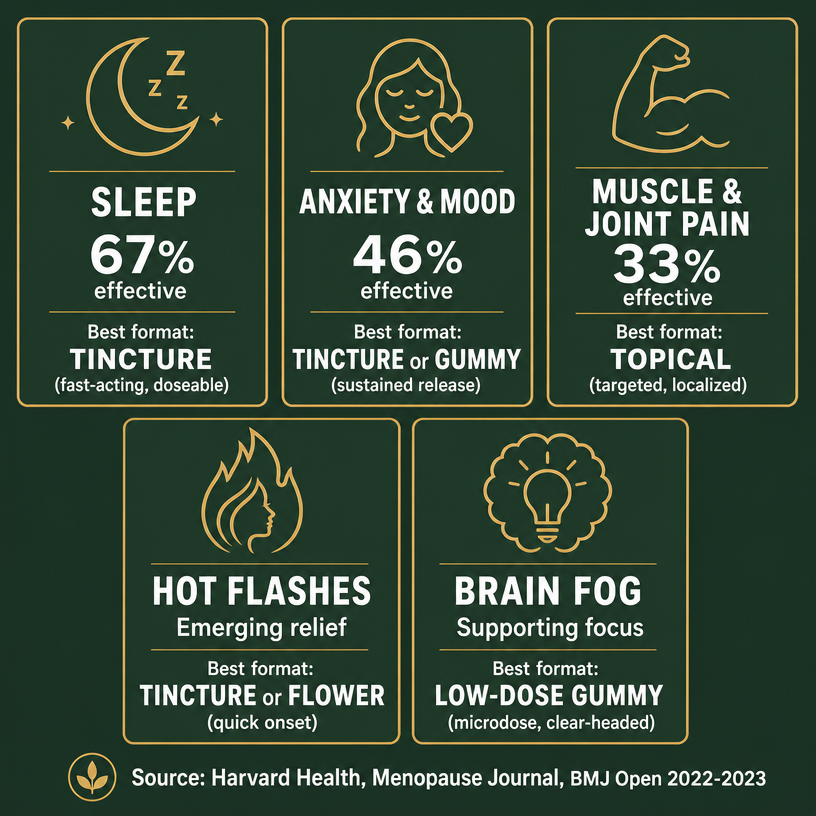
Product types and their best uses:
- Tinctures — offer precise dosing control and fast onset (15–30 minutes sublingual), making them ideal for managing unpredictable symptoms like anxiety spikes or hot flash flares
- Gummies — provide longer-lasting effects (4–6 hours) suited for sleep support or all-day symptom management; effects take 60-90 minutes to fully onset
- Topicals — applied to the neck, shoulders, or lower abdomen, these address localized joint and muscle discomfort without producing a high; ideal for daytime use when you need symptom relief without any psychoactive effects
- Flower — remains popular for rapid symptom relief, particularly for sleep onset; combustion can irritate lungs, so consider a dry herb vaporizer as an alternative
At Treehouse Cannabis in Rockland County, our knowledgeable staff can help you explore these formats and find what works best for your body and symptom patterns.
What Safety Considerations Should Women Know Before Using Cannabis for Menopause?
Women using hormone replacement therapy (HRT), blood thinners, or other prescription medications should consult a healthcare provider before using cannabis. THC can interact with certain medications metabolized by the cytochrome P450 liver enzyme system. HealthCentral This is not a reason to avoid cannabis entirely — it simply means thoughtful timing and dosing matter more for women on medications.
Key safety points to discuss with your provider:
- HRT interactions — THC may affect how your body metabolizes certain hormone formulations; share your full medication list
- Blood thinners — THC can potentiate the effects of some anticoagulants; monitoring is recommended
- Liver enzyme interactions — the CYP450 system processes both THC and many common medications; timing doses apart may reduce interaction risks
- Start low and track — a symptom journal helps your provider adjust recommendations over time
Avoid smoking if you have respiratory concerns — tinctures, edibles, and topicals eliminate combustion exposure while delivering effective symptom relief. Never start with a high dose, and always give your body time to adjust before increasing.
Frequently Asked Questions
Does cannabis actually help with menopause symptoms?
Yes, according to multiple surveys including Harvard Health and BMJ Open research, the majority of midlife women who use cannabis report meaningful relief — particularly for sleep disturbance (67%), mood and anxiety (46%), and joint pain (33%). Clinical trials remain limited, but the self-reported data is consistent across multiple peer-reviewed studies.
What is the connection between the endocannabinoid system and menopause?
Estrogen directly regulates the FAAH enzyme that breaks down anandamide — your body's main endocannabinoid. As estrogen drops during perimenopause, this regulation shifts, altering CB1 receptor activity in brain regions controlling mood, sleep, temperature, and pain. This ECS disruption is theorized to be both a symptom contributor and a reason why many women experience notable relief from cannabis products.
CBD vs. THC for menopause — which is better for what symptom?
CBD is generally better for daytime anxiety, mental clarity, and mood stabilization without intoxication. THC is more effective for nighttime sleep support, pain relief, and appetite. Many women find a balanced 1:1 ratio of CBD to THC covers both daytime and nighttime symptom management effectively, avoiding the cognitive fog of higher THC-only doses.
What product types are best for menopause symptom relief (tinctures, gummies, topicals)?
Tinctures offer the fastest onset and most precise dosing for acute symptom flares like anxiety or hot flashes. Gummies last longer (4–6 hours) making them ideal for sleep support. Topicals target localized joint and muscle discomfort without any psychoactive effect. Your best choice depends on which symptom you're prioritizing — start with a tincture for versatility and adjust based on what you learn about your body's response.
Is it safe to use cannabis for menopause symptoms if I'm on HRT or other medications?
This is the most important safety question and one you should discuss with your healthcare provider. THC is metabolized by the same liver enzyme (CYP450) that processes many common medications including certain HRT formulations and blood thinners. Potential interactions are real but manageable — your doctor can review your specific medications and advise on timing and dose. Never start with a high dose, and keep a symptom and dose journal to share with your provider.
Sources
- Harvard Health Publishing — Nearly 80% of midlife women use cannabis to ease menopause-related symptoms, wit
- Menopause Journal (LWW) — A survey of 258 perimenopausal and postmenopausal women found 86% were current c
- Project CBD — The endocannabinoid system undergoes significant changes during menopause, and e
- BMJ Open — A cross-sectional survey of 1,485 women aged 35+ found 74% of current cannabis u
- HealthCentral — 27% of middle-age women reported using cannabis for menopause symptoms with anot
This content is for educational purposes only and does not constitute medical advice. Treehouse Cannabis is a licensed adult-use dispensary. Must be 21+ to purchase.
Shop our products

Shop All
Flower
Pre-rolls
Vaporizers

Edibles
Drinks
Concentrates
Tinctures

Topicals

CBD

Pet CBD

Accessories