
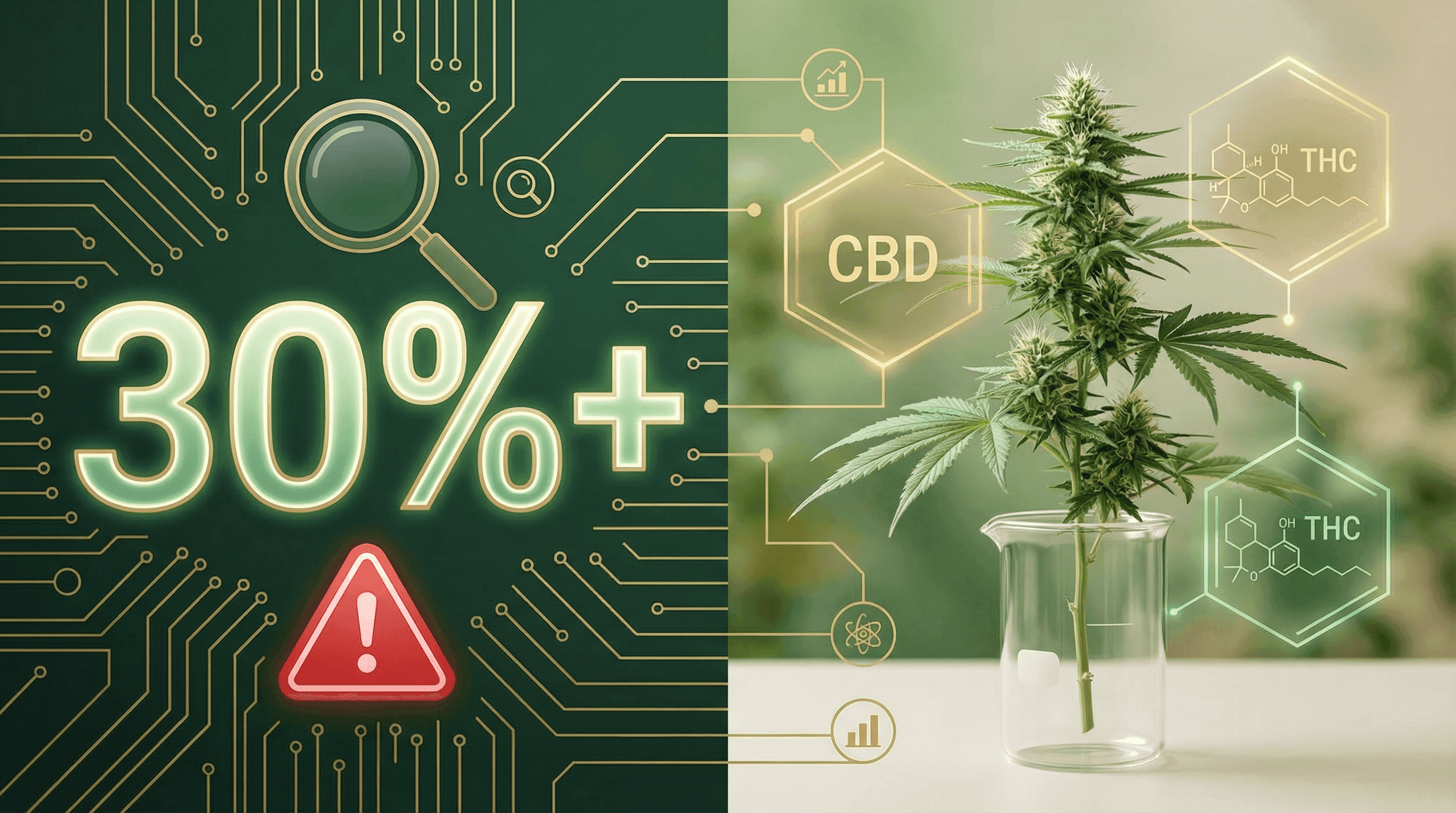
Why more THC doesn't always mean a better experience—and what actually matters when choosing cannabis
Is High THC Percentage Really Better? Debunking the Potency Myth

Is High THC Percentage Really Better? Debunking the Potency Myth
Quick Answer: No, higher THC percentage doesn't necessarily mean a better experience. Research shows that THC has a biphasic effect—low to moderate doses often provide optimal therapeutic benefits, while very high doses can increase side effects without proportional benefits. The "entourage effect" of combined cannabinoids and terpenes matters more than THC alone.
Table of Contents
- The THC Arms Race
- What THC Percentage Actually Means
- The Problem with High-THC Thinking
- The Entourage Effect Explained
- THC Tolerance: The Hidden Cost
- What Really Determines Your Experience
- Finding Your Sweet Spot
- The Future: Beyond THC
- Frequently Asked Questions
The THC Arms Race
Walk into any dispensary and you'll see it: products proudly displaying THC percentages of 25%, 30%, even 35% or higher. It's become a numbers game, with consumers—and often budtenders—assuming that higher percentages equal better products. But this assumption isn't just misleading; it can actually work against your cannabis experience.
Expert Insight: At Treehouse Cannabis, we regularly see patients who come in requesting "the strongest stuff you have," only to return later asking for something milder after experiencing anxiety, paranoia, or overwhelming psychoactive effects. The highest THC product is rarely the best choice for therapeutic use.
The push for ever-higher THC percentages is a relatively recent phenomenon. In the 1990s, average cannabis potency ranged from 4-8% THC. By 2020, that average had climbed to over 20%, with some products exceeding 30%. This dramatic increase isn't because cannabis plants have evolved—it's because growers and breeders have selectively cultivated for maximum THC production, often at the expense of other beneficial compounds.
But here's what the marketing doesn't tell you: the relationship between THC percentage and effect isn't linear. Once you understand the science, you might find that products with 15-20% THC provide everything you need—and potentially a better experience than their ultra-high counterparts.
What THC Percentage Actually Means
Before we dive into why high THC isn't always better, let's clarify what those percentage numbers actually represent.
Understanding Lab Testing
THC percentages come from laboratory testing, but these numbers can be misleading for several reasons:
1. THC vs. THCA Raw cannabis contains mostly THCA (tetrahydrocannabinolic acid), which is non-psychoactive. When heated (through smoking, vaping, or cooking), THCA converts to THC through a process called decarboxylation. Lab reports may show:
- THCA percentage (the raw compound)
- THC percentage (already activated)
- Total THC (calculated potential after conversion)
2. Testing Variability Different labs can produce different results for the same sample. Testing methods, equipment calibration, and sample selection all introduce variability. Two products labeled 25% THC might actually be closer to 22% and 28%—or vice versa.
3. Batch Variation Even within the same strain, THC percentages can vary significantly between batches due to growing conditions, harvest timing, and curing processes.
The Dose-Response Relationship
Here's the crucial point: cannabis follows a biphasic dose-response curve. This means:
- Low doses: Increasing THC generally increases therapeutic effects
- Moderate doses: Plateau effect—more THC doesn't significantly increase benefits
- High doses: Diminishing returns with increased side effects
Research suggests that many people reach their optimal therapeutic window at doses far lower than maximum potency. A 2024 Johns Hopkins study found that participants experienced similar pain relief from 15% and 30% THC products—the higher potency didn't improve outcomes but did increase adverse effects.
The Problem with High-THC Thinking
So what actually happens when you consume ultra-high THC products? Let's examine the downsides.
Increased Side Effects
Higher THC concentrations correlate strongly with:
| Side Effect | Why It Happens |
|---|---|
| Anxiety/Paranoia | THC activates amygdala at high doses |
| Rapid Heart Rate | THC's cardiovascular effects intensify |
| Cognitive Impairment | Working memory and attention suffer |
| Dry Mouth/Red Eyes | CB1 receptor activation increases |
| Overconsumption Risk | Delayed awareness of full effects |
For medical patients, these side effects can be counterproductive. Someone using cannabis for anxiety might find that high-THC products actually worsen their condition—a paradox that's frustratingly common.
The Tolerance Trap
Perhaps the biggest problem with consistently using high-THC products is tolerance development. Your endocannabinoid system adapts to high THC exposure by downregulating CB1 receptors—the very receptors that produce cannabis's therapeutic effects.
The vicious cycle:
- Start with high-THC product
- Experience strong initial effects
- Develop tolerance quickly
- Need even higher doses for same effect
- Increased side effects and cost
- Diminished therapeutic window
We've seen patients who started with 30%+ THC flower find better results—and spend less money—by switching to balanced 15-18% products with diverse cannabinoid profiles.
Missing Out on the Full Experience
The cannabis plant produces over 100 cannabinoids and 200+ terpenes, each with unique properties. When you focus exclusively on THC percentage, you miss the symphony of compounds that work together to create the full cannabis experience.
The Entourage Effect Explained
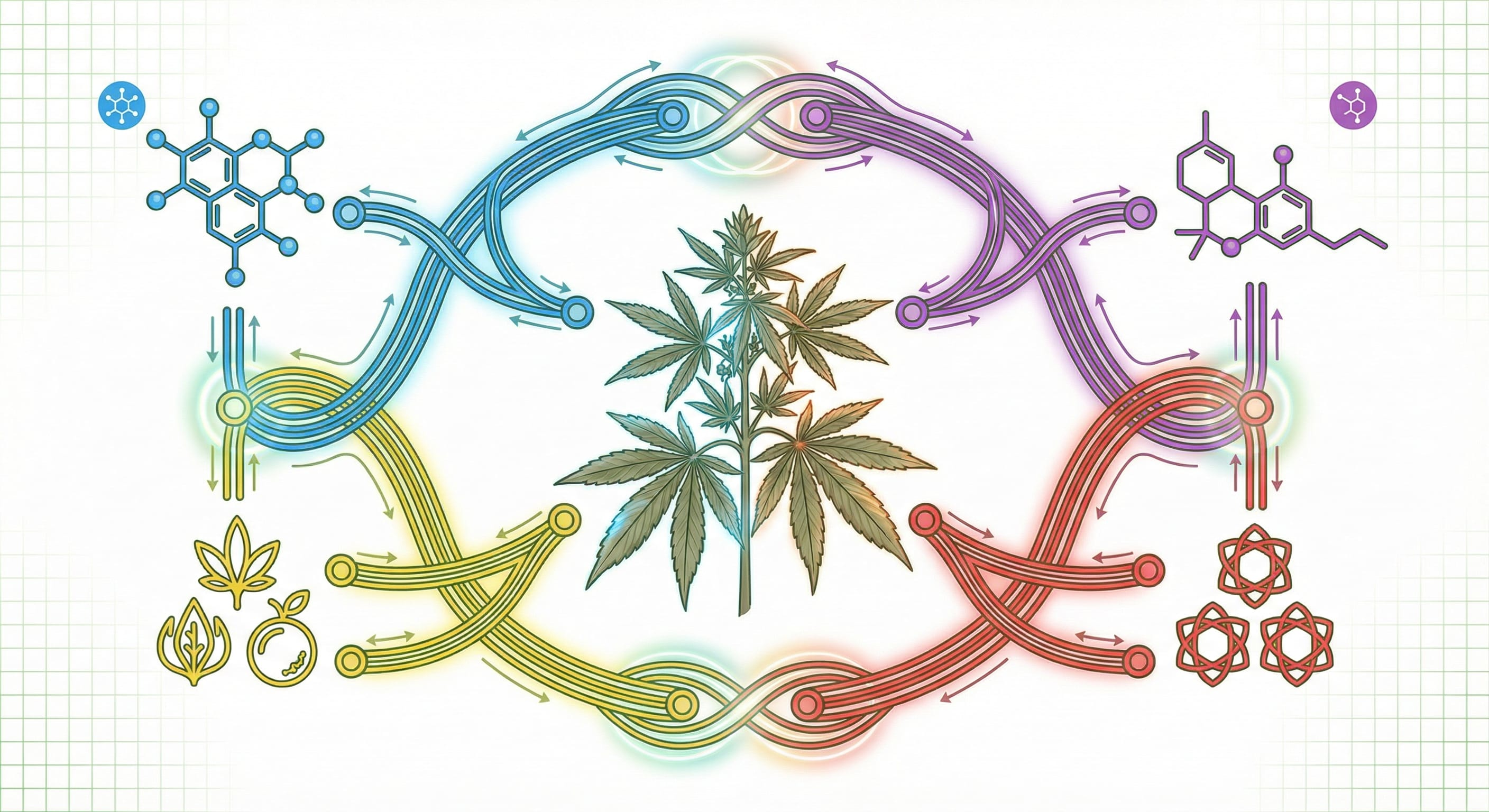
The entourage effect is arguably the most important concept for understanding why THC percentage isn't everything. This theory—now supported by substantial research—posits that cannabis compounds work synergistically, producing effects greater than any single compound could achieve alone.
The Supporting Cast
CBD (Cannabidiol)
- Modulates THC's psychoactive effects
- Reduces anxiety and paranoia
- Provides anti-inflammatory benefits
- May enhance pain relief when combined with THC
Minor Cannabinoids
- CBG: Anti-inflammatory, neuroprotective
- CBC: Pain relief, antidepressant effects
- CBN: Sedative properties, enhances sleep
- THCV: Appetite suppression, energy
Terpenes (The Game Changers)
A 2024 study from Johns Hopkins and University of Colorado demonstrated that terpenes significantly influence the cannabis experience:
| Terpene | Effects | Found In |
|---|---|---|
| Myrcene | Sedating, muscle relaxation | Mangoes, hops, lemongrass |
| Limonene | Mood elevation, stress relief | Citrus fruits |
| Pinene | Alertness, memory support | Pine needles, rosemary |
| Linalool | Calming, anti-anxiety | Lavender |
| Caryophyllene | Anti-inflammatory, pain relief | Black pepper, cloves |
| Terpinolene | Energizing, creative | Apples, cumin |
The Research Evidence
A groundbreaking 2024 study published in Forbes confirmed that the entourage effect is real and measurable. Researchers found that:
- Full-spectrum products outperformed THC isolates
- Terpene profiles significantly modified effects
- The interaction between compounds created unique therapeutic profiles
- Patients reported better experiences with diverse cannabinoid ratios
This research validates what cannabis experts have long suspected: the plant's complexity is a feature, not a bug.
THC Tolerance: The Hidden Cost

THC tolerance develops faster than most people realize—and high-potency products accelerate this process dramatically.
How Tolerance Works
When THC binds to CB1 receptors, the body responds by reducing receptor density and sensitivity. This is a protective mechanism, but it means:
- The same dose produces weaker effects over time
- You need increasingly more product to achieve results
- The therapeutic window narrows
- Side effects may persist while benefits diminish
Tolerance Break Reality
Regular consumers of high-THC products often need tolerance breaks ("T-breaks") lasting 2-4 weeks to reset their system. During this time, they may experience:
- Difficulty sleeping
- Irritability
- Reduced appetite
- Cravings
These withdrawal symptoms, while mild compared to other substances, demonstrate that the body adapts significantly to chronic high-THC exposure.
The Moderation Advantage
Patients and consumers who use lower-THC products or practice moderation often report:
- Sustained effectiveness over months or years
- More predictable experiences
- Lower costs
- Fewer side effects
- Ability to use cannabis for specific therapeutic goals
What Really Determines Your Experience

If THC percentage isn't the best predictor of your cannabis experience, what is? Here are the factors that research and patient feedback consistently identify as most important:
1. Terpene Profile
The "nose knows" isn't just a saying—it's science. Your olfactory system's reaction to a strain's smell indicates how your body might respond to its terpene profile. When a strain smells appealing to you, that's often your body's way of signaling compatibility.
2. Cannabinoid Ratios
The balance between THC, CBD, and minor cannabinoids often matters more than absolute THC content:
- 1:1 THC:CBD: Balanced effects, reduced anxiety
- 2:1 THC:CBD: Moderate psychoactivity with CBD buffer
- High CBD, low THC: Minimal intoxication, therapeutic benefits
- THC dominant: Experienced users, specific therapeutic needs
3. Consumption Method
How you consume cannabis dramatically affects the experience:
| Method | Onset | Duration | Best For |
|---|---|---|---|
| Inhalation | 1-5 min | 2-3 hours | Quick relief, dose control |
| Sublingual | 15-30 min | 4-6 hours | Consistent dosing |
| Edibles | 30-90 min | 6-8 hours | Long-lasting effects |
| Topicals | 15-30 min | 2-4 hours | Localized relief |
4. Set and Setting
Your mindset and environment significantly influence cannabis effects:
- Stress levels: Anxiety amplifies THC's psychoactive effects
- Familiarity: New environments may intensify experiences
- Social context: Alone vs. with others changes perception
- Time of day: Evening use often feels different than daytime
5. Individual Biology
Your unique endocannabinoid system, metabolism, and genetics all play roles:
- Some people naturally have more CB1 receptors
- Metabolism affects how quickly THC is processed
- Genetic variations in enzymes that break down cannabinoids
- Previous cannabis experience shapes tolerance
Finding Your Sweet Spot
The goal isn't to find the highest THC product—it's to find the product and dose that works best for your specific needs.
The Low and Slow Approach
For therapeutic use, we recommend:
- Start with modest THC levels (10-18% for flower, 5-10mg for edibles)
- Pay attention to terpene profiles that match your goals
- Keep a consumption journal tracking dose, effects, and side effects
- Increase gradually only if needed, not exceeding 2.5mg THC per adjustment
- Consider CBD inclusion to buffer THC effects
Signs You're in the Sweet Spot
✅ Desired therapeutic effects achieved
✅ Minimal unwanted side effects
✅ Consistent, predictable experiences
✅ Sustainable cost and consumption
✅ No significant tolerance development
Signs THC May Be Too High
❌ Anxiety or paranoia
❌ Racing heart or discomfort
❌ Impaired daily functioning
❌ Needing increasingly more product
❌ Sleep disruption rather than improvement
The Future: Beyond THC
The cannabis industry is slowly recognizing that the THC arms race benefits no one—except perhaps tax collectors in states with potency-based taxes. The future of cannabis lies in:
Minor Cannabinoid Research
Scientists are increasingly studying:
- CBG for inflammation and neuroprotection
- CBC for pain and mood
- THCV for appetite control and energy
- CBN for sleep enhancement
Personalized Cannabis Medicine
As research advances, we're moving toward personalized recommendations based on:
- Genetic profiling
- Specific symptom profiles
- Previous response patterns
- Desired outcomes
Quality Over Quantity
Forward-thinking cultivators are focusing on:
- Terpene preservation
- Minor cannabinoid development
- Organic and sustainable practices
- Cure and storage optimization
Frequently Asked Questions
Q: What THC percentage is considered "high"? A: Generally, anything above 20% THC is considered high potency. Most therapeutic users find their sweet spot between 10-18%, while ultra-high potency (25%+) is rarely necessary and often counterproductive.
Q: Can you build a tolerance to CBD? A: Research suggests CBD tolerance develops much more slowly than THC tolerance, if at all. Some studies indicate CBD may actually have "reverse tolerance" properties, meaning effectiveness may improve over time.
Q: Will switching to lower THC help reset my tolerance? A: Yes, but a complete tolerance break (abstinence for 2-4 weeks) is most effective. Lowering THC gradually can help prevent withdrawal symptoms while still reducing tolerance.
Q: Are high-THC products ever appropriate? A: For some experienced medical patients with severe pain or specific conditions, higher THC may provide necessary relief. However, this should be approached cautiously and ideally under medical supervision.
Q: How do I know if a product's THC percentage is accurate? A: Purchase from licensed dispensaries that use third-party lab testing. Be aware that testing can vary by ±10-15%, so a product labeled 25% might actually test between 21-29%.
Q: What's the best way to experience the entourage effect? A- Choose full-spectrum or whole-flower products over isolates. Look for diverse cannabinoid and terpene profiles rather than focusing solely on THC percentage. Fresh, properly cured flower typically offers the most complete entourage effect.
Q: Does CBD really counteract THC's negative effects? A: Yes, research supports that CBD can reduce THC-induced anxiety, paranoia, and cognitive impairment. This is why balanced THC:CBD ratios are often recommended for new or sensitive consumers.
About Treehouse Cannabis
Treehouse Cannabis is a licensed New York dispensary committed to patient education and evidence-based cannabis use. We believe informed consumers make better choices—and better choices lead to better outcomes. Our staff receives ongoing training in cannabinoid science, dosing strategies, and personalized care.
📍 Visit Us: Nyack, NY
📞 Call: (845) 315-2049
✉️ Email: info@treehousecannabis.com
🌐 Website: treehousecannabis.com
Medical Disclaimer: This content is for educational purposes only and is not medical advice. Consult a healthcare provider before using cannabis, especially if you have existing health conditions or take medications. Individual responses to cannabis vary significantly.
Sources
- New Study Further Confirms Entourage Effect Of Cannabis — Forbes, March 2024
- Entourage Effect: What Is It & How Does It Work? — LivWell, November 2025
- Combating High THC Tolerance — Hashtag Cannabis, 2024
- Cannabis Potency Guide: Complete Breakdown for 2024 — California Blendz, November 2025
- Highest THC Weed Strain of 2025 — Chronic Guru, June 2025
Last updated: February 24, 2026

Shop our products

Shop All

Deals

Flower

Pre-rolls
Vaporizers

Edibles
Drinks

Concentrates
Tinctures

Topicals

CBD

Pet CBD

Accessories