
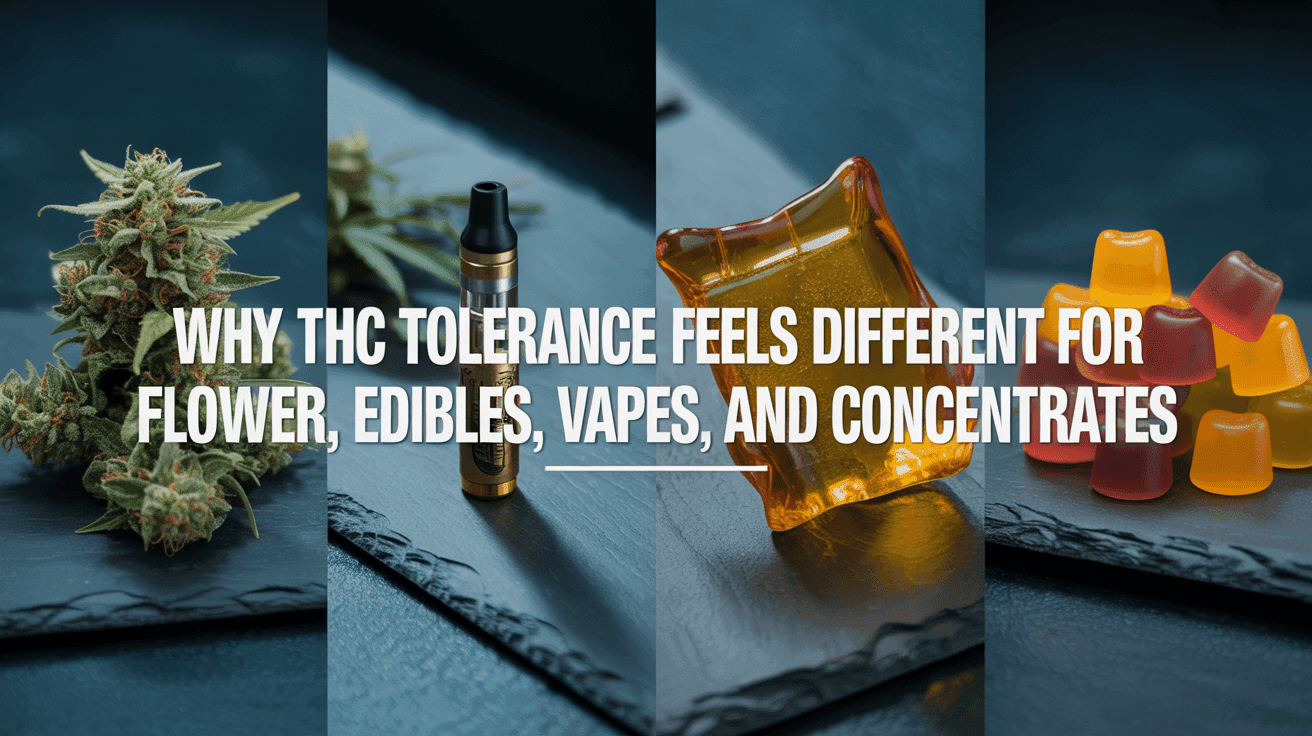
The cannabis landscape has shifted. Here's how today's high-THC culture changes what tolerance looks and feels like across different products.
Why THC Tolerance Feels Different for Flower, Edibles, Vapes, and Concentrates
Why THC Tolerance Feels Different for Flower, Edibles, Vapes, and Concentrates
The cannabis landscape has shifted. A decade ago, a 15% THC flower was considered strong. Today, that's on the lighter end of what you'll find at most dispensaries. The rise of high-THC products — vapes, concentrates, live resin — has fundamentally changed what cannabis tolerance looks and feels like. Here's how.
The High-THC Era
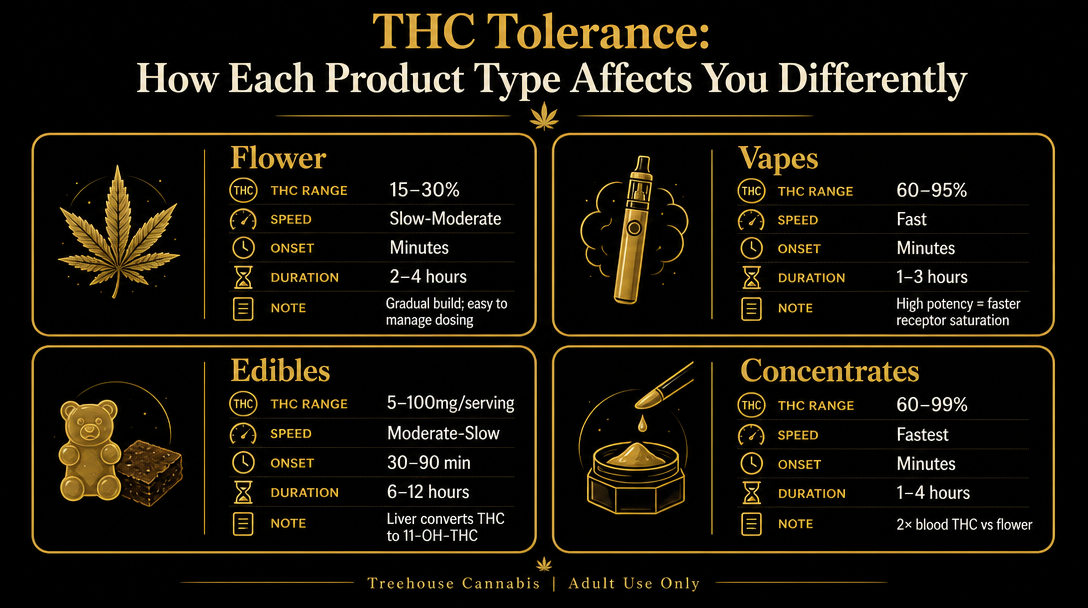
Walk into any adult-use dispensary today and you'll see products that would have been unimaginable to earlier generations of cannabis consumers. THC percentages in flower routinely hit 25-30%. Vape cartridges push 70-90%. Concentrates like shatter, live resin, and rosin regularly clear 80-90% THC. Some even approach 99%.
This isn't just a potency arms race — it's a cultural shift. The normalization of high-THC products has changed how people consume, what they expect from a session, and how tolerance develops. If you came up in the era of 10-15% flower, the current landscape can feel like a different plant entirely.
Flower: The Foundation
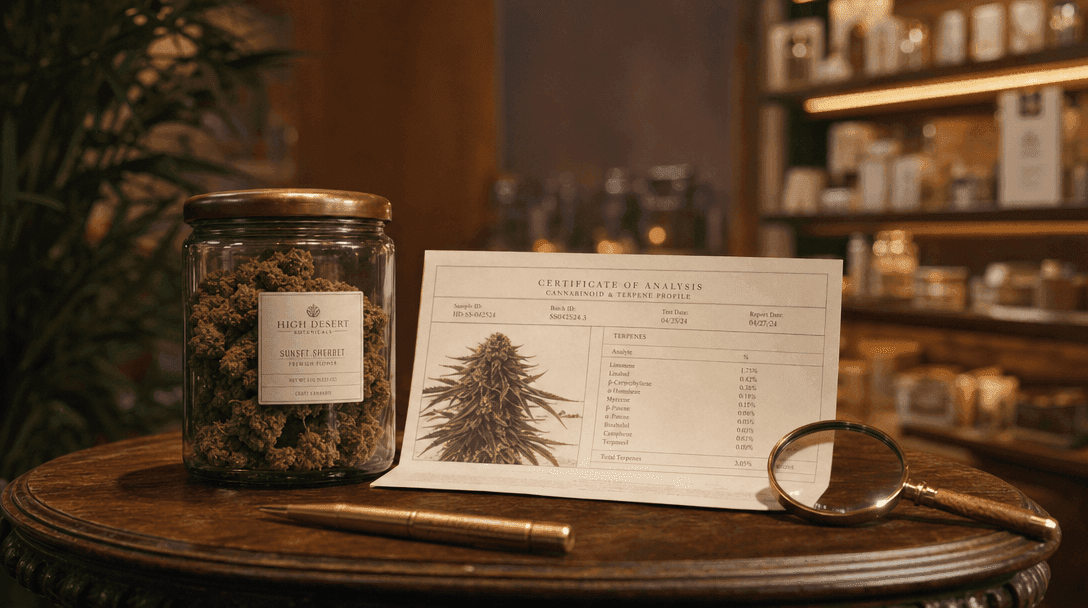
Flower remains the original cannabis experience — and for many, still the preferred one. But the flower of today is a far cry from what most people remember from even five years ago. Modern cultivation techniques have pushed THC content well past what was standard even recently.
For someone who vapes or dabs regularly, switching back to flower can feel underwhelming — not because anything is wrong with the flower, but because your baseline for what "a hit" feels like has shifted. The ritual of rolling a joint or loading a bowl also creates a natural pace that makes overconsumption less likely. There's something about the ceremony of flower that tends to keep things in check.
Flower tolerance is real, but it builds more gradually than with other products. If you're finding that your usual joint isn't hitting the same, a short break or dialing back the amount is usually enough to reset your frame of reference.
Vapes: The New Default
Vape cartridges have become the default for a huge chunk of cannabis consumers — and for good reason. They're discreet, convenient, and surprisingly potent. A single 0.5g vape cart can deliver as much THC as an eighth of flower in a fraction of the volume.
The culture around vaping is different from flower, too. There's no smoke, no smell, no rolling required. Hit a pen, put it away, move on with your day. That ease of use makes it much simpler to consume frequently throughout the day without the ritual friction that flower requires. And with THC contents regularly hitting 70-85%, the dose per hit is dramatically higher than what you'd get from a bowl.
The result is that tolerance from vaping tends to build faster. What takes months to develop with flower can happen in weeks with a high-potency cart. If you're finding yourself hitting your vape more and more to get the same effect, that's the culture of high-THC vaping doing its thing.
Edibles: A Different Experience
Edibles occupy a separate space in cannabis culture — one defined by delayed onset, long duration, and a different kind of high. When you eat cannabis, your liver converts THC into 11-hydroxy-THC, a metabolite that hits differently than what you'd get from inhalation. The high from edibles tends to be more body-focused, longer-lasting, and harder to gauge ahead of time.
The culture around edibles is partly about experimentation — trying different doses, different products, seeing how they affect you. But that same experimentation can lead to misjudging your dose, especially when you're used to the faster feedback of inhalation. Re-dosing before the first dose has fully landed is one of the most common cannabis rookie mistakes, and it happens to experienced users too.
Tolerance to edibles develops along a different track. Switching from a high-THC vape to edibles won't necessarily feel like starting fresh — they're operating through different pathways. And vice versa.
Concentrates: The Extremes
This is where cannabis culture has changed the most. Concentrates — wax, shatter, live resin, rosin, sugar, sauce — have moved from niche specialty to mainstream in a surprisingly short time. THC contents of 70-90% are now normal, not exceptional.
Dabbing — once a ritual reserved for concentrate connoisseurs — has become a regular practice for a huge number of consumers. The high from a dab hits fast and hits hard, and the culture around it often emphasizes chasing the biggest, most flavorful hit possible. That culture, combined with the sheer potency of modern concentrates, means tolerance can build fast.
University of Colorado Boulder research found that blood THC levels after concentrate use were more than twice as high as after flower use at comparable doses. That's the physiological reality underneath the culture. If you're consuming concentrates regularly, you're building tolerance at a pace that flower users simply don't experience.
The concentrate tolerance conversation is real in cannabis culture. Heavy concentrate users often find that flower barely registers for them anymore — not because they're "broken," but because their baseline has shifted dramatically with high-potency exposure.
Finding Your Balance
There's no right or wrong level of cannabis consumption. But when tolerance builds to the point where your usual product stops working, most people start looking for a way back. The culture of high-THC cannabis doesn't really have an answer for this — the industry is set up to sell more, not to help people dial back.
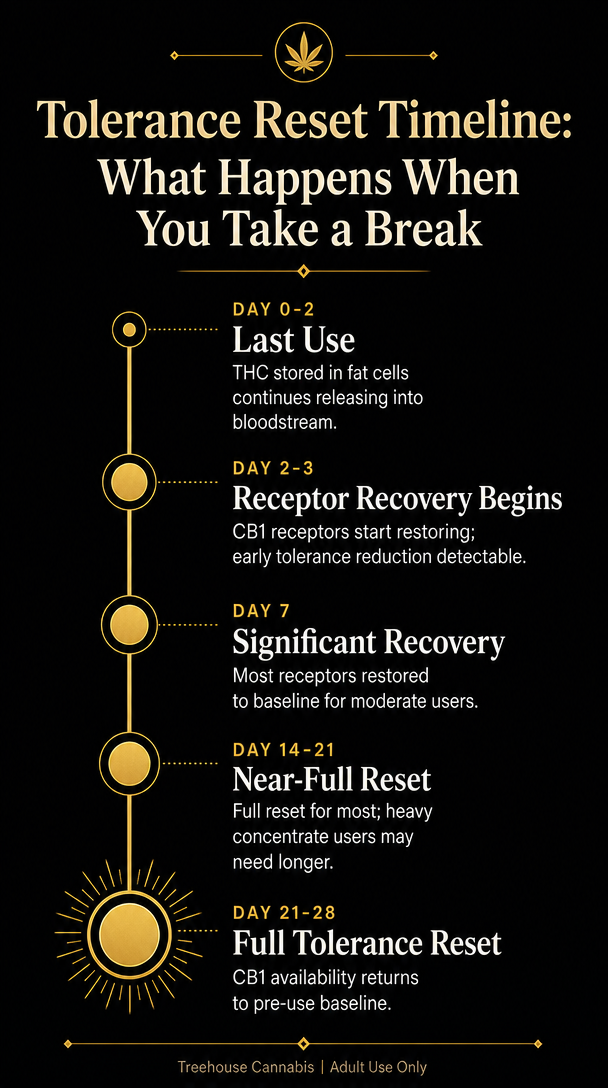
What does work: taking a step back. A few days away from concentrates and high-THC vapes can make a noticeable difference. For heavy users, a longer reset — a few weeks — can feel like rediscovering cannabis for the first time. Some people find that switching to flower for a while helps bring their frame of reference back to earth. Others take a full break and then moderate going forward.
The rise of high-THC culture has changed what's possible with cannabis — and what tolerance looks like. Knowing how different products affect your tolerance differently is part of navigating that landscape intelligently. Whether you're just getting into cannabis or you've been at it for years, being intentional about what you're consuming and how it affects you is never a bad move.
Frequently Asked Questions
Why does tolerance build up differently for flower vs vapes vs edibles vs concentrates?
Tolerance builds at different rates because each product delivers THC differently. Flower (15–30% THC) is the least concentrated; vapes and concentrates are highly concentrated and saturate your system's response faster. Edibles process through your liver, which produces a different kind of tolerance development that doesn't necessarily cross-reference with inhalation tolerance.
How long does it take to lower cannabis tolerance?
For most people, a week of not using produces a noticeable return in sensitivity. A full reset — where things feel close to your original baseline — typically takes three weeks or more. Heavy concentrate users tend to need longer than flower-only users.
Does vaping build tolerance faster than smoking flower?
Yes. Vape cartridges regularly contain 60–95% THC, compared to 15–30% in typical flower. The higher potency per hit means your baseline shifts faster. The ease of hitting a pen throughout the day also makes it simple to consume more frequently than you might with flower.
Why do edibles feel stronger than smoking the same amount of THC?
When you eat cannabis, your liver converts THC into 11-hydroxy-THC, a metabolite that crosses the blood-brain barrier more efficiently than inhaled THC. The process, called first-pass metabolism, makes edibles feel more potent at the same dose. Tolerance to edibles develops through this different pathway.
What's the fastest way to reset cannabis tolerance?
Taking a break is the only thing that actually resets things. Even a few days can help. A full reset typically takes three to four weeks for most people. Some find that switching to lower-potency products for a while helps manage things in the interim.
Sources
Shop Flower at Treehouse Cannabis
Explore our curated selection of premium flower products at Treehouse Cannabis in Rockland County. Our team can help you find the right product for your routine.
Thai Sunrise Flower - 70g — Find. | $330.00/70g
Slingria Flower - 70g — Find. | $330.00/70g
Sour Diesel Flower - 28g — Smoakland | $99.99/28g
Banana Bread World Cup - 3.5g — Mini Mart | $22.99/3.5g
Durban Poison Small Bud - 3.5g — untitled | $21.99/3.5g
Purple Headband Small Bud - 14g — To The Moon | $84.99/14g
This content is for educational purposes only and does not constitute medical advice. Treehouse Cannabis is a licensed adult-use dispensary. Must be 21+ to purchase.

Shop our products

Shop All
Flower
Pre-rolls
Vaporizers

Edibles
Drinks

Concentrates
Tinctures

Topicals

CBD

Pet CBD
Accessories