
A balanced look at what peer-reviewed studies reveal about cannabis
The Science of Cannabis: What the Research Actually Says
The Science of Cannabis: What the Research Actually Says
A data-driven look at what clinical trials and systematic reviews actually prove about cannabis and your health. With so much conflicting information out there, it's worth stepping back and looking at what peer-reviewed science — not marketing, not anecdotes — actually tells us about how cannabis affects the human body.
The Endocannabinoid System: How Cannabis Works in Your Body
Before understanding what cannabis does, it helps to understand the system it interacts with: the endocannabinoid system (ECS). This is a network of receptors and naturally occurring chemicals in the human body that regulates mood, appetite, sleep, inflammation, and immune response.
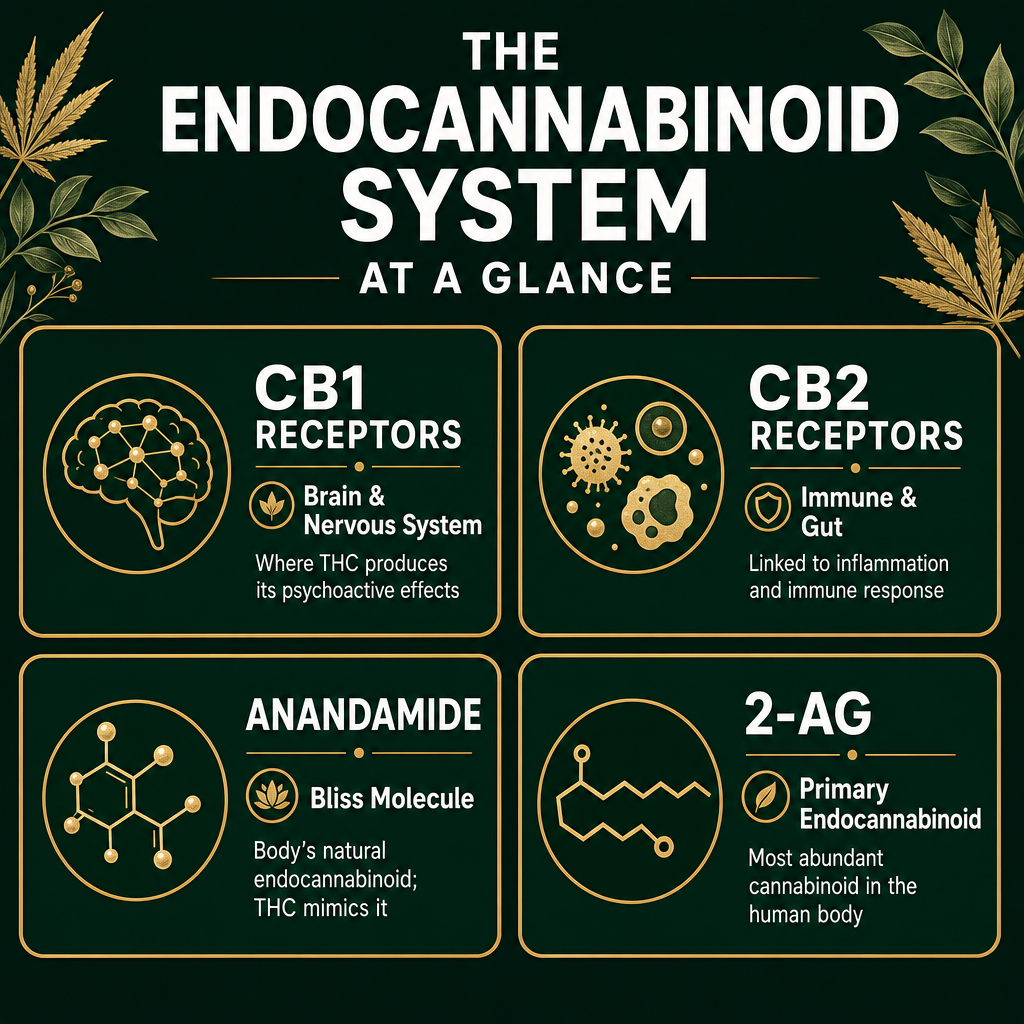
The ECS has two primary receptor types. CB1 receptors are concentrated in the brain and nervous system — these are the targets THC binds to when producing psychoactive effects. CB2 receptors are found primarily in the immune system and gut, linked to inflammation and immune response. The body produces its own cannabinoids, anandamide (often called the "bliss molecule") and 2-AG (the most abundant endocannabinoid in the human body), which bind to these same receptors.
This science matters for Rockland County consumers because understanding how cannabis interacts with your ECS helps explain why different products and ratios produce different effects. At Treehouse Cannabis, our team can walk you through how these biological mechanisms translate into your actual experience.
Therapeutic Evidence: What the Research Actually Supports
The most authoritative review of cannabis therapeutic evidence comes from the National Academies of Sciences' comprehensive 2017 report, which assessed research across more than 20 medical conditions. This report represents the current state-of-the-art in understanding what cannabis science actually supports — and where the evidence falls short.
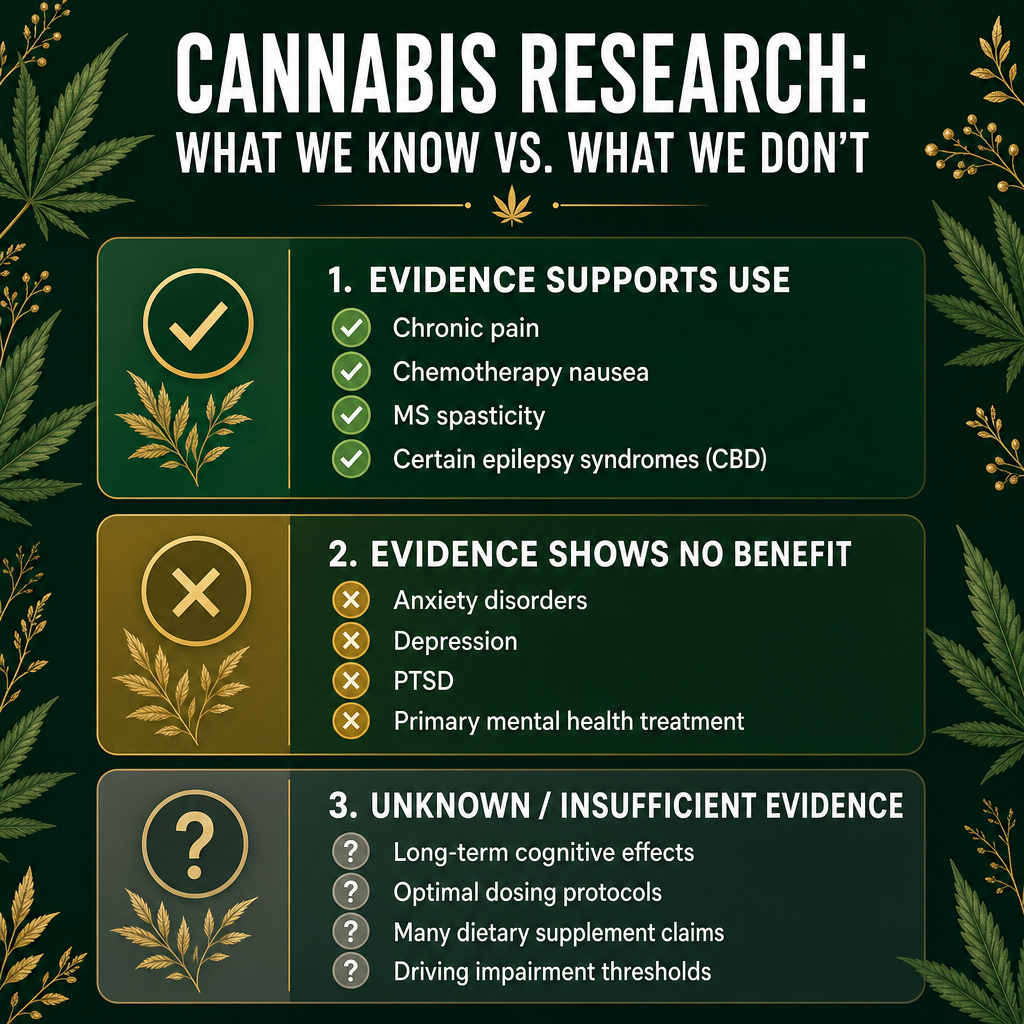
The findings were strongest for three conditions. There is substantial evidence that cannabis treats chronic pain in adults, making it one of the most well-supported therapeutic applications. Evidence also supports its use for chemotherapy-induced nausea and vomiting and for multiple sclerosis spasticity. These are the areas where cannabis research has produced the most consistent, high-quality data.
For many other conditions commonly associated with cannabis use, the evidence is far weaker or absent entirely. Scientific American's review of randomized controlled trials found no evidence that cannabis effectively treats mental health conditions including anxiety, PTSD, or depression. In some cases, THC can worsen anxiety, particularly at higher doses — a risk factor Rockland County consumers should understand before using cannabis for stress or mood support.
CBD: Separating Therapeutic Promise from Placebo
CBD has been the subject of more than 21 years of clinical trials, and the research picture is more nuanced than marketing claims suggest. The FDA has approved CBD medications — most notably Epidiolex for certain epilepsy syndromes including Dravet and Lennox-Gastaut — representing the strongest evidence for CBD's therapeutic applications.
Beyond epilepsy, CBD shows promise for anxiety and pain in some controlled studies. Research published in NIH databases has synthesized evidence suggesting therapeutic potential across several applications. However, many popular CBD claims — for conditions ranging from insomnia to inflammation to cognitive enhancement — outpace what controlled clinical trials have demonstrated.
The gap between popular perception and clinical evidence is significant. A substantial portion of CBD products on the market make therapeutic claims that haven't been validated by rigorous trials. For Rockland County consumers exploring CBD, understanding which applications have research support and which remain unproven helps set realistic expectations and make informed choices.
The Risks: What Systematic Reviews Found
Cannabis science isn't just about benefits — understanding risks is equally important for making informed decisions. The 2025 NIH systematic review on cannabis and health risks identified 164 serious adverse events among patients receiving cannabinoid therapy in controlled trials. These findings represent the most comprehensive look at cannabis-related harms from clinical research.
The risks documented include impaired coordination, slowed reaction time, and distorted perception — effects that are dose-dependent and particularly relevant for tasks like driving. Mental health effects have also been documented, especially with higher-THC products and in users with predispositions to certain conditions. Gastrointestinal and cardiovascular impacts appear in the literature as well, though more research is needed to fully characterize these relationships.
The 2025 review found evidence of harm reported across 62 systematic reviews covering mental health disorders, brain changes, cognitive outcomes, and pregnancy outcomes. This isn't meant to be alarmist — it means that for consumers in Rockland County and beyond, understanding both sides of the research ledger is essential for responsible use.
Brain Development and Cognition: The Developing Brain Question
Research consistently shows that cannabis impairs coordination and reaction time — effects measured across numerous controlled studies. The CDC's overview of cannabis health effects documents these cognitive impacts as dose-dependent, meaning higher doses produce more pronounced effects.
For developing brains — specifically adolescents and young adults — the research raises particular concerns. The brain continues developing until approximately age 25, and studies suggest cannabis use during this period may affect cognitive development in ways that aren't fully understood. The CDC notes these risks are more pronounced with regular high-THC use, which is why prevention messaging in states with adult-use cannabis still emphasizes the importance of waiting until adulthood.
Even for adult users, the cognitive effects of cannabis — impaired short-term memory, slowed reaction time, difficulty concentrating — are real and should inform how and when you use cannabis. Understanding these effects is part of using any cannabis product responsibly, whether you're in Rockland County or elsewhere.
The Research Gaps: Why So Much Is Still Unknown
Perhaps the most honest thing cannabis science can say is: we don't know enough. Cannabis remains a Schedule I controlled substance at the federal level in the United States, which has significantly limited research funding, hindered large-scale clinical trials, and created regulatory barriers that other pharmaceuticals don't face.
Beyond scheduling, there are fundamental scientific challenges. Cannabis is a plant with hundreds of active compounds, making standardization difficult across studies. Different strains, extraction methods, and delivery mechanisms produce variable results. The research community has called for more rigorous, standardized trials with larger sample sizes and longer follow-up periods.
What this means for consumers is that absence of evidence is not evidence of absence — just because a benefit hasn't been proven doesn't mean it doesn't exist. But it also means that enthusiastic claims, whether from friends, budtenders, or product labels, should be weighed against what peer-reviewed research actually demonstrates. As more states legalize cannabis for adult use, the research landscape is beginning to shift, and future studies will undoubtedly refine our understanding of both benefits and risks.
Frequently Asked Questions
Can cannabis treat chronic pain — what does the evidence say?
The National Academies 2017 report found substantial evidence that cannabis treats chronic pain in adults. The research supports its use for conditions like neuropathy and MS spasticity, though more standardized trials are needed to refine dosing and long-term outcomes.
Does cannabis help or worsen anxiety?
Scientific American's review of randomized controlled trials found no evidence cannabis treats mental health conditions including anxiety, PTSD, or depression. In some cases, THC can worsen anxiety, particularly at higher doses — a risk factor Rockland County consumers should understand.
Is CBD actually effective as a therapeutic treatment?
CBD has FDA approval for certain epilepsy syndromes (Dravet, Lennox-Gastaut) and shows therapeutic promise for anxiety and pain. However, many popular CBD claims outpace the evidence. 21+ years of clinical trials show promise, but more research is needed to establish efficacy across all claimed applications.
What are the known health risks of cannabis use?
The 2025 NIH systematic review found 164 serious adverse events among cannabinoid therapy patients in controlled trials. Risks include impaired coordination, slowed reaction time, distorted perception, and dose-dependent mental health effects. These risks are particularly relevant for tasks like driving.
How does cannabis affect brain development?
Research consistently shows cannabis impairs coordination and reaction time. Evidence of harm was reported across 62 systematic reviews covering brain changes and cognitive outcomes. The CDC notes these risks are dose-dependent and more pronounced with regular high-THC use, especially in younger users.
Sources
- National Academies of Sciences - The Health Effects of Cannabis and Cannabinoids
- NIH / PMC - Cannabis, cannabinoids and health risks: a 2025 systematic review
- NIH / PMC - Therapeutic efficacy of CBD: a review of clinical trial evidence
- CDC - Cannabis and Public Health: Health Effects
- Scientific American - What We Know and Don't Know About Marijuana's Health Effects
This content is for educational purposes only and does not constitute medical advice. Treehouse Cannabis is a licensed adult-use dispensary. Must be 21+ to purchase.

Shop our products

Shop All

Flower

Pre-rolls

Vaporizers

Edibles

Drinks

Concentrates

Tinctures

Topicals

CBD

Pet CBD

Accessories