
Forget the couch-lock stereotype. More athletes are turning to cannabis for focus, recovery, and a better mind-muscle connection.
Weed & Workouts: How Cannabis Fits Into an Active Lifestyle
Weed & Workouts: How Cannabis Fits Into an Active Lifestyle
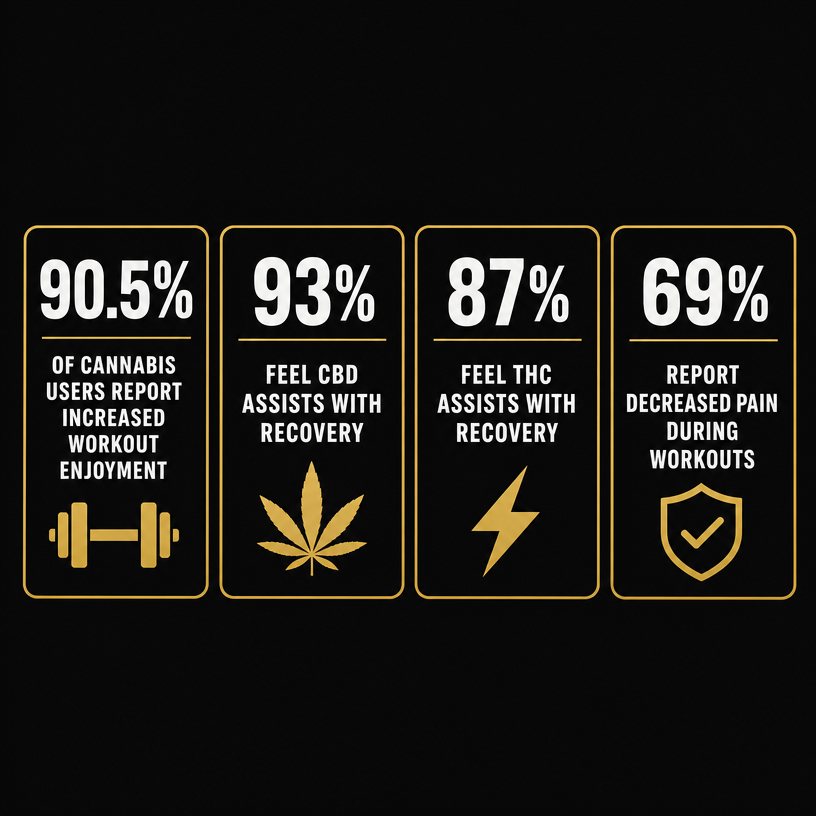
Yes — cannabis and exercise are increasingly paired together, with over 80% of cannabis users in legal states using it within an hour of working out. Research from the University of Colorado Boulder found that 90.5% of cannabis-using athletes reported increased workout enjoyment University of Colorado Boulder. Current evidence does not support cannabis as a performance enhancer, though its role in workout consistency and enjoyment is well-documented.
Can You Use Cannabis Before a Workout?
Yes — cannabis before exercise is common among users in legal states, primarily used to increase focus, enjoyment, and mind-body connection rather than to manage pain or improve performance Journal of Cannabis Research.
Different consumption methods produce different timing effects:
- Smoking or vaporizing: Effects onset within minutes, peak around 30–60 minutes, suitable for pre-workout timing
- Edibles: Effects onset in 45–90 minutes, lasting 4–8 hours, better suited for post-workout recovery or longer activities
- Tinctures: Sublingual onset in 15–30 minutes, flexible for pre- or post-workout use
Cannabis before a workout is generally safe for recreational exercisers who start with low doses and assess their tolerance. High-THC products may amplify the perception of effort, making cardio feel harder than usual — something to keep in mind if your goal is pushing intensity.
How Does Cannabis Affect Post-Workout Recovery?
Post-workout is where cannabis may offer its most evidence-backed benefits. A Kent State University study published in the Journal of Cannabis Research found that 93% of surveyed regular exercisers felt CBD assisted with recovery, and 87% felt THC assisted with recovery from exercise Journal of Cannabis Research (Kent State University). The primary mechanisms reported were reduced muscle soreness, improved sleep quality, and decreased inflammation after intense training.
Cannabis supports recovery through several pathways:
- Sleep quality: CBD and low-dose THC may help regulate sleep architecture, which is when muscle repair and adaptation actually occur
- Inflammation reduction: Both CBD and THC have documented anti-inflammatory properties that may help manage post-exercise soreness
- Muscle relaxation: Indica-dominant strains with the terpene myrcene may promote physical relaxation, easing post-training tension
For those looking to use cannabis after a workout, indica-dominant strains, CBD tinctures, and topicals are commonly preferred choices. Waiting 30–60 minutes after exercise before consuming allows your heart rate to normalize and can make the recovery experience more comfortable.
What is Microdosing Cannabis for Fitness?
Microdosing cannabis for fitness involves consuming small, controlled amounts — typically 2.5 mg THC or less — to experience focus and enjoyment benefits without significant psychoactivity. This approach allows exercisers to enhance mind-body connection and workout engagement while remaining functional and safe.
The goal of microdosing is not to feel high. Instead, users report:
- Subtle enhancement of body awareness during exercise
- Increased motivation to start and finish workouts
- Greater enjoyment of repetitive or endurance activities like running and cycling
- Reduced pre-workout anxiety without impaired coordination
Microdosing is particularly relevant for resistance training, yoga, and activities where focus and body awareness matter more than raw output. Starting with a low-dose edible or a single inhalation from a vaporizer is a common starting point. Users should wait at least 30 minutes before exercising to assess effects.
How Does Cannabis Affect Exercise Focus and Mind-Body Connection?
Adults who use cannabis during physical activity primarily do so to increase focus, enjoyment, and mind-body connection rather than to manage pain or improve performance Journal of Cannabis Research. Cannabis can heighten awareness of physical sensations during exercise, making activities like yoga, running, and weight training more engaging for some users.
The mind-body enhancement effect is often described as:
- Increased awareness of breath and posture during aerobic exercise
- Greater sensitivity to muscle engagement during strength training
- Reduced mental friction that makes starting a workout feel easier
- Enhanced appreciation for the sensory experience of movement
This effect appears strongest with moderate THC doses and sativa-dominant strains that produce uplifting, clear-headed effects. Strains high in the terpene limonene are often cited for mood elevation and mental clarity, while pinene may support alertness and counter some short-term memory effects of THC.
What are the Risks of Combining Cannabis and Exercise?
Cannabis produces transient cardiovascular effects including increased resting heart rate and orthostatic hypotension (dizziness when standing up quickly) Gatorade Sports Science Institute. It remains unclear whether cannabis is ergogenic (performance-enhancing), ergolytic (performance-impairing), or has no meaningful effect on performance — the research is still developing.
Key risks to consider:
- Elevated heart rate: Cannabis can increase resting heart rate for several hours after consumption, which may be uncomfortable during high-intensity exercise
- Orthostatic hypotension: A drop in blood pressure when standing can cause dizziness — hydrate well and move slowly from seated to standing positions
- Altered effort perception: THC can change how hard exercise feels, potentially leading to overexertion or unsafe movement patterns
- Impaired coordination: High doses can affect motor control — avoid complex movements or heavy weights while significantly impaired
- Interaction with other substances: Combining cannabis with pre-workout supplements, stimulants, or alcohol introduces unknown variables
Pre-Workout vs. Post-Workout Cannabis: Which Should You Use?
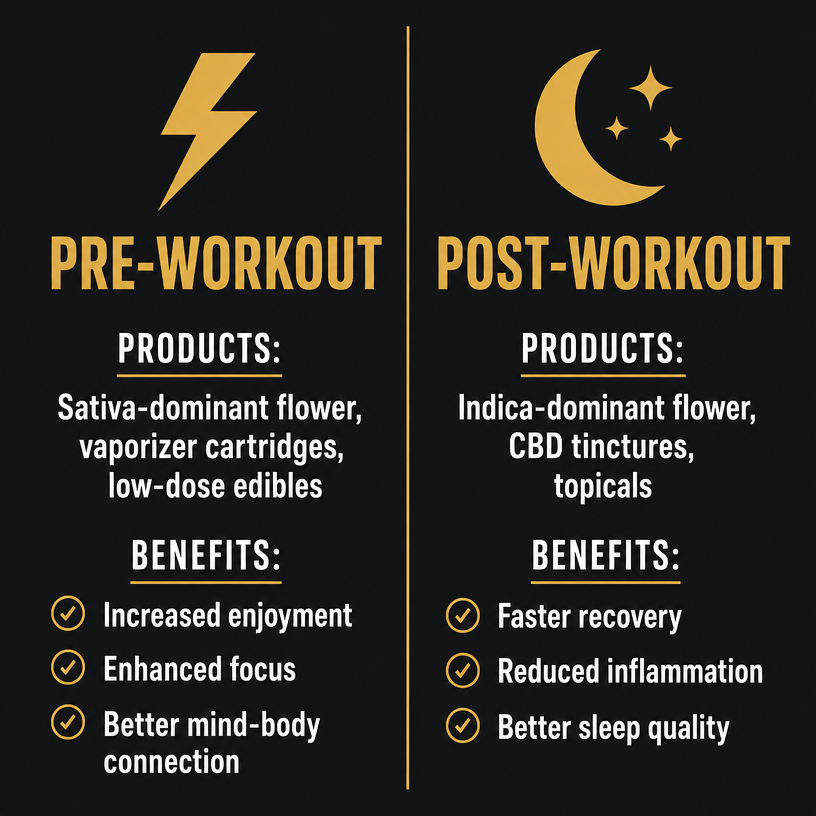
The best timing depends on your goals. Pre-workout cannabis is best for enjoyment, focus, and mind-body connection. Post-workout cannabis is best for recovery, sleep, and inflammation management.
| Factor | Pre-Workout | Post-Workout |
|---|---|---|
| Primary goal | Enjoyment, focus, motivation | Recovery, sleep, inflammation |
| Best strains | Sativa-dominant, limonene/ pinene | Indica-dominant, myrcene |
| Best products | Flower, vaporizer, low-dose edible | Indica flower, CBD tincture, topical |
| Timing | 15–60 min before exercise | 30–60 min after exercise |
| Key benefit | Reduced mental friction to start | Reduced soreness, better sleep |
For exercisers in Rockland County, exploring different strains at a dispensary and noting how each affects your workout focus can help identify what works best for your specific fitness goals.
Shop Products
Browse our curated selection of cannabis products at Treehouse Cannabis. Stop by our Rockland County dispensary or explore our full menu online.
Flower
- GG4 · Flower · 28g
- Muffin Bomb • Flower • 70g
- Birthday Cake · Small Bud Flower · 14g
- Sour Candy · Pre-Ground Flower · 14g
- Headbanger · Small Buds · 28g
- Gas Lit • Flower • 28g
Frequently Asked Questions
Does cannabis improve athletic performance?
Current research indicates cannabis does not enhance athletic performance — it may make exercise feel more effortful. However, it significantly increases workout enjoyment and focus, which can help consistency and long-term fitness goals.
Is it safe to work out after using cannabis?
For recreational exercisers, low to moderate cannabis consumption before exercise is generally considered safe. Avoid high-THC products if you're new to cannabis, and never exercise while significantly impaired. Stay hydrated and listen to your body.
What are the best cannabis strains for exercise?
Sativa-dominant strains with moderate THC and uplifting terpenes like limonene or pinene work well for pre-workout use. For recovery, indica-dominant strains with myrcene may support relaxation and sleep. Start low and assess tolerance at your preferred Rockland County dispensary.
Can cannabis help with muscle recovery after workouts?
Research shows 87–93% of trained exercisers felt both CBD and THC assisted with their post-workout recovery. Cannabis may help with inflammation, muscle soreness, and sleep quality — all critical factors in recovery and adaptation.
What are the risks of combining cannabis and exercise?
Key risks include increased heart rate, orthostatic hypotension (dizziness when standing), and altered perception of effort. Avoid high-intensity exercise if you're inexperienced with cannabis, and never combine cannabis with other performance-affecting substances.
Sources
- University of Colorado Boulder — Cannabis before exercise increases positive mood and enjoyment during workouts,
- Journal of Cannabis Research (Kent State University) — 93% of surveyed regular exercisers felt CBD assisted with recovery, and 87% felt
- Gatorade Sports Science Institute — Cannabis produces transient cardiovascular effects including increased resting h
- Journal of Cannabis Research — Adults who use cannabis during physical activity primarily do so to increase foc
- TIME — Over 80% of surveyed cannabis users in legal states used it within an hour of ex
This content is for educational purposes only and does not constitute medical advice. Treehouse Cannabis is a licensed adult-use dispensary. Must be 21+ to purchase.
About Treehouse Cannabis
Treehouse Cannabis is Rockland County's premier adult-use dispensary, offering a carefully curated selection of premium cannabis products including flower, concentrates, edibles, and more. Our knowledgeable team is dedicated to helping both new and experienced consumers find the right products for their needs in a welcoming, judgment-free environment. Visit us at treehousecannabis.com to learn more about our current selection and special offers.


Shop our products

Shop All

Flower

Pre-rolls
Vaporizers

Edibles

Drinks

Concentrates
Tinctures

Topicals

CBD

Pet CBD

Accessories