

What the research says about transdermal THC absorption
Cannabis Topicals: Do They Get You High?
The Short Answer
No — and it's not about dose. It's about chemistry and skin anatomy. Cannabis topicals work because cannabinoids interact with cannabinoid receptors in your skin, but those receptors don't connect to your brain the way THC from smoking or edibles does. Your skin is a remarkably effective barrier. Most topicals never make it past the dermis, let alone into your bloodstream[^1].
That said, the question deserves a thorough answer, because the nuance matters — especially if you're using products with THC, considering drug testing, or trying to understand what actually works for pain and inflammation.
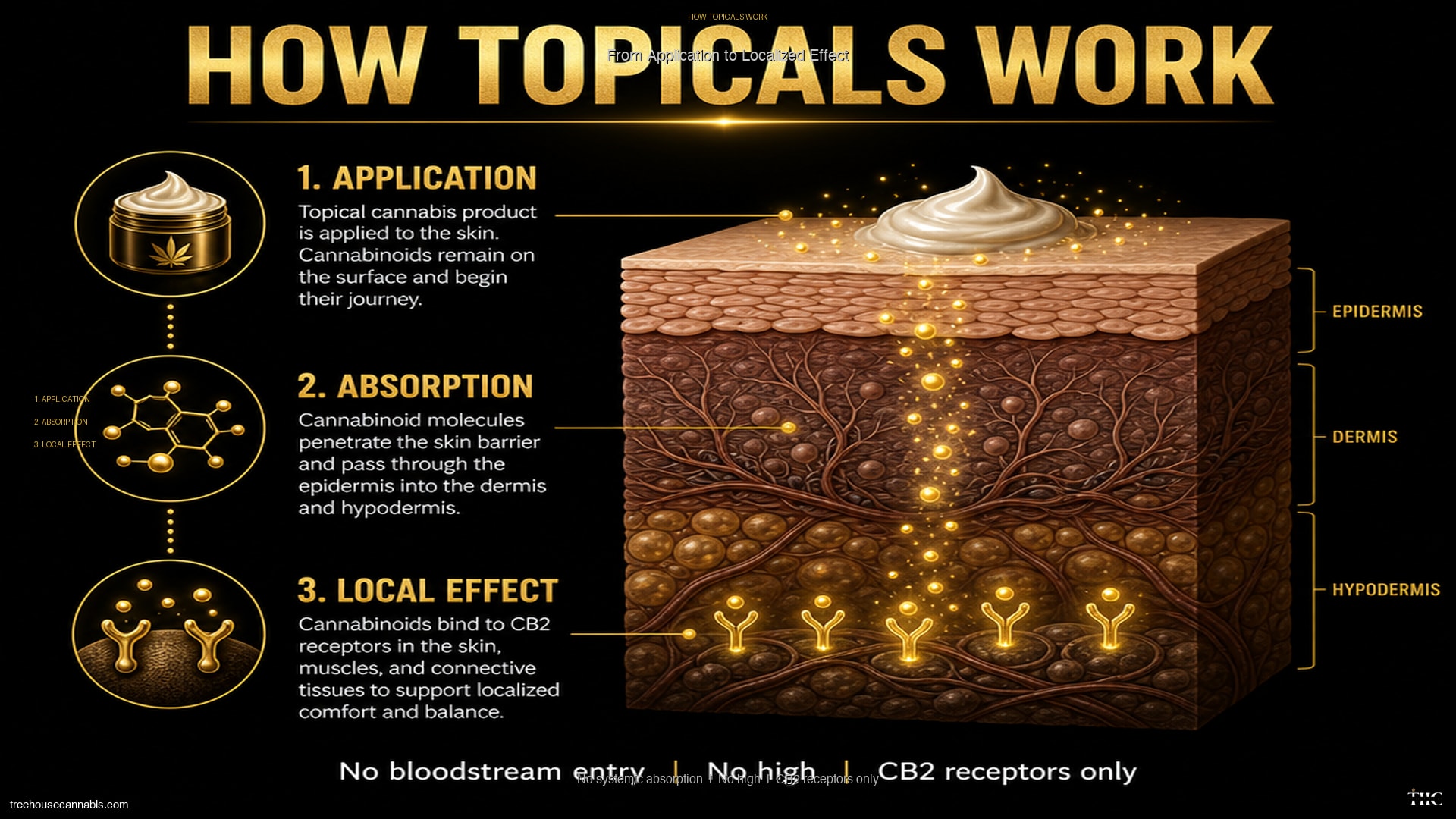
How Cannabis Topicals Actually Work
When you apply a cannabis cream, balm, or lotion, the cannabinoids interact with the endocannabinoid system (ECS) in your skin — specifically the CB2 receptors that are dense in dermal tissue. CB2 receptors regulate inflammation, pain signaling, and immune responses[^2].
THC and CBD both bind to CB2 receptors. CBD may also interact with TRPV1 receptors (involved in pain and temperature) and serotonin receptors, which is why CBD topicals are popular for localized discomfort[^3].
The critical distinction: CB2 receptors in your skin don't transmit signals to your brain. They work locally — in the exact area where you apply the product. That's why a THC topical can reduce inflammation in your knee without affecting anything else.
This is fundamentally different from smoking or ingesting cannabis, where THC enters your bloodstream and crosses the blood-brain barrier to produce psychoactive effects.
THC vs CBD Topicals: What's the Difference?
CBD Topicals
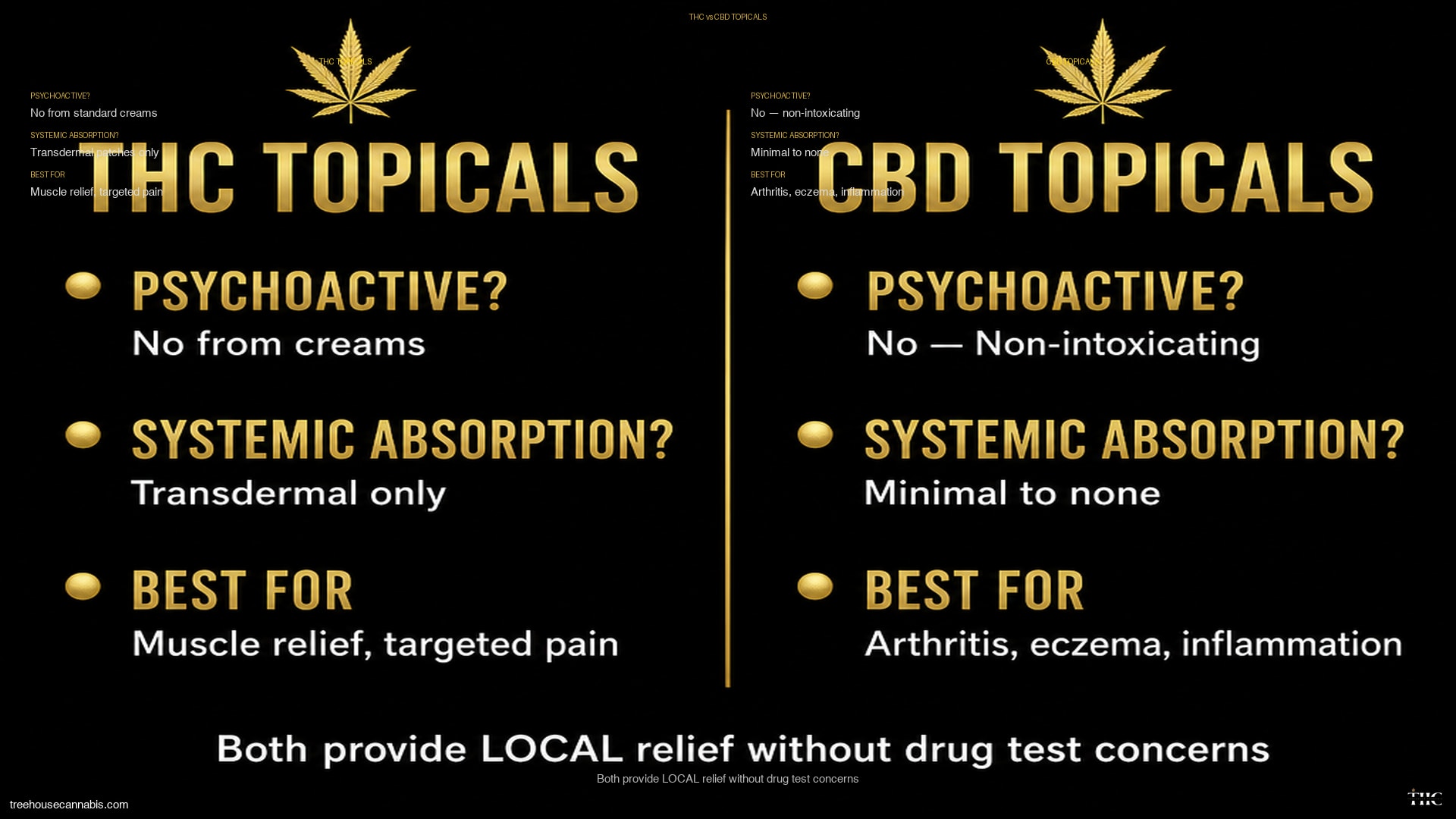
CBD topicals are the most researched category. Studies on self-reported pain and disability show significant improvements with topical CBD treatment[^4]. Because CBD is non-psychoactive, there's no "high" to worry about — even with high-concentration products.
CBD topicals are commonly used for:
- Joint pain and arthritis
- Muscle soreness after exercise
- Skin conditions like eczema and psoriasis
- General inflammation
THC Topicals
THC does penetrate the skin — but only in limited, localized amounts. Research shows THC absorption through intact skin is "slow, irregular, and unpredictable"[^5]. Even products with meaningful THC concentrations aren't delivering enough systemic THC to produce intoxication.
For THC topicals to actually get you high, you'd need a transdermal patch — a delivery method specifically designed to push THC through the skin barrier and into the bloodstream. These use penetration enhancers (like olive oil carriers or chemical permeation aids) that standard creams and balms don't have[^6].
Standard THC topicals? Local relief, no high.
What About Drug Testing?
This is one of the most common questions — and the answer is reassuring for most people.
Standard cannabis topicals (creams, balms, gels) won't make you fail a drug test. Multiple peer-reviewed studies confirm that topical THC application does not produce detectable levels of THC in blood or urine[^7].
The critical exception: transdermal patches. These are designed to deliver THC systemically, and depending on the formulation and frequency of use, they could potentially show up on a test.
If you're facing a drug test and using cannabis topicals:
- Creams and balms: almost certainly safe
- Transdermal patches: proceed with caution — they can deliver meaningful systemic doses
For the safety-conscious: if you're subject to regular testing, your best move is to avoid all cannabis products in the days leading up to the test. But standard topicals alone are unlikely to be the culprit.
Who Are Cannabis Topicals Best For?
Cannabis topicals aren't a magic bullet, but they're particularly well-suited for certain use cases:
Athletes and active people — post-workout muscle soreness, joint stiffness, and inflammation respond well to targeted application. The localized delivery means you're targeting exactly the area that needs relief.
People with skin conditions — CBD's interaction with TRPV1 and serotonin receptors makes it relevant for inflammatory skin conditions. Research is still developing, but the anti-inflammatory properties are well-documented[^8].
Those avoiding psychoactive effects — if you want cannabis-derived relief without intoxication, topicals are one of the few formats that deliver it reliably. CBD-dominant products are especially relevant here.
People managing localized pain — back pain, arthritis in specific joints, nerve pain in a defined area. Topicals work best where you can apply them directly.
What to Look for in a Cannabis Topical
Not all products are created equal. Here's what matters:
Full-spectrum vs isolate — Full-spectrum products include minor cannabinoids and terpenes, which may enhance the therapeutic effect through the "entourage effect." Isolates are pure CBD or THC. For topical use, full-spectrum often performs better.
Concentration — Higher concentration doesn't always mean better relief, but it does affect how much you need to use. If you're going through product quickly, a higher-concentration option may be more cost-effective.
Carrier ingredients — Look for products with quality base ingredients (shea butter, jojoba oil, beeswax) that aren't loaded with artificial fragrances or alcohols that can irritate skin.
Transparency — Reputable brands provide third-party lab testing results. This is especially important for THC products — you want to know exactly what you're applying.
The Bottom Line
Cannabis topicals — creams, balms, gels — work locally on CB2 receptors in your skin. They don't get you high because the cannabinoids never reach your bloodstream in meaningful amounts, and CB2 receptors don't connect to the brain's psychoactive pathways.
CBD topicals have solid research behind them for pain and inflammation. THC topicals work locally but rarely produce any psychoactivity. Transdermal patches are the exception — they're designed for systemic delivery and could affect drug tests.
If you're looking for targeted, non-intoxicating relief from a cannabis product, topicals are a legitimate option. Just know what you're buying and what you're trying to address.
Sources


Shop our products

Shop All

Deals

Flower

Pre-rolls

Vaporizers

Edibles

Drinks

Concentrates
Tinctures

Topicals

CBD

Pet CBD

Accessories