

The Science-Backed Guide to Preserving Potency, Flavor, and Aroma
How to Store Cannabis: Keep Flower Fresh for 6+ Months

How to Store Cannabis: Keep Flower Fresh for 6+ Months
Cannabis flower is perishable. Left unchecked, the THC that makes your bud potent slowly degrades into CBN — a cannabinoid that produces sedating, foggy effects instead of the clear, uplifting high you paid for. Terpenes, the aromatic compounds responsible for flavor and aroma, evaporate faster than cannabinoids. Within months of improper storage, even premium flower can turn dry, harsh, and lifeless.
The good news: preserving cannabis properly is simple. It just requires understanding what damages it in the first place.
The Five Enemies of Cannabis Storage
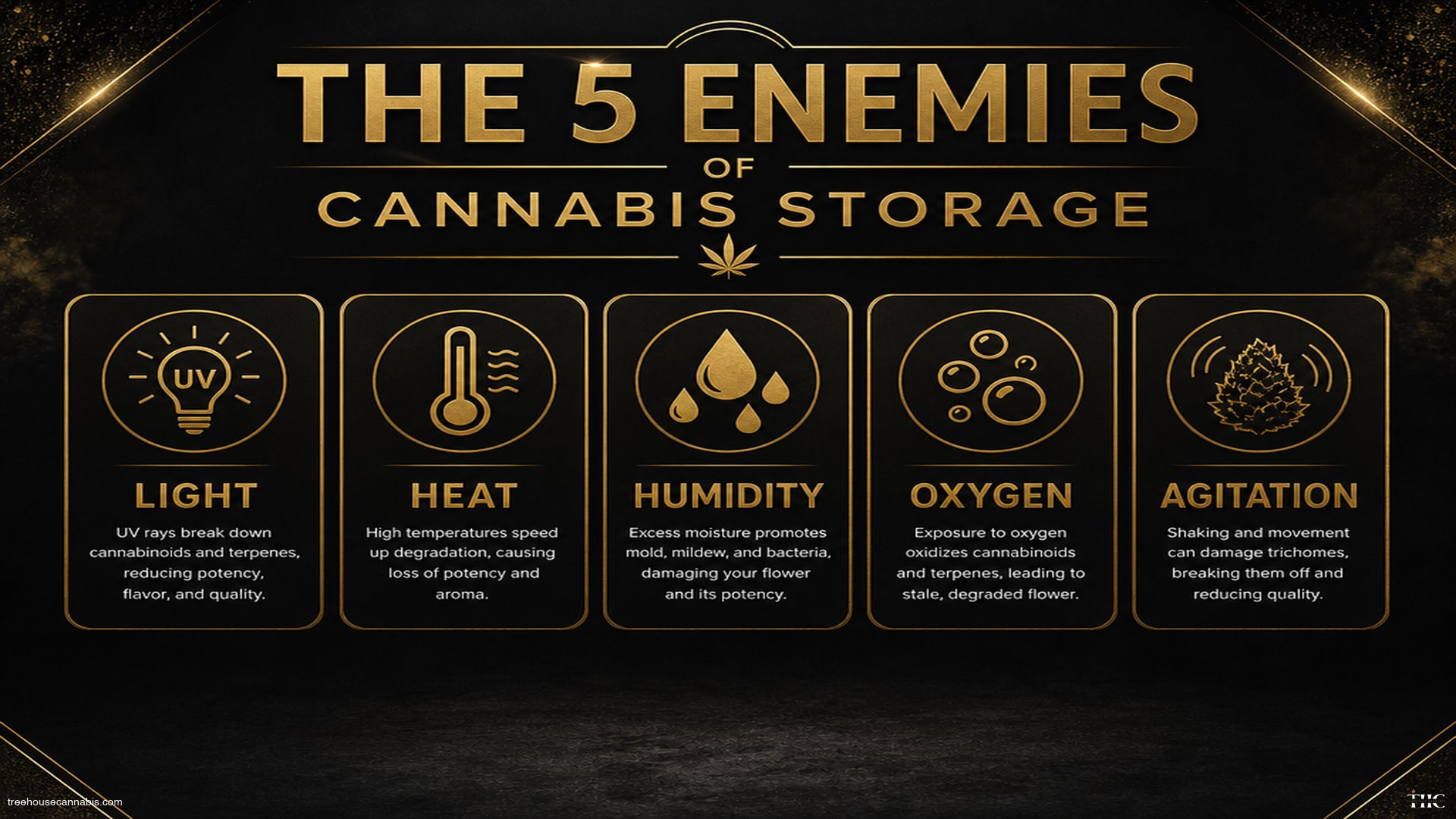
Cannabis degrades because of five environmental factors. Control them, and your flower stays fresh for six months to a year or longer.
1. Light — The Silent Potency Killer
UV radiation breaks down both THC and terpenes through photooxidation. A jar left on a sunny windowsill will lose measurable potency within days. A 2024 study published in Science Direct found that light exposure was one of the three most significant drivers of cannabinoid degradation, alongside temperature and storage duration[^1].
2. Heat — Accelerates Everything
High temperatures accelerate the conversion of THC to CBN and cause terpenes to evaporate. A 2022 study published in Industrial & Engineering Chemistry Research found that flower stored at higher temperatures lost both THC and terpene content measurably faster than flower stored at refrigeration or freezing temperatures[^2]. At elevated temperatures, THC converts to CBN at a dramatically increased rate — the warmer the storage conditions, the more potent your flower loses each month.
3. Humidity — The Delicate Balance
Too dry and the flower becomes brittle, losing terpenes and breaking apart. Too humid and mold becomes a real risk. The consensus across cannabis storage research and industry guidance: 59–63% relative humidity (RH) is the optimal range for long-term cannabis storage[^3].
This is why products like Boveda humidity control packs — available in 58% and 62% RH formulations — have become standard among serious cannabis consumers. They passively maintain the ideal moisture level without any effort on your end.
4. Oxygen — Oxidation Destroys THC
Exposure to air accelerates the oxidation of THC to CBN. Oxygen exposure is one of the primary drivers of THC degradation over time — the mechanism is well-documented in pharmaceutical cannabis research[^4]. A jar that is only half full exposes significantly more flower to oxygen each time it's opened, accelerating degradation. The longer cannabis sits in a partially empty container with air, the more potency it loses.
5. Physical Agitation — The Overlooked Factor
Rough handling, jostling, and repeated opening and closing of containers physically damages the trichomes — the tiny, resinous structures that contain THC, terpenes, and other cannabinoids. Each time you shake or rub your jar, you're knocking off trichomes and losing potency. This is especially relevant for long-term storage where the cumulative effect of repeated handling matters.
Minimize movement, and avoid grinding or breaking up flower until you're ready to use it.
How Fast Does Cannabis Degrade?
Understanding the timeline helps you prioritize what matters most:
| Condition | THC Loss |
|---|---|
| Room temp, dark, airtight | |
| Refrigerated (37–40°F) | ~1–2% per month |
| Frozen (-4°F) | <1% per month, retained up to 2 years[^2] |
| Light exposure (windowsill) | Measurably degraded within days |
At room temperature without special precautions, you can expect noticeable potency loss within three to four months. With proper storage — cool, dark, humidity-controlled, minimal oxygen — six months of near-peak freshness is very achievable.
The Best Containers for Cannabis Storage
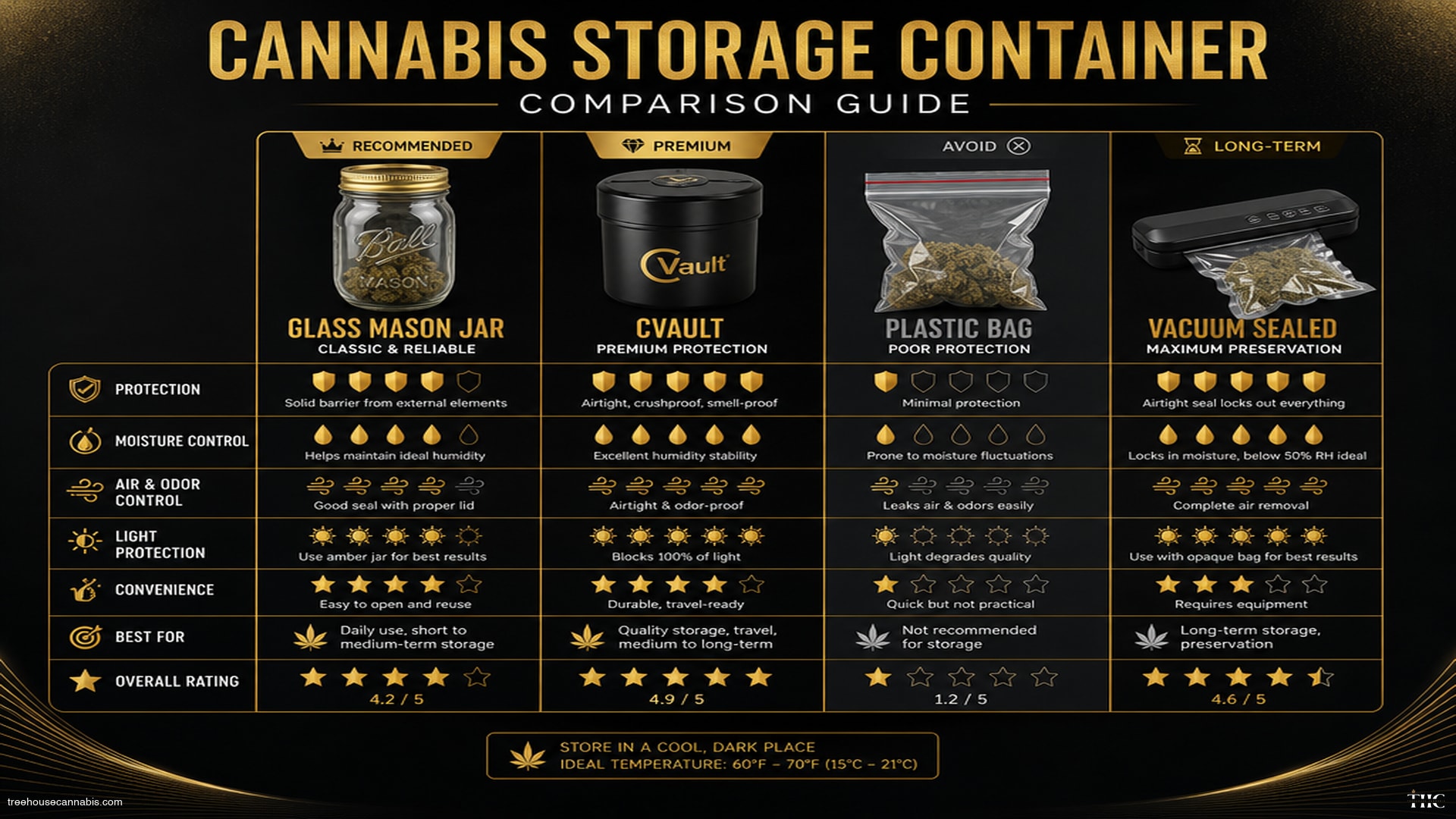
Not all containers are equal. Here's how the common options stack up:
| Container | Pros | Cons |
|---|---|---|
| Glass mason jar | Inert, airtight, widely available, affordable | Fragile, no humidity control on its own |
| Cannabis-specific jar (e.g., CVault) | Airtight seal, often includes humidity pack slot | More expensive |
| Plastic bag (Ziploc) | Cheap, convenient | Static charge damages trichomes, not airtight long-term |
| Vacuum-sealed bag | Minimal oxygen, great for long-term | Must be resealed each time you open; one-time use |
| Nitrogen-flushed container | Near-zero oxygen, professional grade | Requires equipment; overkill for most users |
For most people, a glass mason jar paired with a Boveda humidity pack is the sweet spot of effectiveness and cost. Fill the jar as full as possible to displace air, drop in a 62% Boveda pack, and seal it tight.
Step-by-Step: How to Store Cannabis Long-Term
- Start with fresh, properly cured flower. If your bud is already dried out or stale, storage won't help. Buy from a trusted dispensary and store it within a day or two of opening any original packaging.
- Portion it out. Put what you'll reasonably consume within two weeks into a small jar. Store the rest in larger containers you don't open often.
- Add a humidity pack. Drop in a 62% Boveda pack for long-term storage (58% if you prefer a slightly drier texture).
- Seal tight and store in a cool, dark place. A closet, drawer, or cellar works perfectly. Avoid attics, cars, and windowsills.
- Resist the urge to open it. Every time you open the jar, you introduce fresh oxygen and let humidity fluctuate. Check it once a week at most.
- For very long-term storage (6+ months), refrigerate or freeze. Use a vacuum-sealed or nitrogen-flushed container. Label it with the date.
Common Cannabis Storage Mistakes to Avoid
Freezing flower without proper protection. Freezing is excellent for long-term storage, but only when done right. Moisture is the enemy in a freezer — if your flower isn't fully dried and sealed, ice crystals will form and damage trichomes. Only freeze properly cured, dry flower in an airtight, moisture-free container.
Using plastic bags. Beyond the static charge that blasts trichomes off your flower, plastic bags offer poor oxygen barriers. They are fine for transport, not storage.
Refrigerating fresh flower. A refrigerator is too humid for undried flower and introduces moisture risk. Only refrigerate well-cured, bone-dry flower if you're trying to extend short-term freshness beyond a few weeks.
Storing with a humidity pack in a too-warm space. Humidity packs stabilize moisture but do nothing about temperature. A Boveda pack in a hot car will still result in terpene and cannabinoid degradation. Keep it cool.
How to Know If Cannabis Has Gone Bad
Cannabis doesn't "spoil" the way food does, but there are clear signs of degradation:
- Loss of aroma: If it smells like plain dry grass instead of the original strain profile, terpenes are gone.
- Discoloration: Good cannabis ranges from bright green to purple-tinged. Brown or yellowish tones suggest age and heat damage.
- Crumbling easily: Properly stored cannabis should be slightly sticky and pliable. If it crumbles to dust, it's too dry.
- Harsh smoke: If the vapor or smoke is unusually harsh and hot, the terpenes have degraded and the chlorophyll has broken down.
Mold is a different concern — if you see any white, fuzzy growth or smell a musty, mildew-like odor, discard the batch immediately. Moldy cannabis is a health risk.
The Bottom Line
Cannabis storage isn't complicated, but it requires intention. The five enemies — light, heat, humidity, oxygen, and physical agitation — are what drive degradation. Keep flower in an airtight glass jar with a humidity pack, store it cool and dark, minimize air exposure, and don't touch it more than necessary. Do this and you'll realistically retain most of your flower's potency and flavor for six months or longer.
Invest a few dollars in proper jars and humidity packs. Your future self — and your vaporizer — will thank you.
Sources
- Science Direct — Effect of short-term storage on cannabinoid content (2024)
- ACS Industrial & Engineering Chemistry Research — Optimal Storage Conditions of Commercial Cannabis Crops (2022)
- The Cannabis Industry Association — The Importance of Storing Cannabis Properly
- Journal of Pharmaceutical and Biomedical Analysis — The role of time and storage conditions on the composition of cannabis (2019)


Shop our products

Shop All

Deals

Flower

Pre-rolls
Vaporizers

Edibles

Drinks

Concentrates
Tinctures

Topicals

CBD

Pet CBD

Accessories