How Long Does a Cannabis High Last by Consumption Method?
How Long Does a Cannabis High Last by Consumption Method?
How long does a cannabis high last? For most adult consumers, a single session runs one to six hours, and the window depends almost entirely on consumption method. Inhaled cannabis (smoking, vaping) typically fades within one to three hours, while edibles can stretch four to twelve hours because the liver metabolizes THC slowly [1]. Sublingual tinctures usually land in the middle at four to six hours.
This guide walks through each common consumption route, compares timelines side by side, and breaks down why the same nominal dose can feel like a two-hour lift or a full-afternoon experience depending on how it is consumed.
How Long Does a Smoked or Vaped Cannabis High Last?
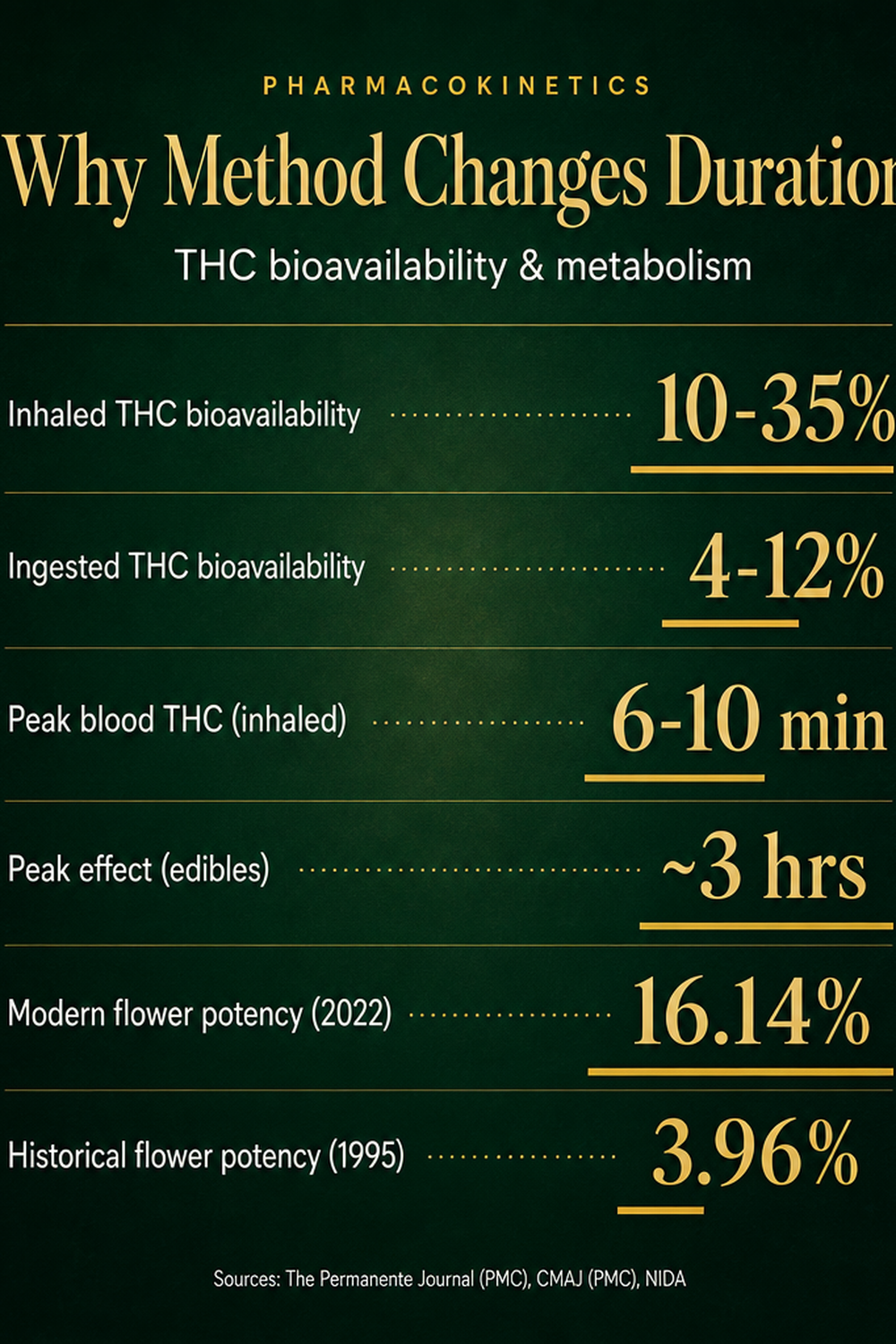
Smoking and vaping produce nearly identical timelines because both routes deliver THC through the lungs into the bloodstream within minutes. When cannabis is inhaled, THC and its metabolites enter the bloodstream rapidly via the lungs and reach peak blood levels within six to ten minutes [2]. From there, the bulk of the high fades in one to three hours, and occasional consumers can feel lingering effects for up to eight hours [4].
The reason inhaled cannabis feels so fast and so strong comes down to bioavailability: roughly ten to thirty-five percent of the THC in inhaled smoke or vapor actually reaches systemic circulation, compared to only four to twelve percent for ingested THC [2]. That gap is why a 20% inhaled flower can feel more potent than a 100 mg edible to the same person, even though the edible carries a higher nominal milligram count.
A few practical patterns show up across consumers:
- Onset: one to five minutes from the first inhale.
- Peak: six to ten minutes after consumption.
- Main high: one to three hours.
- Lingering effects: up to eight hours for occasional consumers.
Because the active window is short and predictable, inhaled formats work well when you want a defined experience that does not bleed into the rest of your day. Gas Lit • Flower • 70g gives you the dose control and quick offset that inhaled routes are known for.
How Long Do Edibles Last Compared to Smoking?
Edibles run on a completely different clock. Instead of reaching the brain through the lungs, THC travels through the digestive system, gets processed by the liver, and is converted into 11-hydroxy-THC, a metabolite that crosses the blood-brain barrier more efficiently and produces a heavier, longer-lasting effect.
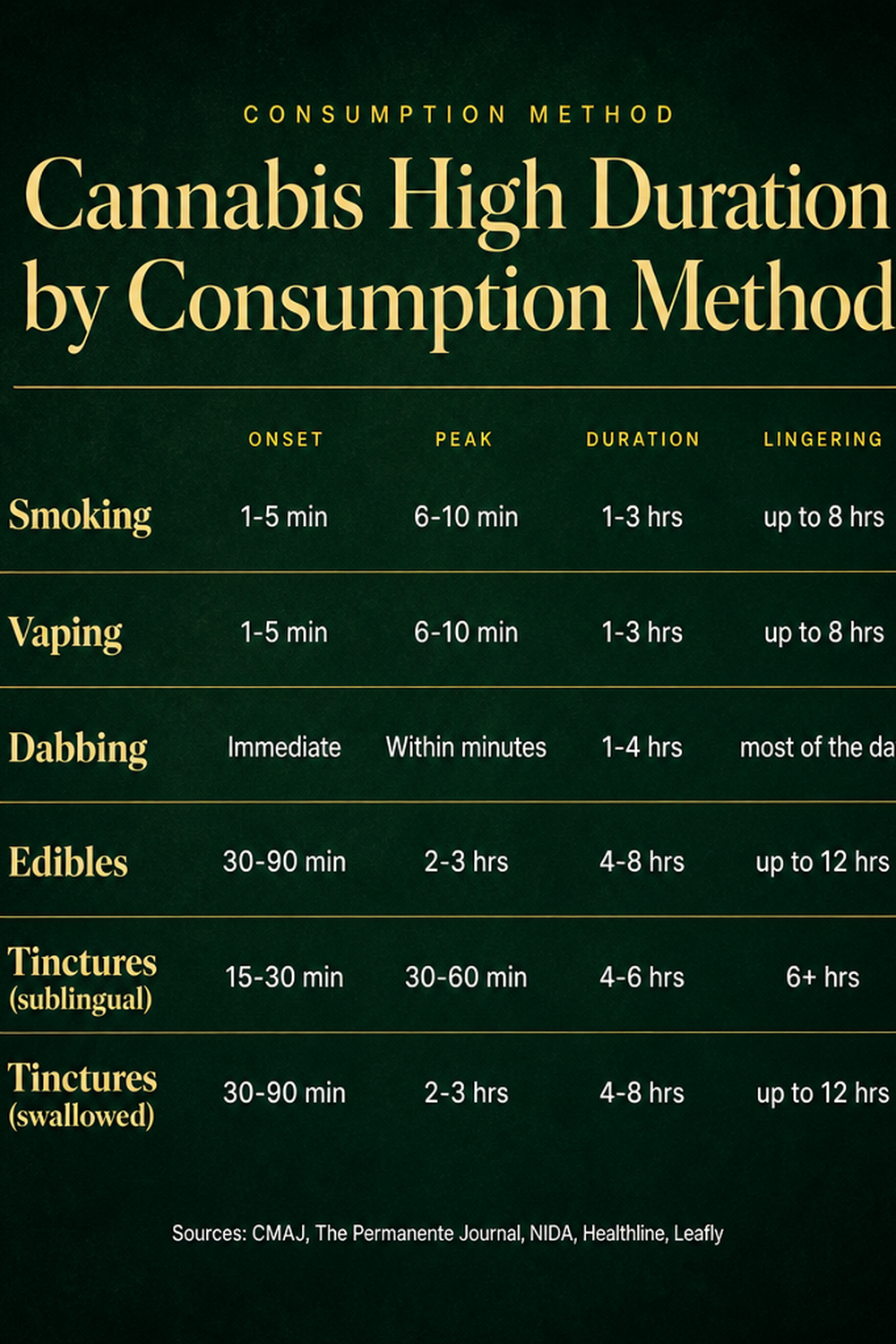
Side by side, the two routes compare like this:
| Factor | Edibles | Smoking or Vaping |
|---|---|---|
| Onset | 30-90 min (up to 2 hrs on a full stomach) | 1-5 min |
| Peak effects | 2-3 hours after ingestion | 6-10 min |
| Main high | 4-8 hours | 1-3 hours |
| Residual effects | Up to 12 hours | Up to 8 hours |
| THC bioavailability | 4-12% | 10-35% |
| Route to the brain | Liver → 11-hydroxy-THC | Lungs → bloodstream |
The practical timeline for edibles looks like this:
- Onset: thirty to ninety minutes, sometimes up to two hours on a full stomach.
- Peak: around two to three hours after ingestion.
- Main high: four to eight hours.
- Residual effects: up to twelve hours, especially at higher doses [1] [5] [7].
Compared to smoking or vaping, edible highs can easily last two to four times longer, even when the nominal THC content is similar [5]. Because the peak arrives late and can catch people off guard, dosing strategy matters more than with inhaled formats. A common mistake is re-dosing before the first dose has peaked, which leads to an unexpectedly intense experience hours later.
If you are new to infused formats, browsing Edibles is a good way to compare dose ranges and product types before choosing one. Midnight Cherry | Indica - Lights Out CBN Sleep Gummies - 100mg THC | 100mg CBN covers a wide range of formats, from low-dose mints to full-potency baked goods, so you can dial in the duration you actually want. For a deeper look at why edible timing trips so many consumers up, our related post You’re Not Lazy—Your Edible Just Peaked at the Wrong Time walks through the most common peaks-and-panic moments.
How Long Does a Dab or Concentrate High Last?
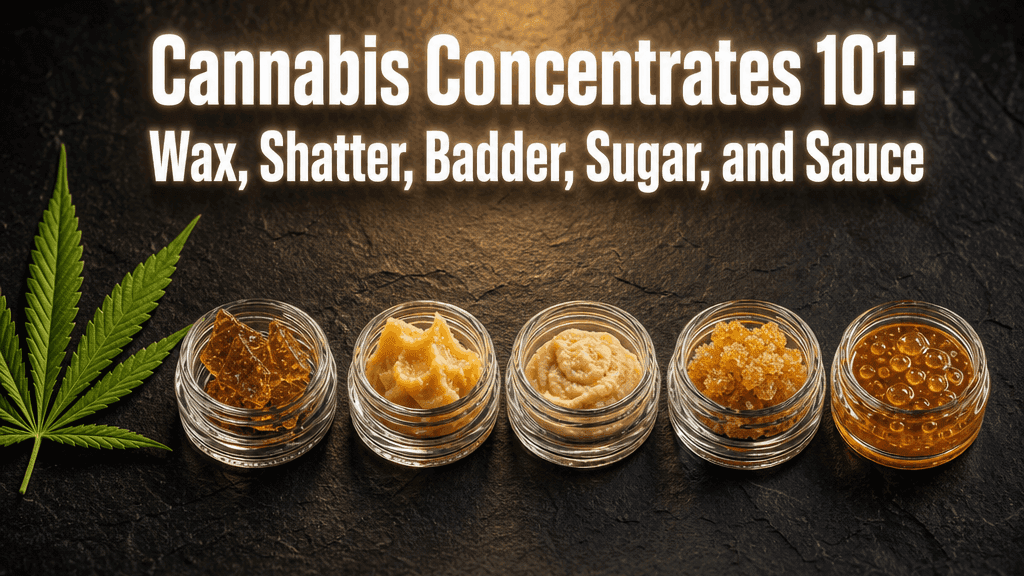
A dab high typically lasts one to four hours. Concentrates carry much higher THC percentages than flower (often sixty to ninety percent), so onset is almost immediate, the peak can feel more intense than smoking flower of similar nominal weight, and the duration extends further than most casual consumers expect [4].
A few things set dabbing apart:
- Onset: immediate, often within seconds of inhalation.
- Peak: within minutes, sometimes before you have set the rig down.
- Main high: one to four hours.
- Lingering effects: can run through much of the day for occasional consumers.
Because concentrates are so potent, regular dabbing tends to build tolerance faster than other routes. If you have been consuming daily, the same dab that once felt overwhelming may start to feel like a light lift, which often pushes consumers toward higher temperatures or larger hits. That feedback loop is worth knowing about if you are calibrating dose to a specific goal.
How Long Does a Cannabis Tincture Last?
Sublingual tinctures held under the tongue usually take effect within fifteen to thirty minutes and last around four to six hours, because cannabinoids are absorbed directly through the mouth's mucous membranes instead of passing through the digestive system first [6]. That puts tinctures in an interesting middle spot: faster onset than edibles, longer duration than inhaled formats.
The catch is technique. If a tincture is swallowed instead of held under the tongue, the body processes it like an edible, with a slower thirty to ninety minute onset and a longer four to eight hour duration. Holding the dose under the tongue for at least sixty to ninety seconds before swallowing is what unlocks the faster sublingual timeline.
If you are weighing tinctures against other formats, a quick comparison:
- Sublingual onset: fifteen to thirty minutes.
- Sublingual peak: thirty to sixty minutes.
- Sublingual duration: four to six hours.
- Swallowed (edible-style) onset: thirty to ninety minutes.
- Swallowed duration: four to eight hours.
The flexibility is part of the appeal. Same product, two different timelines depending on how you use it. Ayrloom | Pillow Talk Drops | 1:5 | 300MG THC : 1500MG CBN offers dropper-based dosing that makes it easy to start low and adjust incrementally.
What Factors Change How Long a Cannabis High Lasts?
Method sets the range, but dose, individual tolerance, body composition, metabolism, and recent meals all shape the actual experience. Higher THC products, larger doses, lower tolerance, and edible formats extend duration; regular consumers often feel shorter and milder effects from the same amount. Average THC potency in seized products climbed from about four percent in 1995 to over sixteen percent in 2022, which means modern products can hit harder than older reference points suggest [3].
A short list of the most common variables:
- Dose and potency: more THC, longer ride.
- Tolerance: regular consumers metabolize effects faster.
- Body composition and metabolism: both shift onset and total duration.
- Recent meals: food in the stomach delays and can deepen edible onset.
- Consumption method: inhaled, sublingual, and ingested routes each follow a different curve.
Strain type matters less than most marketing suggests, but the long-running indica-versus-sativa framing does capture some real differences in how a high tends to feel. Indica Vs Sativa breaks down what those labels actually predict and where they fall short.
For most adult consumers, the most useful skill is matching format to schedule. A short window calls for inhaled flower or a low-dose vape. A long evening lends itself to a measured edible dose. A tincture gives you a middle option that you can steer toward either timeline depending on technique. Whichever route you pick, start lower than you think you need, give the dose time to peak, and adjust from there.
Frequently Asked Questions
How long does a weed high last in general?
A typical cannabis high lasts 1 to 6 hours for most people, depending heavily on consumption method. Smoked or vaped cannabis usually fades within 1 to 3 hours, while edibles can produce effects lasting 4 to 12 hours because the body metabolizes THC more slowly through the digestive system.
How long do edibles take to kick in and how long do they last?
Edibles typically take 30 to 90 minutes to kick in, with peak effects arriving 2 to 3 hours after ingestion. Once they peak, the high commonly lasts 4 to 8 hours, and residual effects can stretch to 12 hours, especially with higher doses or lower tolerance.
How long does a vaping high last compared to smoking?
Vaping and smoking produce nearly identical timelines. Both deliver THC through the lungs within minutes, with peak effects within 6 to 10 minutes and a typical duration of 1 to 3 hours. Lingering effects can persist for up to 8 hours for occasional consumers.
How long does a dab or concentrate high last?
A dab high typically lasts 1 to 4 hours. Because concentrates carry much higher THC percentages than flower, the onset is almost immediate and the peak can be more intense, sometimes producing residual effects through much of the day.
How long do cannabis tinctures take to work?
Sublingual tinctures held under the tongue usually take effect within 15 to 30 minutes and last around 4 to 6 hours. If a tincture is swallowed instead of absorbed under the tongue, it behaves like an edible: slower 30 to 90 minute onset and a longer 4 to 8 hour duration.
What factors change how long a cannabis high lasts?
Dose, THC potency, individual tolerance, body composition, metabolism, whether you have eaten recently, and your consumption method all play a role. Higher THC products, larger doses, lower tolerance, and edible formats generally extend the duration; regular consumers often feel shorter, milder effects from the same amount.
Does a first-time cannabis high last longer?
First-time and infrequent consumers often experience longer and more noticeable effects from smaller amounts. Inhaled highs can last 3 to 6 hours and edible highs can stretch 8 hours or more, because the body has not built up tolerance to THC.
How can you make a cannabis high wear off faster?
There is no reliable way to end a high quickly, but staying hydrated, finding a calm environment, resting, and using CBD can take the edge off. The safest approach is to wait it out; most inhaled highs fade within a few hours and most edible highs within 8 hours.
Sources
- CMAJ (Canadian Medical Association Journal) via NIH PMC — Compared to inhaled cannabis, edibles have delayed peak effects of about 3 hours
- The Permanente Journal via NIH PMC — When inhaled, THC and its metabolites enter the bloodstream rapidly via the lung
- National Institute on Drug Abuse (NIDA) — Authoritative federal overview of cannabis consumption methods (smoking, vaping,
- Healthline — Smoking or vaping effects peak immediately and typically last 1 to 3 hours (can
- Medical News Today — Edible effects may last 6 hours or more, compared with up to 4 hours after smoki
- Leafly — Tinctures held under the tongue typically take effect within 15-30 minutes becau
- Leafly — The length of an edible high depends on the dose and your individual metabolism;
About Treehouse Cannabis
Treehouse Cannabis is a New York State-licensed adult-use dispensary serving adult consumers across Rockland County and the surrounding region. Our team curates a rotating selection of flower, vapes, edibles, tinctures, and prerolls from brands we have vetted ourselves, and our budtenders help customers compare onset, duration, and dose so they can pick the right format for any occasion. Whether you are shopping in store or browsing online, Treehouse Cannabis is built to make the adult-use experience straightforward, transparent, and grounded in real product knowledge.
For adult use only (21+). Keep cannabis products out of reach of children and pets. Do not drive or operate heavy machinery while under the influence of cannabis. If you are pregnant, breastfeeding, or taking medication, consult a qualified healthcare professional before use. The information in this article is educational and is not intended as medical advice.
Shop our products

Shop All
Flower
Pre-rolls
Vaporizers
Edibles
Drinks
Concentrates
Tinctures

Topicals
CBD

Pet CBD
Accessories