
How to Read a Cannabis Menu Without Feeling Lost
How to Read a Cannabis Menu Without Feeling Lost
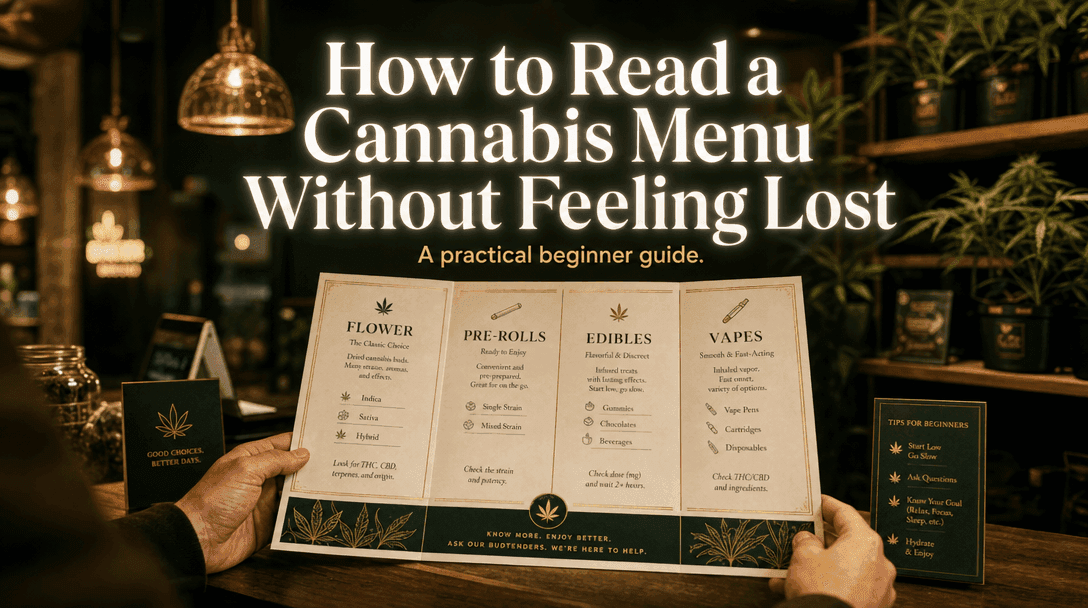
Most dispensary menus in New York are simpler than they look: pick a format first (flower, pre-roll, edible, vape, or tincture), then check the potency numbers, then read the strain name and description. That three-pass scan is the fastest way for a new shopper to learn how to read a dispensary menu without getting buried in strain names.
How Does a Cannabis Dispensary Menu Actually Work?
A typical dispensary menu lays product categories — Flower, Pre-Rolls, Edibles, Vaporizers, and Tinctures — on the left side or across the top. Within each category, the menu lists individual items as cards or rows, with filters for weight, price, brand, and sometimes effect (indica, sativa, hybrid).
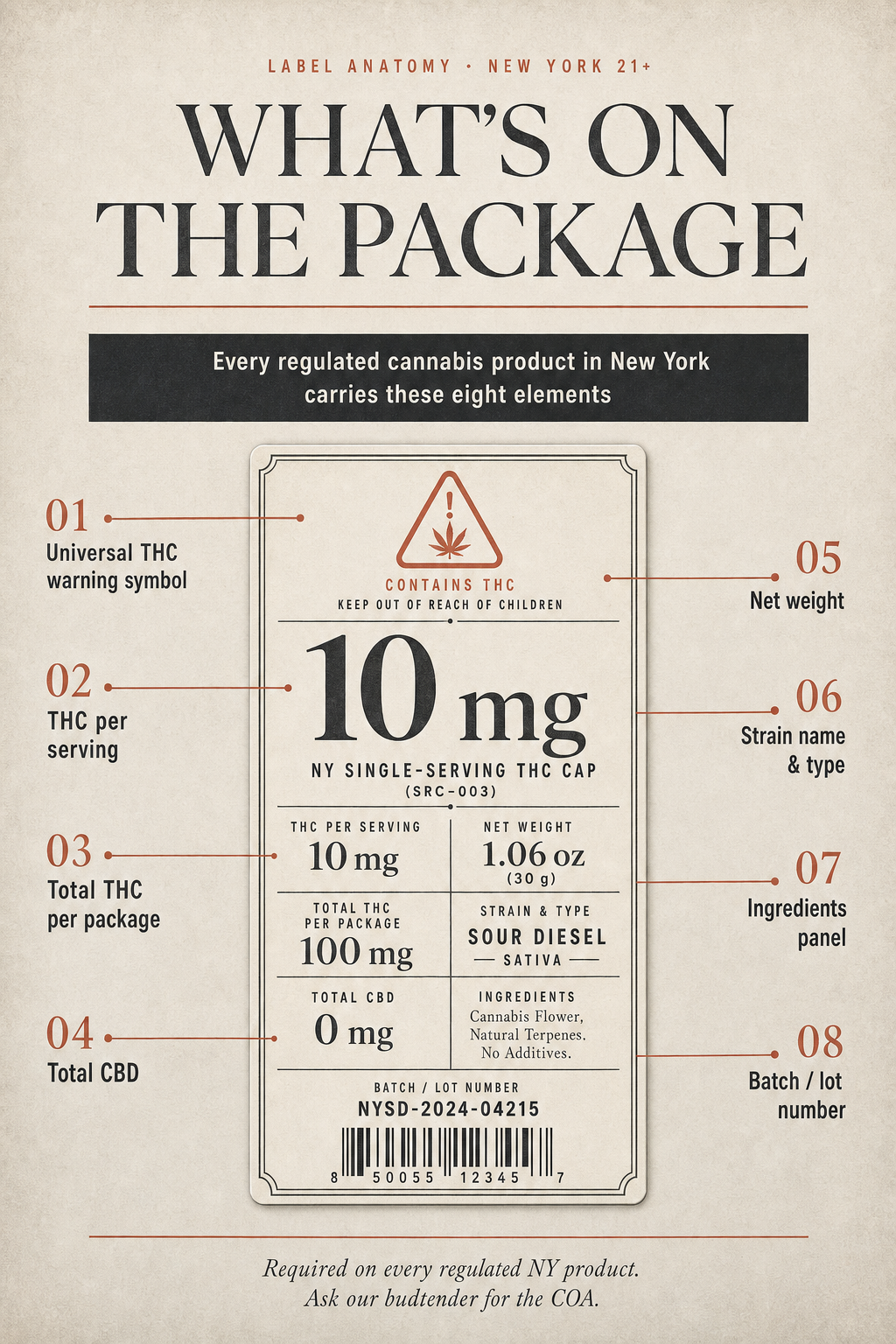
Each card typically shows the product name, the price, the format weight or count, and a short set of numbers: THC and CBD percentages for flower, milligrams per serving for edibles, and a one-line description. The anatomy is governed by Part 128 labeling rules from the New York Office of Cannabis Management, which require every adult-use product to carry standardized information about potency, ingredients, and warnings [3].
That means a single Treehouse menu card and a single California menu card carry the same core data fields — the differences show up in how each retailer chooses to display them. The narrower the menu's filter set, the more the retailer is making a recommendation; the wider the filter set, the more the menu is leaving the call to the shopper.
For a first-timer, the easiest way in is to ignore the strain name and the description on the first pass and only look at format. Once format is decided, the second pass narrows by potency, and the third pass reads strain and description. That sequence takes about thirty seconds on most menus and prevents the most common mistake — picking the strain with the flashiest name instead of the one whose numbers match what the shopper actually wants.
The three-pass scan order for a new shopper:
- Pass 1 — Format: pick flower, pre-roll, edible, vape, or tincture first.
- Pass 2 — Potency: read THC and CBD percentages or milligrams per serving.
- Pass 3 — Strain and description: only now read the strain name and the budtender notes.
For shoppers browsing the live menu, the Flower category is usually the cleanest place to start comparing products side by side, since every item on that page carries the same set of numbers in the same format. Once a format feels familiar, the same scan order applies to pre-rolls, edibles, vaporizers, and tinctures without translation. The Treehouse Cannabis team also publishes a primer, A Guide to Terpenes and Their Effects, that pairs naturally with this menu-reading approach and explains why two flower products with the same THC percentage can feel different.
What Do THC and CBD Percentages on a Menu Really Mean?
The two-number system on a dispensary menu can confuse even returning shoppers because formats do not use the same units. Flower and concentrates use percentages (how much of the product's weight is THC), while edibles, tinctures, and capsules use milligrams per serving.
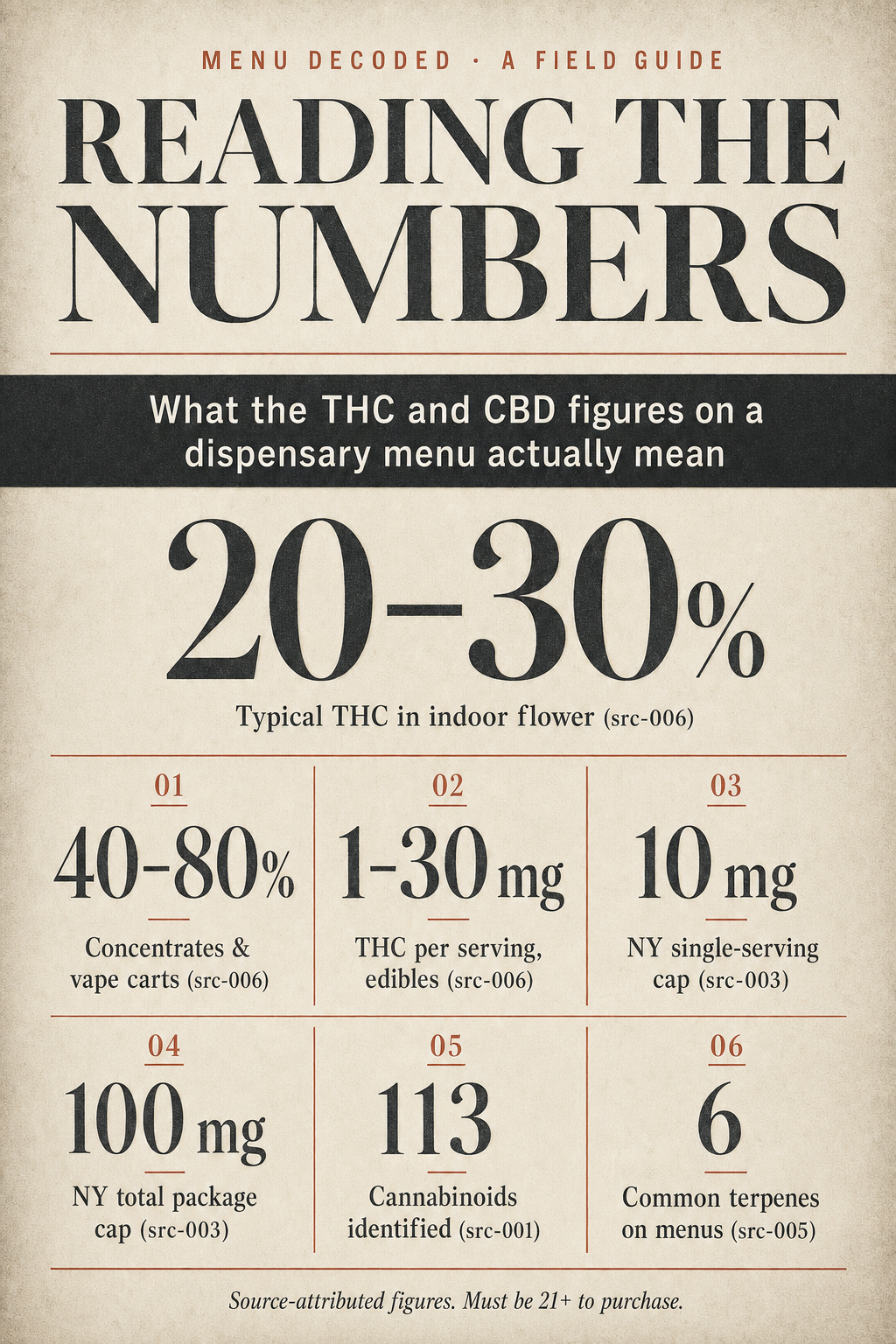
Health Canada's cannabis product label guide draws the line clearly: percentage measures concentration in the plant material, milligrams measure the dose you actually consume [1]. For flower, the typical THC range on a regulated U.S. menu runs from a low-single-digit percentage in CBD-dominant strains to 20–30% in well-grown indoor flower [6].
Concentrates and vape cartridges push the same number much higher — usually 40–80% THC — because the active compounds have been separated from the plant material. The percentage does not mean the dose is bigger; it means the same weight carries far more THC.
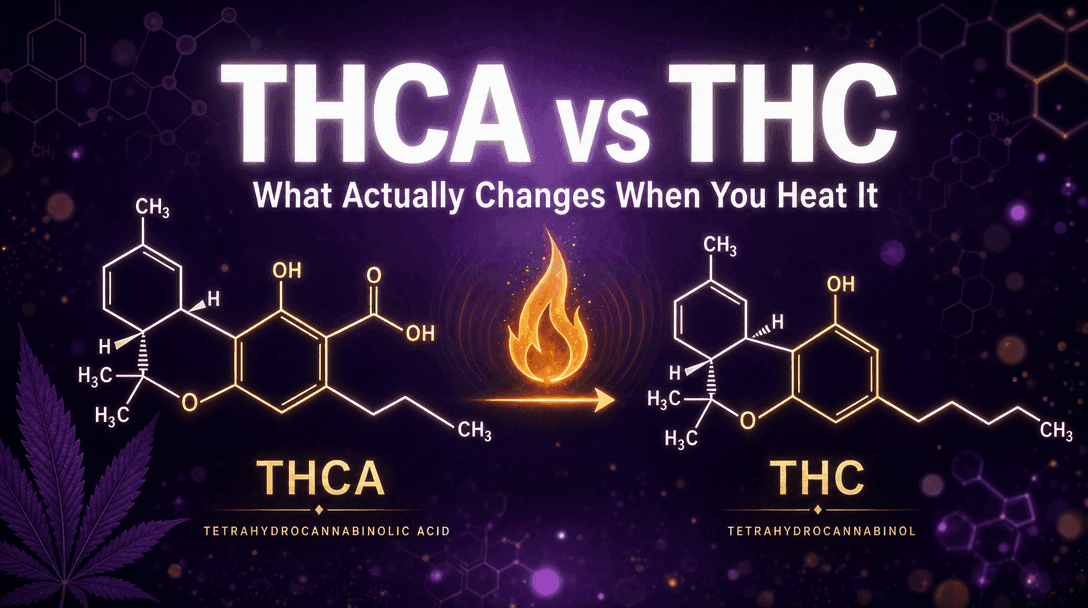
The label often says THCA instead of THC. THCA is the acidic precursor that converts to active THC only when heated. Total THC is the more useful number because it adds already-active THC to the THCA that will convert when the flower is smoked or vaped. CBD, by contrast, is non-intoxicating on its own and acts on the body's endocannabinoid system differently than THC [2]. A product with a high THC:CBD ratio will feel markedly more psychoactive than one with balanced THC and CBD, even at the same THC percentage.
A quick reference for the potency ranges a shopper is most likely to see on a New York menu:
- Flower: 0–30% THC, with most indoor strains in the 18–28% band
- Pre-rolls: same percentage as the flower they contain, plus the convenience of ready-to-use
- Concentrates and vape cartridges: 40–80%+ THC, dose goes a long way
- Edibles: 1–30 mg THC per serving, capped at 10 mg per serving in NY
- Tinctures: typically under 5% THC, dosed by dropper in milligrams
| Format | Number on the menu | What it measures | Typical NY range |
|---|---|---|---|
| Flower | THC % | Share of weight that is active THC once heated | 0–30% THC |
| Pre-rolls | THC % | Same as the flower inside | 0–30% THC |
| Concentrates / vape carts | THC % | Concentration after extraction | 40–80%+ THC |
| Edibles | mg per serving | Dose in each edible portion | 1–30 mg, NY cap 10 mg/serving |
| Tinctures | mg per dropper | Dose per calibrated dropper | Typically under 5% THC |
The CDC's public-health overview on cannabis and cannabinoids is the right reminder on why potency matters: products with higher THC percentages produce stronger and longer-lasting effects than less potent ones, so the menu's numbers directly predict what the experience will feel like [8]. For a deeper look at how those cannabinoid and terpene numbers interact on the menu, the Treehouse guide on Understanding Terpenes in Cannabis walks through how the various plant compounds shape the experience.
How Should You Read Edible Dosing on a Dispensary Menu?
For edibles and tinctures, the most important number is milligrams per serving, not the total milligrams in the package. A 100 mg chocolate bar split into ten 10 mg squares delivers ten controlled doses; the same total milligrams in a single serving delivers the whole load at once. New York labels under Part 128 cap a single serving at 10 mg THC and a single package at 100 mg, so the per-serving number on the menu is the dose a shopper will actually feel [3].
The practical rule for first-time edible shoppers is straightforward: start at 2.5–5 mg, wait at least two hours before considering more, and treat the per-serving number on the menu as a hard ceiling for any single sitting. Typical regulated edibles run from 1–30 mg per serving, with most recreational products in the 5–10 mg band [6].
The reason for the slow ramp is not caution theater; THC absorbed through the digestive system is processed by the liver into a more potent metabolite, and the effect lasts longer than inhaled formats. A useful habit when reading the edible section of a menu is to scan for products that show both the per-serving number and the per-package number side by side.
Regulated New York products must do this, but pre-roll, vape, and flower sections measure concentration differently. Knowing how each format's number system works before walking in keeps the comparison apples-to-apples. A closer look at how those numbers land on the actual package is in the Treehouse guide on How THC and CBD Work, which pairs the menu-reading primer with the underlying pharmacology.
A short dosing checklist for first-time edible shoppers:
- Read milligrams per serving first; ignore the total package number.
- Start at 2.5–5 mg and wait at least two hours before any more.
- Treat the per-serving number on the menu as a hard ceiling.
- Look for products that show per-serving and per-package numbers side by side.
Do Indica, Sativa, and Hybrid Labels Actually Tell You Anything?
The indica, sativa, and hybrid shorthand on a dispensary menu is one of the most-asked-about and least-precise labels in cannabis. The conventional associations are simple: indica for relaxing, body-heavy effects, sativa for energizing and cerebral effects, and hybrid for a blend of the two. Menus keep using the labels because customers ask for them, and a budtender can usually translate a strain name into an expected effect profile [4].
The modern shift is toward reading the cannabinoid percentages and the terpene profile as the more accurate signals. Two strains with the same name can carry different chemistry from one harvest to the next, and two strains with different names can produce similar effects if their THC, CBD, and dominant terpene numbers line up.
The shorthand is useful starting language — especially when a shopper has no prior experience with the strain — but it should be treated as one signal among several rather than a guarantee. For shoppers who want more reliable guidance, ask the budtender what the chemovar (chemical variety) actually looks like rather than what the category label says. The budtender can usually pull up the lab-tested terpene and cannabinoid percentages and translate them into expected effect.
How to treat each label on the menu:
- Indica: traditional shorthand for relaxing, body-heavy effects; treat as one signal, not a guarantee.
- Sativa: traditional shorthand for energizing, cerebral effects; cross-check with terpene profile.
- Hybrid: shorthand for a blend of the two; useful as a starting point when strain is unfamiliar.
- Chemovar / lab profile: the cannabinoid and terpene numbers are the more accurate signal than the category alone.
What Are Terpenes and Why Are They Listed on a Menu?
Terpenes are the aromatic compounds behind a strain's flavor and scent — citrus, pine, pepper, berry, diesel — and they are increasingly listed on dispensary menus as a third layer of information alongside THC and CBD. The reason menus bother is the Russo entourage hypothesis: cannabinoids and terpenes may act synergistically, which is why two strains with the same THC percentage can produce noticeably different experiences [7].
The six terpenes most commonly listed on a dispensary menu are myrcene, limonene, caryophyllene, pinene, linalool, and humulene [5]:
- Myrcene: earthy, musky, herbal — associated with relaxing effects
- Limonene: bright citrus — often linked with a mood lift
- Caryophyllene: black pepper, clove — associated with a calming body sensation
- Pinene: fresh pine — often paired with alertness
- Linalool: floral, lavender — typically calming
- Humulene: hoppy, woody — sometimes paired with appetite moderation
Reading terpenes on a menu means looking for the dominant two or three in the test results. A strain heavy in myrcene and linalool is likely to feel more relaxing regardless of whether the label says "indica" or "sativa." A strain heavy in limonene and pinene is more likely to read as uplifting.
The terpenes are not the whole story, but they are a sharper signal than the old shorthand. Treehouse's primer on the topic, A Guide to Terpenes and Their Effects, pairs the menu-reading primer with a closer look at each terpene.
How to read a terpene line on a menu:
- Look for the dominant two or three terpenes in the test results, not the full list.
- Myrcene + linalool: usually reads as relaxing, regardless of indica or sativa label.
- Limonene + pinene: usually reads as uplifting and alert.
- Caryophyllene + humulene: usually reads as calming and grounded.
- Cross-check terpenes with THC and CBD percentages for the most accurate read.
What Questions Should You Ask a Budtender at the Counter?
Even after the menu is decoded, the in-person step a screen cannot replace is the budtender conversation. A first visit should bring a short script of questions rather than a vague "what should I get." The standard first-visit pattern is to bring a government photo ID, decide which format is in play before the counter, and tell the budtender how much cannabis experience there is and what effect is being aimed for [9].
A useful set of budtender questions to keep in pocket:
- Which of these two products is stronger, and how do the onset and duration differ?
- What is the lowest-dose edible option on the menu today?
- Which flower strain on this list was harvested most recently?
- Do you have a Certificate of Analysis for the product I am considering?
- If THC and a smaller dose of CBD sound appealing, can you point me to a balanced option?
Rolling NJ's shopper-friendly guide is a useful companion to this primer — it walks through a similar script for both first-time and returning visitors [10]. A budtender should be treated as the translation layer between the menu's numbers and the actual evening the shopper has in mind.
For an edible option worth a follow-up question, the Love Is All You Need | 10 Pack | Gummies | 100mg Thc | 400mg CBD product page lists each piece of the dosing picture a shopper is likely to ask about.
Walking into a dispensary is easier when the menu is treated as a data display rather than a wall of strain names. Format first, potency second, terpenes and strain name third, and the menu becomes a quick read instead of a puzzle. The Treehouse team is happy to walk through product labels, potency, and terpenes in person at the Rockland County dispensary, or to help customers browse flower, edibles, pre-rolls, vape cartridges, and tinctures online at their own pace.
FAQ
What should I look at first on a cannabis dispensary menu? Start with the product format — flower, pre-roll, edible, tincture, or vape — because dosing rules and effect onset differ sharply between them. Then check the THC and CBD percentages for flower or milligrams per serving for edibles before reading strain names or descriptions. Format first, potency second, strain name last is the simplest scan order for a new shopper.
What does THC percentage actually mean on a menu? For flower, THC percentage is the share of the product's weight that is THC — so a 20% eighth equals roughly 20% of the gram weight as active THC once heated. For edibles and tinctures, the label uses milligrams per serving instead of percentage, because the dose is small and exact. Percent and milligrams are not interchangeable; always use the unit that matches the format you are buying.
Why do flower menus show THCA instead of THC? Raw cannabis flower contains THCA, the acidic precursor that converts to active THC only when heated. Menus often list Total THC, which adds the already-active THC to the THCA that will convert when smoked or vaped — making it the more useful number for shoppers. If you only see THCA, expect roughly 87% of that number to become THC once you light up.
How should I read edible dosing on a menu? Ignore the total milligrams in the package and look at milligrams per serving. New York labels cap a single serving at 10 mg THC and a single package at 100 mg, so the menu's per-serving number is the dose you will actually feel. A 100 mg chocolate bar split into ten 10 mg squares is a different product than a 100 mg chocolate bar meant as one serving.
What are terpenes and why are they on the menu? Terpenes are aromatic compounds that give each strain its smell and flavor — citrus, pine, pepper, berry — and may also shape the subjective experience of a product. The six most common on a dispensary menu are myrcene, limonene, caryophyllene, pinene, linalool, and humulene. Two strains with identical THC percentages can feel different because of their terpene mix, which is why menus bother listing them.
What is a Certificate of Analysis and should I ask for one? A Certificate of Analysis, or COA, is the third-party lab report that confirms a product's potency and screens for contaminants like pesticides, heavy metals, and mold. New York dispensaries can produce a COA on request, and it is the most reliable way to verify what the menu says is actually in the package. If a product matters to you for medical or potency reasons, asking for the COA is a reasonable habit.
Sources
- Health Canada — Defines Total THC and Total CBD on a cannabis label, explains mg/g vs. mg-per-se
- Health Canada — Confirms CBD is non-intoxicating on its own and explains how CBD and THC act dif
- New York State Office of Cannabis Management — Establishes New York's required labeling elements for adult-use cannabis product
- Leafly — Explains the conventional indica/sativa/hybrid shorthand used on most dispensary
- ReLeaf Shop — Profiles the six terpenes most often listed on a dispensary menu — caryophyllene
- Philadelphia Inquirer — Walks through the typical potency ranges shoppers actually see: flower 0–30% THC
- British Journal of Pharmacology (PMC archive) — Foundational peer-reviewed paper proposing that cannabinoids and terpenes act sy
- U.S. Centers for Disease Control and Prevention — Public-health overview of THC and CBD, including how cannabis is consumed and wh
- Remedy Room — Distills the practical first-visit experience — what to bring, what to expect at
- RollingNJ — Provides a short, shopper-friendly script of the questions to ask a budtender —
About Treehouse Cannabis
Treehouse Cannabis is an adult-use dispensary serving Rockland County, Orange County, and Westchester County from our storefront in Rockland County, NY. We carry flower, pre-rolls, edibles, vaporizers, and tinctures from licensed New York growers and brands, and our team is happy to walk customers through product labels, potency, and terpene profiles either in person or through our online menu. Browse the live menu at treehousecannabis.com or stop in to talk through what the numbers on the menu actually mean for the experience you want.
Cannabis is for adults 21 and older. Keep all cannabis products out of reach of children and pets. Do not drive or operate machinery while impaired. If you are pregnant, nursing, or taking medication, talk to a clinician before using cannabis. This article is intended for educational purposes only and is not a substitute for professional medical advice.
Shop our products

Shop All

Flower

Pre-rolls
Vaporizers

Edibles
Drinks

Concentrates
Tinctures

Topicals

CBD

Pet CBD

Accessories