
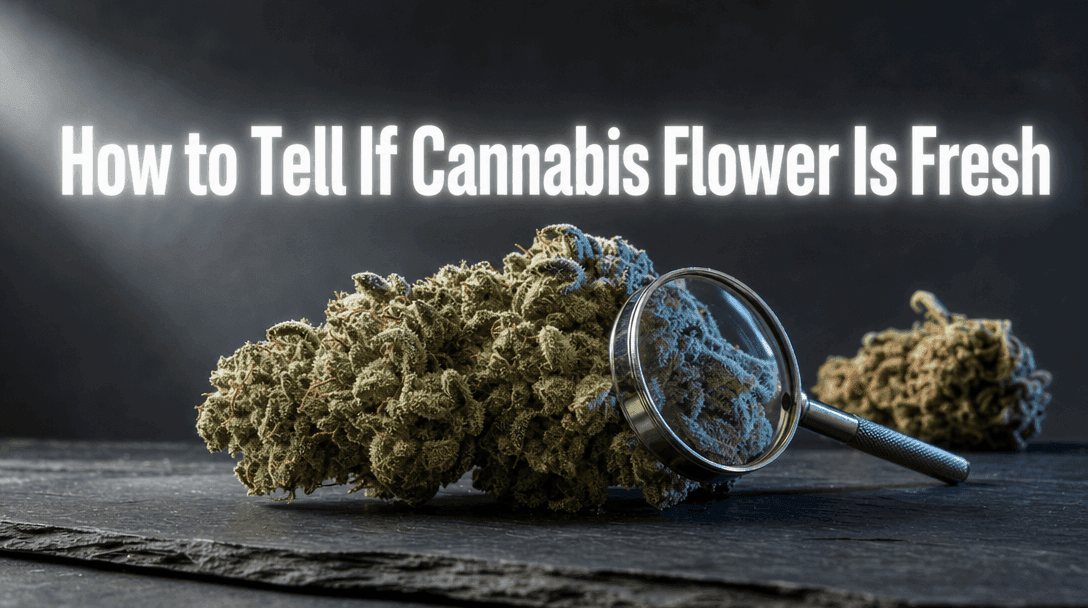
How to Tell If Cannabis Flower Is Fresh
How to Tell If Cannabis Flower Is Fresh
A practical inspection guide using sight, smell, and touch - plus what the storage science says about how long flower actually stays at peak quality.
Fresh cannabis flower is something you can verify in seconds, once you know what to look for. The signals are concrete: trichomes that still shine, pistils in their mature color, an aroma that actually shows up when you crack the jar, and a stem that snaps instead of bending. Underneath those sensory cues sits a real body of post-harvest research on moisture, humidity, water activity, terpene retention, and THC degradation - and that research gives every home inspection a reliable backbone. This guide walks through the visual, olfactory, and tactile checks first, then ties each one to the storage science that explains why freshness fades and how to slow it down. For a deeper look at how long properly stored flower actually holds up, our How Long Does Weed Stay Fresh? piece runs the same timeline in longer form.
What does fresh cannabis flower look like?
The fastest freshness check is visual, and four signals carry most of the weight. Intact trichomes give the surface a frosty, sugary look - if the bud looks polished smooth or shiny-greasy, the trichome heads have likely rubbed off in handling. Saturated, cultivar-appropriate color matters more than any specific hue: a healthy purple strain should look deep and rich rather than washed out, while a healthy green strain should look vivid, not khaki. Pistils should sit in the orange-to-red-to-amber range; pale green or white pistils usually mean an early-harvested batch that never finished curing. Structure should match the grow style - dense and tight for indoor, looser and longer for sun-grown - but never airy, leafy, or stem-heavy.
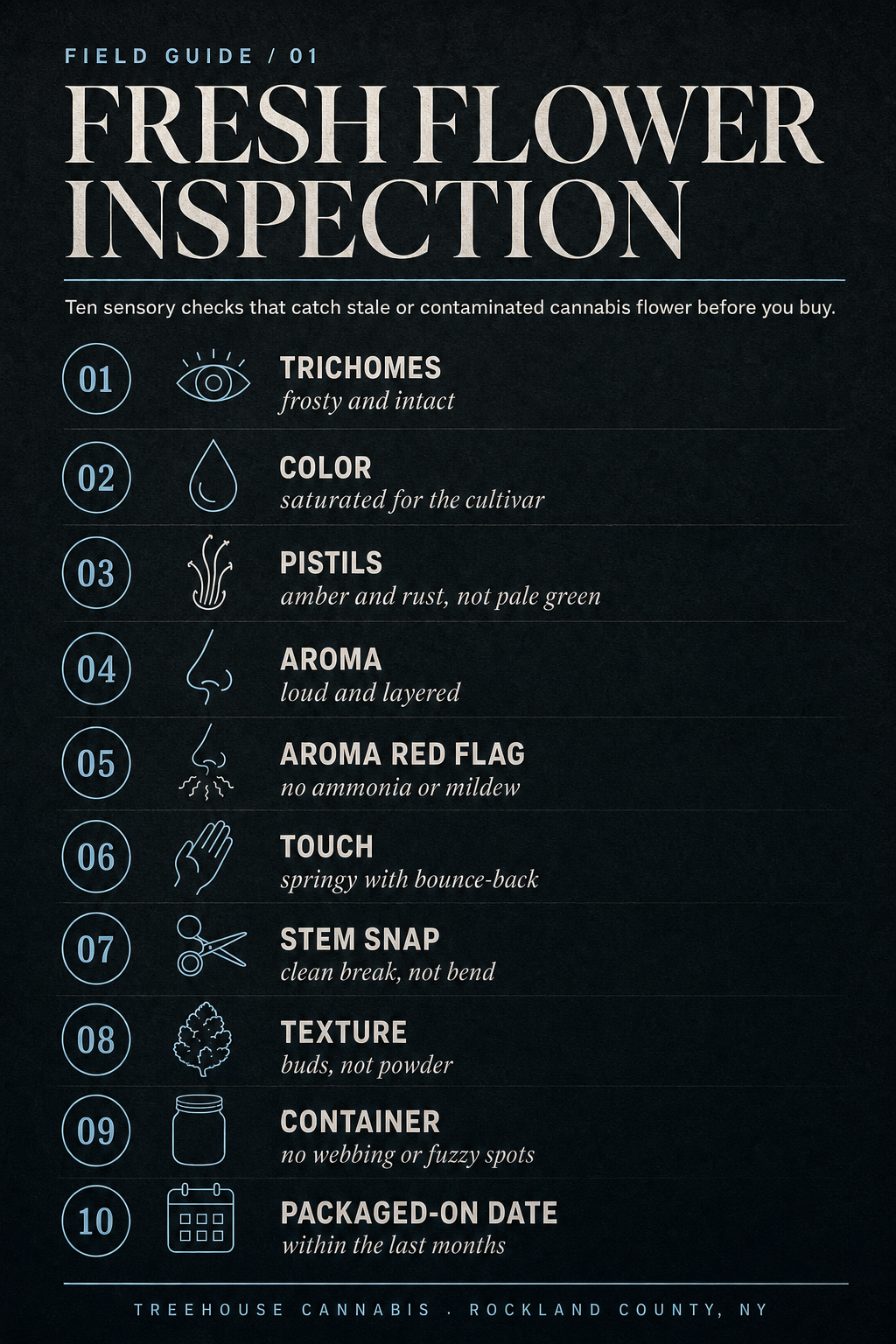
Visual freshness checklist buyers can run in under a minute:
- Trichomes: frosty, sugary, and intact - not polished smooth or rubbed off
- Color: saturated for the cultivar - not brown, khaki, or washed out
- Pistils: orange, red, or brown - not pale green or all-white
- Structure: dense for indoor, loose for sun-grown - never airy or stem-heavy
A few visual cues cross the line from "stale" to "do not consume." White fuzzy patches, gray fuzz, or fine webbing inside the container are signs of mold, most commonly Aspergillus or Botrytis, and any contaminated batch should be discarded rather than used [8]. Brown or black discoloration that spreads rather than fades, especially paired with dampness, is another reject signal. Brown or rust-colored spotting on the leaves (not the pistils) can point to pest damage or nutrient burn that the curing process did not clean up - the flower may still be usable, but it was not grown or handled with the care a customer should expect.
How should fresh cannabis flower smell?
Aroma is the most direct freshness signal because terpenes - the volatile compounds behind citrus, pine, gas, fruit, candy, earth, and floral notes - evaporate faster than cannabinoids do. Ross and ElSohly showed in 1996 that air-dried cannabis lost roughly 31.0% of its terpene content after one week, 44.8% after one month, and 55.2% after three months compared to freshly harvested flower [3]. By the time a customer opens a jar that was packaged months ago in poor conditions, the loud layered aroma may have already collapsed into a faint or flat hay-like smell. That hay note is the classic stale-flower signature: terpenes are gone, leaving behind the generic plant background.
Loud layered aromas a fresh jar should announce on opening:
- Citrus-and-pine: lemon, lime, pine needle, kushy sharpness
- Gas-and-earth: diesel, fuel, skunk, soil, damp wood
- Fruit-and-candy: berry, tropical, grape, sweet pastry
- Floral-and-spice: lavender, rose, pepper, clove, hash
Negative smells, ranked by severity:
- Faint or flat: terpenes are gone, but the flower is usually still safe - past its prime
- Hay, grass, or paper: classic stale-flower signature; terpenes evaporated, generic plant background only
- Ammonia, musty, mildew, or sour-laundry: microbial contamination - discard outright, do not air out and use
For adult customers who are new to reading cannabis aroma and want a broader grounding in how different products and formats present themselves, our guide on How Seniors Are Using Cannabis in New York walks through the same sensory literacy in a more general context.
What does fresh cannabis flower feel like when you touch it?
Touch is where moisture content and water activity become tangible. Properly cured flower carries roughly 10-12% moisture by weight - the window at which buds burn cleanly, smoke smoothly, and still hold enough water to keep trichomes from shattering [5]. Below that window, the bud feels powdery or dusty and the stem snaps before it bends. Above it, the bud feels damp, spongy, or limp and the stem bends without breaking. Both extremes are freshness failures, just in opposite directions.
Three tactile checks, run in sequence:
- Squeeze test: gently press a bud between thumb and forefinger. Fresh flower gives a little, then bounces back - it should feel springy, not stiff. Stiff or crumbly buds are over-dry; buds that stay compressed or feel spongy are over-moist and carry mold risk [8].
- Stem snap: a small inner stem should break cleanly with an audible snap. It should not bend like a green twig, and it should not powder into dust.
- Shake test: a few buds in a jar should move loosely without shedding dust or trichome crystals into the bottom of the container. A dusty bottom means trichomes have rubbed off - a sign of handling damage or age.
For customers building out their first kit, the same tactile literacy that helps them judge a jar on the shelf carries over to picking the right format and the right accessories. Our walkthrough on How to Choose Your First Cannabis Product: A Complete Guide for Beginners applies these sensory checks to the broader buying decision.
How long does cannabis flower stay fresh before it goes stale?
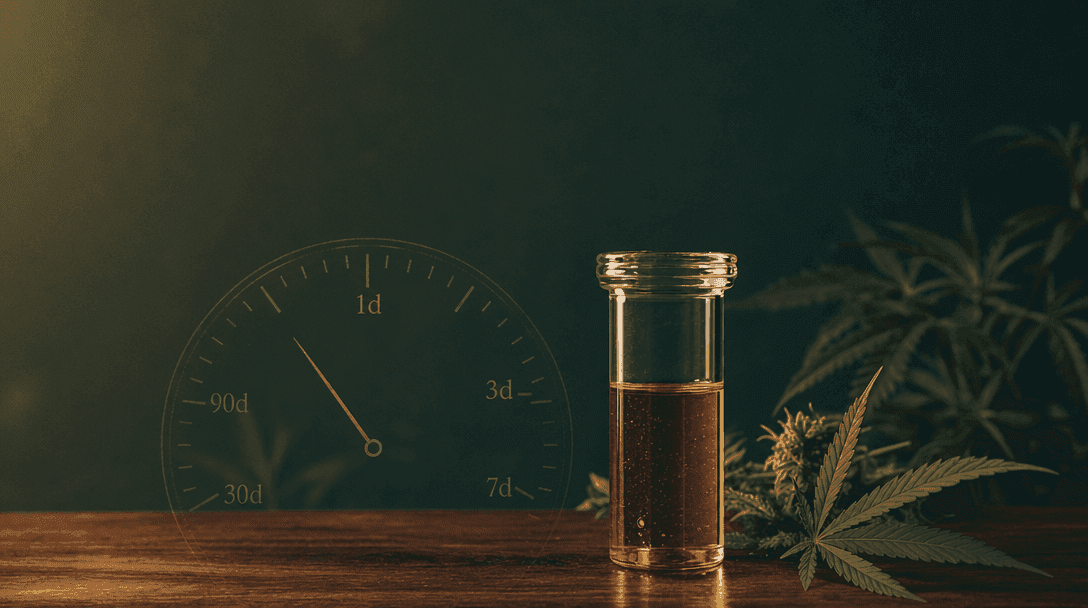
Even properly stored flower loses potency and aroma on a known curve. The United Nations Office on Drugs and Crime tracked room-temperature dark storage and reported roughly 16% THC loss in year one, 26% by year two, 34% by year three, and 41% by year four - a steady degradation that compounds rather than levels off [7]. The Fairbairn 1976 study, often cited in post-harvest reviews, found that light exposure was the single largest factor in cannabinoid loss, more destructive than heat or oxygen alone [4]. Direct sunlight through clear glass can strip 50% or more of the original THC within a few months.
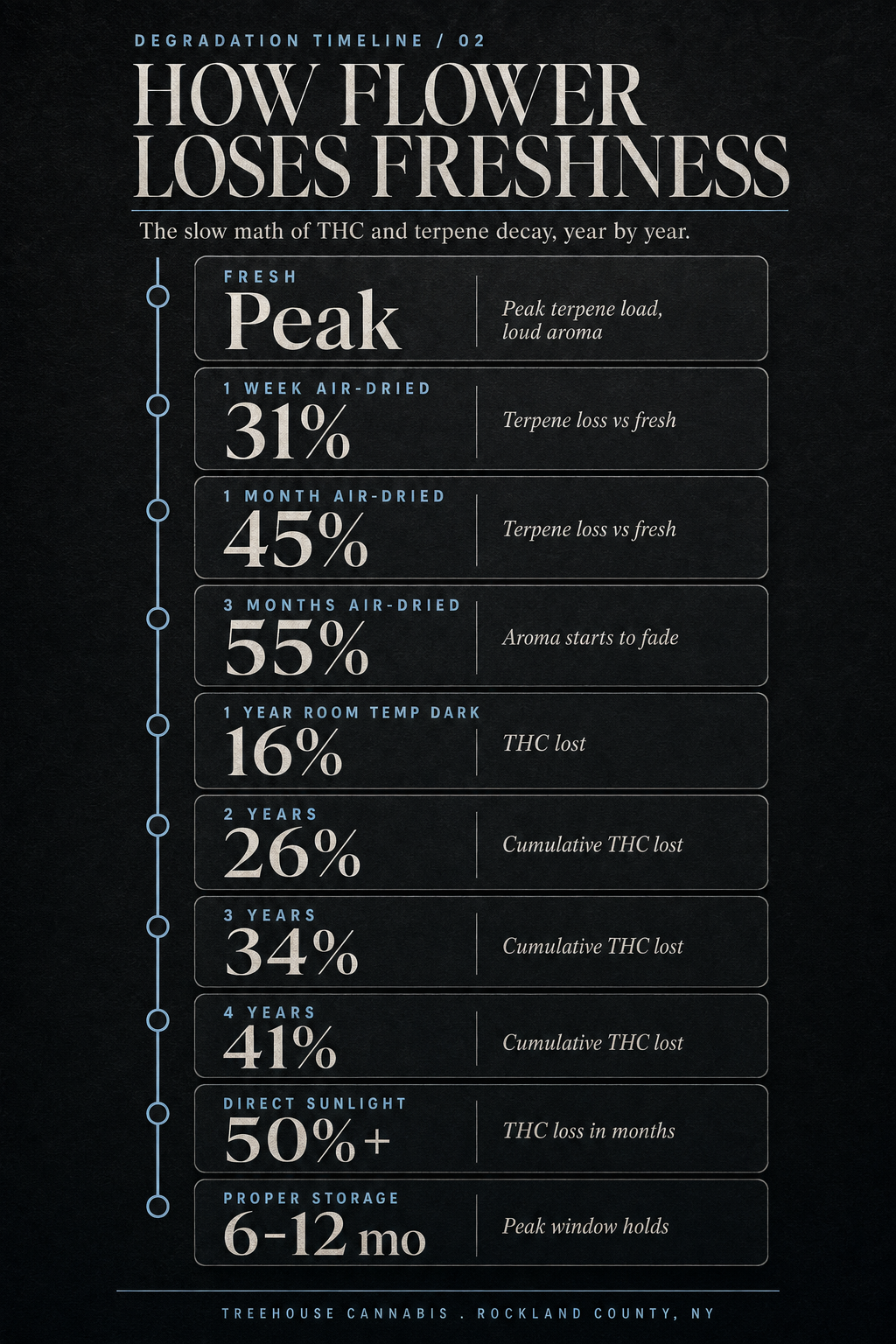
Degradation factors, ranked by destructive impact:
- Light - direct sun or strong room light through clear glass; up to 50%+ THC loss in months [4]
- Heat - every 10 degrees Celsius roughly doubles the reaction rate
- Oxygen - drives THC-to-CBN conversion and terpene oxidation
- Humidity swings - both dryness and dampness damage trichomes and invite mold
- Time - compounds every other factor; even good storage loses ground after a year
Proper storage versus poor storage, side by side:
| Condition | THC retained at 12 months | Aroma | Texture |
|---|---|---|---|
| Opaque glass jar, 55-62% RH, cool dark cabinet | ~84% (year-one UNODC rate) | Loud and layered | Springy, stem snaps clean |
| Plastic bag, room light, fluctuating humidity | ~30-50% (light + heat + O2 compounded) | Faint, hay-like, or sour | Dusty or damp, mold risk |
The practical takeaway: properly sealed flower in an opaque jar at the right humidity holds peak freshness for about six to twelve months. Under poor storage - plastic bags, room light, heat, fluctuating humidity - the same quality loss can happen in weeks rather than months. The packaged-on date on the jar is one of the more useful signals a customer can read; a jar packaged within the last few months, kept sealed, and stored in a humidity-controlled environment will almost always out-perform a jar packaged eight to ten months ago, even at the same price point. To see what properly stored flower looks like on the shelf, browse our current Flower selection, including options like NY Diesel | Flower | 28g that are packaged and stored with this timeline in mind.
How should you store cannabis flower to keep it fresh?
The research consensus narrows to a short, specific routine. Airtight, opaque glass jar; two-way humidity pack set to 55-62% relative humidity; storage temperature around 18-20 degrees Celsius; and a dark cabinet away from direct light and heat sources [4]. The 58-62% RH jar standard exists because it sits in the band where trichomes stay intact and terpenes stop evaporating rapidly, while Aspergillus and Botrytis still cannot grow [6]. The 0.55-0.65 water activity window adopted by California and Michigan regulators maps onto the same band - it explains why two batches at the same moisture percentage can carry very different mold risk [8].
Vacuum storage at around 4 degrees Celsius preserves significantly more monoterpenes (20-82% higher retention than reference air storage) and limits THCA loss to roughly 4% over four months, per a 2024 peer-reviewed preservation study [1]. Separate work on post-harvest storage temperatures confirms that terpenoid concentrations decrease across every condition tested, with temperatures below minus 20 degrees Celsius and pre-grinding both worsening losses [2]. Home refrigerators and freezers are not ideal - they introduce humidity cycling and freeze-thaw damage - but a cool, dark cabinet at stable room temperature gets close to the published curves.
Home storage routine, step by step:
- Jar: airtight, opaque glass - mason jars work, UV-blocking glass is better
- Humidity pack: two-way 55-62% RH pack (Boveda 62 or Integra Boost 62)
- Location: cool dark cabinet, 18-20 degrees Celsius, away from appliances that cycle heat
- Burping: open the jar only as often as needed; every opening is a humidity exchange
- Rotation: use older jars first - first in, first out beats the calendar every time
A few practical details round out the routine. Never store flower in clear glass on a sunny shelf - light is the largest single degradation factor, and direct sun through glass can double or triple the loss curve. Avoid plastic bags for anything longer than a day or two; plastic holds static that pulls trichomes off the surface and does not block oxygen well. Open the jar only as often as needed; every opening is a humidity exchange. For customers ready to upgrade from a basic mason jar, our Storage Containers Accessories collection covers humidity-controlled options built specifically for this routine.
Frequently Asked Questions
What does fresh cannabis flower look like? Fresh flower shows rich, saturated color for its cultivar (not faded or washed out), intact trichomes giving a frosty or sugary surface, healthy pistils in orange, red, or brown tones, and a structure that is dense for indoor or loose for sun-grown but never airy or leafy. Any white fuzzy patches, gray fuzz, or unusual discoloration are signs of mold and a reason to reject the product outright.
How should fresh cannabis flower smell? Fresh flower should open with a loud, layered aroma - citrus, pine, gas, fruit, candy, earth, or floral depending on the cultivar. A flat, faint, or hay-like smell usually means terpenes have degraded from age or poor storage. Ammonia, musty, or mildew smells are hard red flags that point to microbial contamination rather than simple staleness.
What does fresh cannabis flower feel like when you touch it? Fresh flower feels slightly springy, gives a little under gentle pressure, and bounces back. A small stem should snap cleanly rather than bend or crumble, which signals moisture in the right range. Buds that crush into powder are over-dry, while buds that feel wet, spongy, or limp were likely cured or stored improperly and carry higher mold risk.
How can you tell if cannabis flower has gone bad or stale? Stale flower usually shows a faded or brownish color, no aroma or a generic hay smell, a crumbly or dusty texture, and a harsher smoke with less flavor. These signs come from terpene evaporation and gradual THC-to-CBN conversion. The flower is not toxic from age alone, but it is weaker, less flavorful, and noticeably past its prime.
Is moldy cannabis flower dangerous to smoke? Yes. Visible mold (white fuzzy spots, gray patches), a musty or ammonia smell, or webbing in the container means the flower is contaminated with microbes such as Aspergillus. Smoking or vaping moldy flower can cause real respiratory harm, especially for immunocompromised users, and any contaminated batch should be discarded rather than aired out or used.
How long does cannabis flower stay fresh? Properly stored flower in an airtight, opaque container at 55-62% relative humidity and a cool, dark temperature stays at peak freshness for about six to twelve months. Under poor storage (plastic bags, room light, heat), the same quality loss can happen in weeks. Even in good storage, terpenes begin to fade subtly after three months.
Does the packaging date matter when buying cannabis flower? Yes, the packaged-on date is one of the more useful freshness signals because it tells you how long the flower has been sealed in its final container. A jar packaged within the last few months, kept sealed, and stored in a humidity-controlled environment will almost always out-perform a jar packaged eight to ten months ago, even at the same price point.
What is the ideal humidity for storing cannabis flower at home? Industry consensus and post-harvest research point to 55-62% relative humidity as the sweet spot: high enough to keep trichomes from shattering and terpenes from evaporating, low enough to keep Aspergillus and Botrytis from growing. A two-way humidity pack inside an airtight, opaque glass jar is the simplest way to hold that range for months at a time.
Sources
- MDPI (PMC11013627) — Peer-reviewed storage study quantifying THCA and terpene loss over a four-month
- Frontiers in Plant Science (PMC7593247) — Defines optimal storage temperatures for whole inflorescences and shows that ter
- Phytochemistry Reviews / Springer (PMC7819294) — Cites the Ross and ElSohly 1996 finding that air-dried cannabis stored for one w
- Emerald Harvest (cited literature review) — Aggregates the Fairbairn 1976 finding that light exposure was the largest single
- Leafly — Establishes the 10-12% moisture content benchmark that determines whether flower
- Budtrainer — Explains why the 58-62% relative humidity jar standard exists and ties it to tri
- RethinkTHC — Synthesizes the United Nations Office on Drugs and Crime degradation rates (abou
- Crushed — Distinguishes moisture content from water activity and reports the 0.55-0.65 aw
About Treehouse Cannabis
Treehouse Cannabis is an adult-use dispensary serving Rockland, Orange, and Westchester Counties in New York. We stock hand-curated Flower, Pre-rolls, Vape Cartridges, Edibles, Concentrates, and Storage Containers Accessories from brands that store and cure their product the way the research recommends. Stop in at our Rockland County dispensary or order online for delivery across the region.
Cannabis is for adults 21 and older. Keep all cannabis products out of the reach of children and pets. The information in this article is educational and is not medical advice - consult a qualified healthcare provider for any health-related questions. Effects vary by individual; consume responsibly and do not drive or operate machinery after consuming cannabis. Treehouse Cannabis serves adult customers across Rockland, Orange, and Westchester Counties in New York.
Shop our products

Shop All

Flower

Pre-rolls
Vaporizers

Edibles
Drinks

Concentrates
Tinctures

Topicals

CBD

Pet CBD

Accessories