
The Endocannabinoid System: What Science Says About How Cannabis Works in Your Body
The Endocannabinoid System: What Science Says About How Cannabis Works in Your Body
The endocannabinoid system is one of the most important — and least discussed — biological systems in your body. This ancient network of receptors, molecules, and enzymes has been quietly regulating your mood, appetite, sleep, and immune response for roughly 500 million years. It exists in every mammal on Earth, and it's the reason cannabis produces any effect in your body at all. Understanding this system changes how you think about cannabis, wellness, and your own physiology.
What Is the Endocannabinoid System?
The endocannabinoid system (ECS) is a vast cellular communication network that spans your brain, spine, immune cells, and peripheral tissues. It wasn't discovered until the 1990s, which is why it remains so underappreciated despite its central role in human health. The system operates on a simple principle: whenever your body drifts out of balance — emotionally, metabolically, or physically — the ECS activates to bring things back to center.
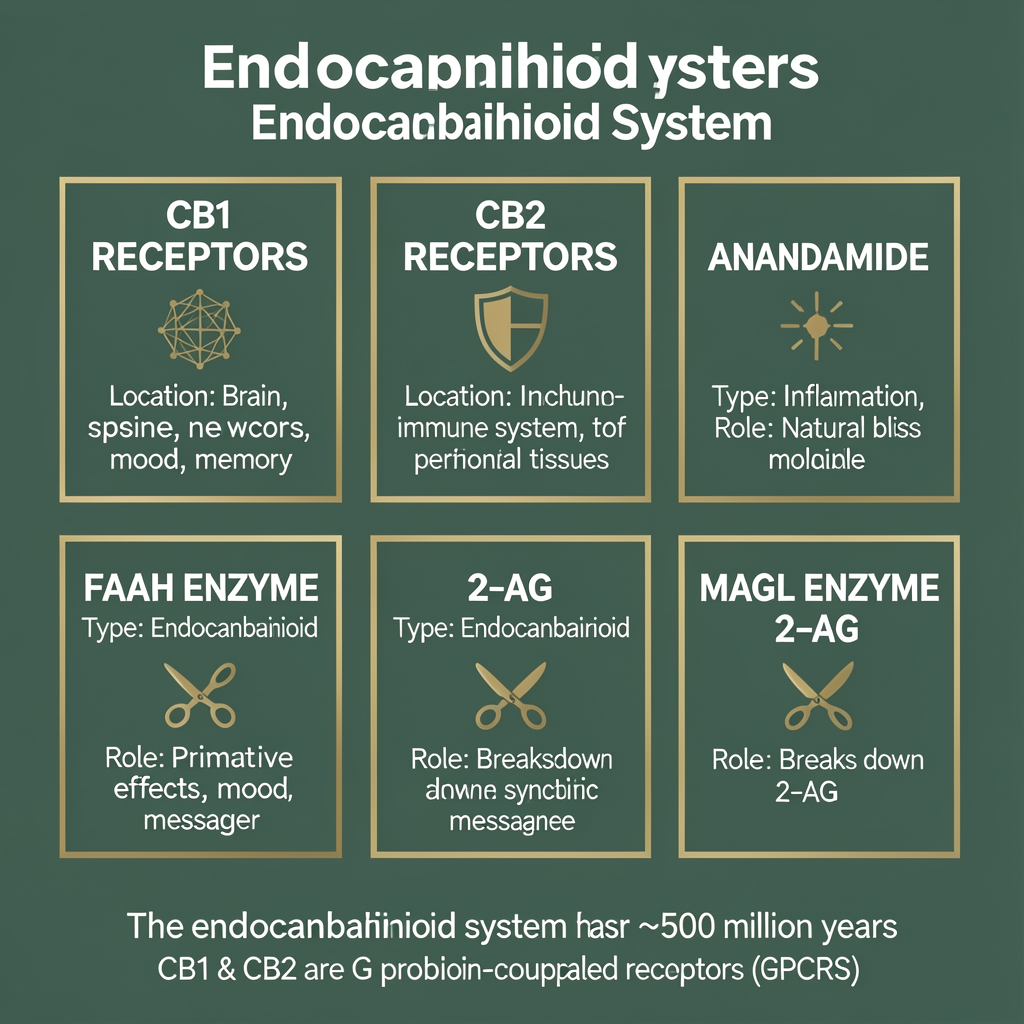
The ECS has three core components. First, there are the receptors — CB1 and CB2 — which sit on the surface of cells like tiny antennae waiting for a signal. Second, there are the endocannabinoids themselves — primarily anandamide and 2-AG — which your body produces on demand to bind to those receptors. Third, there are the enzymes that synthesize and break down these endocannabinoids once they've done their job. Together, these parts form a finely tuned feedback loop that governs nearly every aspect of your internal environment.
What makes this system remarkable from a cannabis perspective is that it was essentially named after the plant. "Endo" means "within," and endocannabinoids are the body's own cannabis-like molecules. When you consume cannabis, the plant's phytocannabinoids — THC and CBD among them — interact with the same receptors that your natural endocannabinoids were designed to activate. At Treehouse Cannabis, we've guided thousands of Rockland County, Orange County, and Westchester County customers as they explore this relationship firsthand.
CB1 and CB2 Receptors: The Lock and Key
Think of CB1 and CB2 receptors as the two distinct locks on the same door — each opened by slightly different keys. Both are classified as G protein-coupled receptors (GPCRs), a large family of cellular gateways involved in everything from vision to smell to mood regulation.
CB1 receptors are concentrated heavily in the brain and central nervous system — particularly in the hippocampus (memory), cerebellum (motor control), and prefrontal cortex (decision-making). This density in brain tissue is why cannabis affects perception, mood, and cognition so directly. CB2 receptors, on the other hand, are primarily found in immune cells and peripheral tissues throughout the body. They govern inflammation, immune surveillance, and gut function.
The distribution of these receptors explains a great deal about how different cannabis products affect you. A THC-rich product that targets CB1 receptors will produce psychoactive effects centered in the nervous system. A product rich in compounds that interact with CB2 may influence inflammation and immune response more predominantly. Researchers first identified these receptors in the early 1990s, and their discovery fundamentally changed how we understand both human biology and the cannabis plant.
How THC Hijacks Your Cell Communication
When THC enters your system, it doesn't introduce some foreign chemical process — it impersonates one of your body's own signaling molecules. THC binds directly to the orthosteric sites of CB1 receptors in your brain, essentially slotting into the same receptor that anandamide — your natural "bliss molecule" — was designed to occupy.
This mimicry is shockingly effective. Anandamide and 2-AG, your body's native endocannabinoids, are produced on demand and then rapidly broken down by enzymes. THC behaves differently: it lingers at the receptor site for an unusually long time, and its molecular structure triggers a more sustained activation than your body would normally produce on its own. The result is a more intense and longer-lasting signal — which translates into the familiar sensations of euphoria, altered time perception, and deep relaxation.
This mechanism is what researchers mean when they say cannabis "hijacks" the endocannabinoid system. It's not an invasion — it's an interruption of an existing conversation, one that your body is already wired to have. For customers at our New York dispensary locations, understanding this process helps frame cannabis not as something foreign, but as a supplement to a system you already possess and already rely on every day.
ECS and Homeostasis: Your Body's Balancing Act
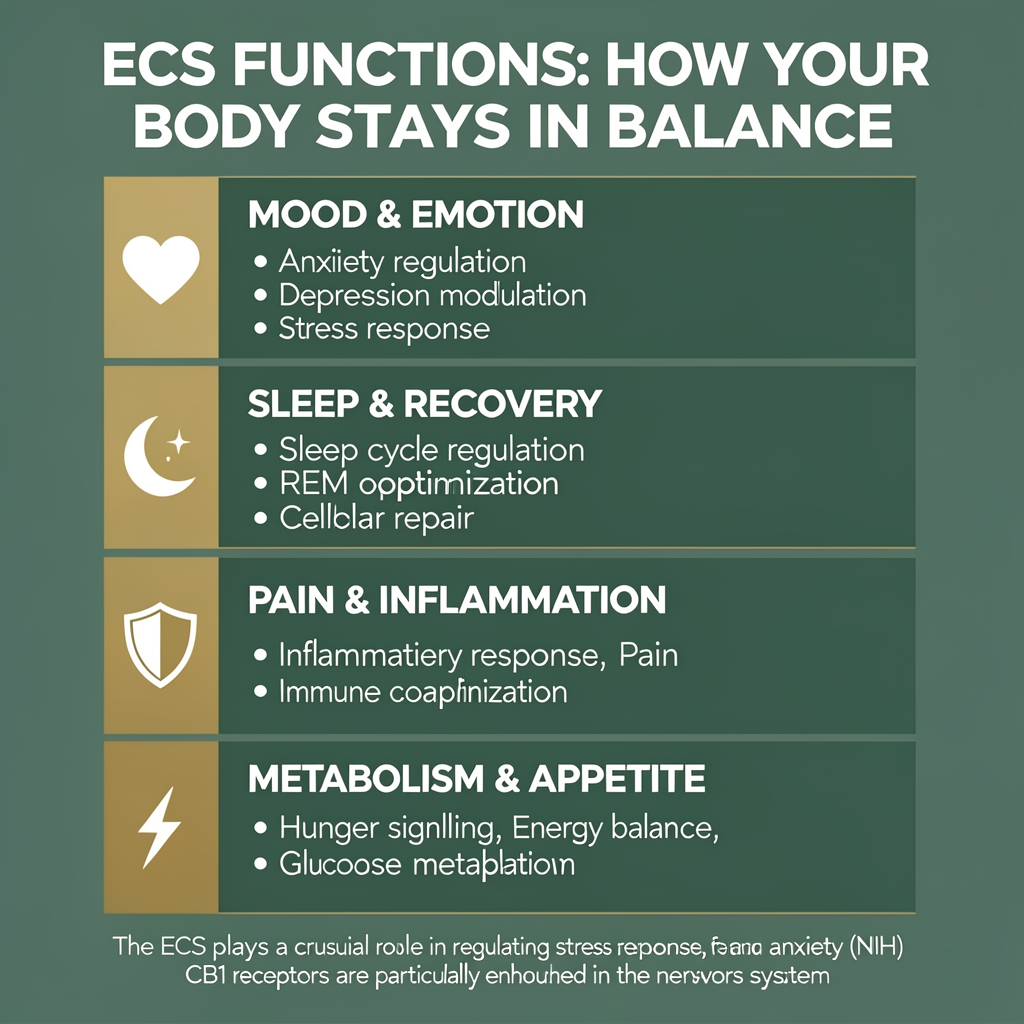
Homeostasis is the body's word for equilibrium — the state of internal stability despite a constantly changing external environment. Your ECS is arguably the master regulator of this balance. It modulates the hypothalamic-pituitary-adrenal (HPA) axis, which controls your stress response, and it coordinates signaling across brain regions that govern fear, anxiety, and emotional memory.
When you encounter a stressor, your ECS activates as part of the recovery process, helping your body return to baseline once the threat has passed. Chronic stress, however, can deplete endocannabinoid levels over time — a phenomenon sometimes called the "diminishment hypothesis." This depletion may contribute to conditions like anxiety disorders, migraines, irritable bowel syndrome, and fibromyalgia, all of which researchers have linked to potential endocannabinoid deficiency.
What this suggests is striking: rather than introducing something unnatural, cannabis may work by supplementing a system that is undertrained or depleted. The implications for wellness are significant, and they explain why so many people report improvements in stress, sleep, and overall equilibrium when they incorporate cannabis into their routine. For those in the Rockland County and Westchester County areas exploring these possibilities, Treehouse Cannabis offers products and guidance to support your body's own regulatory processes.
CBD vs. THC: Different Compounds, Different Mechanisms
Not all cannabis compounds work the same way, and CBD illustrates this perfectly. While THC binds directly to CB1 and CB2 receptors — producing strong, direct effects — CBD takes a more indirect route. It doesn't bind strongly to either receptor. Instead, CBD inhibits an enzyme called FAAH (fatty acid amide hydrolase), which is responsible for breaking down anandamide. By slowing FAAH, CBD allows your body's natural endocannabinoids to accumulate, amplifying your ECS's own signaling without introducing an external override.
This distinction matters for how you choose products. THC-dominant products produce a more pronounced, direct effect — useful for those seeking relaxation, euphoria, or sleep support. CBD-dominant or balanced products offer a subtler modulation of your existing chemistry, which many customers prefer for daytime wellness use or for managing stress and mild discomfort without intoxication.
At Treehouse Cannabis in New York, our team helps customers navigate these differences every day. Whether you're interested in the direct engagement of THC or the gentle support of CBD, understanding the underlying science empowers you to make choices aligned with your goals.
Frequently Asked Questions
What is the endocannabinoid system? The ECS is a vast network of receptors (CB1 and CB2), endocannabinoids, and enzymes that exists throughout your body. It regulates mood, appetite, sleep, immune response, and pain — essentially functioning as the body's own cannabis-like messaging system present for over 500 million years.
How do CB1 and CB2 receptors work? CB1 receptors are concentrated in the brain and nervous system and handle cannabis's psychoactive effects. CB2 receptors are more common in immune cells and peripheral tissues, influencing inflammation and immune responses. Both are G protein-coupled receptors (GPCRs) that activate when bound to endocannabinoids or phytocannabinoids like THC.
What does THC do to the endocannabinoid system? THC binds directly to CB1 receptors in the brain, mimicking your body's natural endocannabinoids (anandamide and 2-AG) but with a much longer duration. This hijacking produces the classic cannabis effects — altered perception, euphoria, and relaxation — because your cell machinery essentially receives a "cannabis-like" signal it's heard before but never this strongly.
How does the ECS regulate mood and stress? The ECS regulates stress through the hypothalamic-pituitary-adrenal (HPA) axis and interacts with brain regions that control fear and anxiety (like the amygdala). Chronic stress can deplete endocannabinoid levels, potentially leading to anxiety and mood dysregulation — which is why some researchers propose "endocannabinoid deficiency" as a factor in certain conditions.
Can I support my endocannabinoid system naturally? Yes — exercise, omega-3 fatty acids, polyphenols, and adequate sleep all support ECS function. Treehouse Cannabis also offers full-spectrum products that work synergistically with your body's own endocannabinoid system for those seeking additional support.
Ready to explore how cannabis interacts with your body's own endocannabinoid system? Visit Treehouse Cannabis in New York for lab-tested products and expert guidance tailored to your ECS wellness goals.
Sources
- Harvard Health — The Endocannabinoid System: Essential and Mysterious
- NIH/PubMed — The Endocannabinoid System as a Crucial Component in HPA Axis Function
- NIH/PubMed — THC and Endocannabinoid Receptor Signaling
- NIH/PubMed — CB1 and CB2 Receptor Structure and Function
- NIH/PubMed — Cannabinoid Receptors and Their Role in CNS Function
This content is for educational purposes only and does not constitute medical advice. Treehouse Cannabis is a licensed adult-use dispensary. Must be 21+ to purchase.

Shop our products

Shop All

Flower

Pre-rolls

Vaporizers

Edibles

Drinks

Concentrates

Tinctures

Topicals

CBD

Pet CBD

Accessories