
What Is CBD? A Clear Guide to Cannabidiol
What Is CBD? A Clear Guide to Cannabidiol
CBD is short for cannabidiol, one of more than 100 phytocannabinoids found in Cannabis sativa. Unlike THC, CBD is non-intoxicating at typical doses and will not produce the high commonly associated with cannabis. Most consumer CBD is extracted from hemp, which federal law defines as cannabis with no more than 0.3 percent delta-9 THC.
What Is CBD in Simple Terms?
CBD, or cannabidiol, is one of more than 100 identified phytocannabinoids in Cannabis sativa, and at typical doses it does not produce the high commonly associated with cannabis [12]. The compound was first isolated in 1940 by chemist Roger Adams and his team at the University of Illinois, decades before its mechanism of action was understood [12]. A MedlinePlus explainer notes that CBD is often confused with THC, marijuana, and hemp in consumer marketing, even though it is a single molecule distinct from any of those [2].
CBD is not the same thing as marijuana or hemp. Both are cannabis plants. Marijuana typically contains higher concentrations of THC, the intoxicating cannabinoid, while hemp is legally defined as cannabis containing 0.3 percent or less delta-9 THC by dry weight. CBD is a molecule that can be extracted from either plant, and most retail CBD products are made from hemp because of that legal threshold.
A few practical points to keep in mind:
- CBD is an ingredient, not a plant — the plant it comes from matters for legality
- CBD is non-intoxicating on its own; the high feeling comes from THC
- Full-spectrum CBD products may contain trace THC, which is legal under 0.3 percent but distinct from a pure CBD isolate
Pure CBD does not produce a euphoric high, and the FDA has approved exactly one prescription CBD product, the seizure medication Epidiolex [1]. Other CBD products sold as gummies, oils, capsules, and topicals are not FDA-approved to diagnose, treat, cure, or prevent any disease.
If you have ever had an edible hit at a strange hour and wondered whether timing was the whole story, You’re Not Lazy—Your Edible Just Peaked at the Wrong Time walks through the delayed-onset problem from a different angle. And for a sense of the accessory side of the category, the 9.5" Concentrate Rig with Banger | White is the kind of piece customers ask about when they are setting up a rig.
How Does CBD Work in the Body?
CBD works in the body by interacting with the endocannabinoid system (ECS), a cell-signaling network that helps regulate mood, sleep, appetite, memory, and pain perception [7]. The ECS has three core parts: endogenous cannabinoids (molecules your body makes on its own), cannabinoid receptors (mainly CB1 and CB2), and the metabolic enzymes that build and break those molecules down [6].
CBD does not strongly bind the CB1 and CB2 receptors the way THC does. Instead, it modulates several non-cannabinoid targets, including the serotonin 5-HT1A receptor, the TRPV1 ion channel, and the GPR55 receptor [9]. That difference in receptor binding is the main reason CBD feels nothing like THC, even though both come from the same plant.
A simplified picture of how CBD works, step by step:
- CBD enters the bloodstream through ingestion, sublingual absorption, or inhalation
- Instead of locking onto CB1 the way THC does, it nudges serotonin 5-HT1A, TRPV1, and GPR55 receptors
- The downstream effect depends on the dose, the route, and the consumer's own chemistry
For a deeper walk through what THC and CBD each do at the receptor level, How THC and CBD Work compares the two side by side.
What Are the Main Differences Between CBD and THC?
CBD and THC share the same molecular formula but have different atomic arrangements, which is why they interact with the body so differently. THC binds strongly to the CB1 receptor and produces the intoxicating cannabis high. CBD binds CB1 only weakly and acts mainly on other targets, so at typical doses it does not produce a high at all [9]. Some research also notes that CBD can soften or modulate some of THC's effects when both compounds are present in the same product [12].
The practical differences show up at the dispensary counter. The table below lines up the two compounds across six axes adults actually weigh when choosing a product:
| Attribute | CBD | THC |
|---|---|---|
| Psychoactivity | Non-intoxicating | Intoxicating |
| Primary receptor targets | 5-HT1A, TRPV1, GPR55 | CB1 (strong agonist) |
| FDA-approved prescription drug | Epidiolex (2018) | Dronabinol, Marinol, Syndros |
| Plant source (federal) | Hemp (≤0.3% delta-9 THC) | Marijuana |
| Common product formats | Oil, gummy, capsule, topical | Flower, vape, edible, concentrate |
| Drug interactions | CYP450 liver enzymes, warfarin | Additive CNS depression |
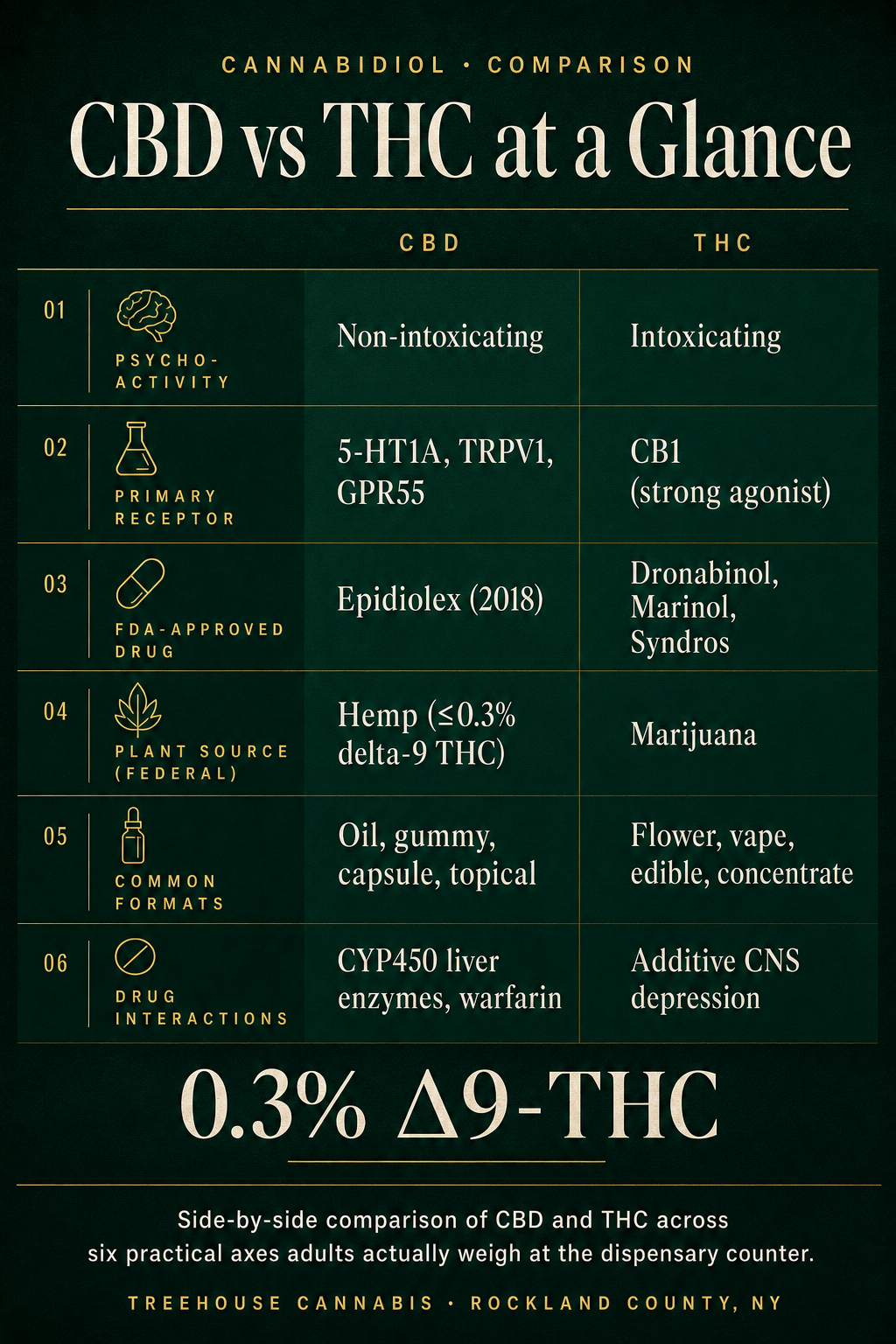
Key practical takeaways from the table above:
- THC is the only one of the two that produces an intoxicating high; CBD does not
- Hemp-derived CBD (≤0.3% delta-9 THC) is federally legal; marijuana-derived CBD follows state cannabis law
- The two compounds act on different receptor targets, which is why CBD feels nothing like THC
A common follow-up question is whether full-spectrum CBD will make you feel high. The short answer is no, full-spectrum CBD typically contains less than 0.3 percent THC, far below the threshold most adults would notice. Pure CBD isolate contains no THC at all.
For consumers who want both cannabinoids in a measured ratio, balanced products like Pomegranate 1:1 CBD + Hybrid Enhanced Gummies | THC: 100mg, CBD: 100mg are an easy entry point without needing to mix their own.
Is CBD Legal and Where Does It Come From?
CBD legality depends on three things: where the CBD came from, whether the product is sold as a drug, a food, a supplement, or a cosmetic, and which state you live in. Under the 2018 Farm Bill, hemp-derived CBD containing no more than 0.3 percent delta-9 THC by dry weight is federally legal to produce and transport [4]. Cannabinoids extracted from lawfully grown hemp are treated as agricultural commodities rather than controlled substances [5].
A quick legality checklist:
- Hemp-derived CBD ≤0.3% delta-9 THC — federally legal under the 2018 Farm Bill
- Marijuana-derived CBD — legal only in states with adult-use or medical cannabis laws
- State rules vary — some restrict CBD-infused food or require dispensary-only sales
- The FDA has not recognized CBD as GRAS (Generally Recognized as Safe) in food [3]
- Epidiolex (prescription CBD) is approved nationwide for specific seizure disorders [8]
CBD's only FDA-approved use is the prescription drug Epidiolex, which the agency cleared on June 25, 2018 for seizures associated with Lennox-Gastaut syndrome, Dravet syndrome, and tuberous sclerosis complex [8]. Other CBD products sold as gummies, oils, capsules, and topicals have not been evaluated or approved by the FDA to diagnose, treat, cure, or prevent any disease [3].
For more context on the botanical side of the plant, What Is Humulene and Why Does It Show Up in Herbs, Black Pepper, and Cannabis? explains one of the more interesting terpenes that shows up alongside cannabinoids in hemp and cannabis.
What Are the Effects and Side Effects of CBD?
Commonly reported effects of CBD include a sense of calm, easier sleep, and reduced inflammation at higher doses, though individual response varies. The World Health Organization's 2018 Critical Review Report concluded that CBD has a good safety profile with limited side effects and no evidence of recreational use or public health-related problems [10].
Documented side effects from clinical studies and MedlinePlus include [1]:
- Drowsiness or fatigue, especially at higher doses
- Dry mouth
- Reduced appetite
- Diarrhea
- Elevated liver enzymes at high prescription-strength doses
The single biggest practical risk for adult consumers is drug interactions. CBD is processed by the same liver enzymes (CYP450) that metabolize many common medications, including the blood thinner warfarin [1]. Anyone on a regular prescription should talk to a healthcare professional or pharmacist before adding CBD to a routine. The WHO review was specifically cautious about gaps in long-term data, and the FDA has flagged quality and labeling inconsistency across the retail CBD market [10].
For shoppers weighing the timing side of edible CBD products, The Biggest Myths About Cannabis Edibles separates the most common myths from how edibles actually work.
How Is CBD Made and What Product Formats Exist?
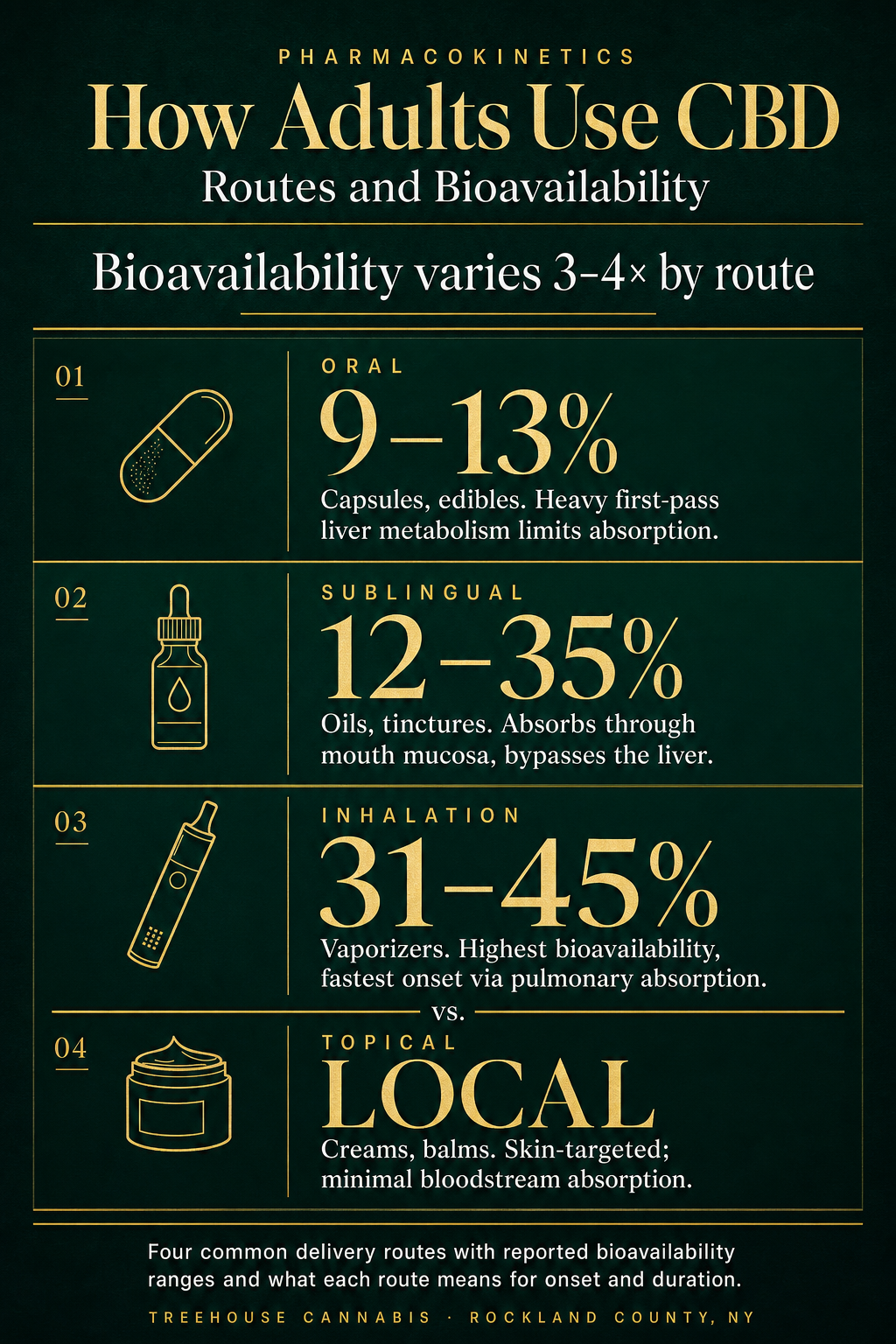
CBD is extracted from hemp using CO2, ethanol, or hydrocarbon methods, then refined into an oil that goes into consumer products. The same milligrams of CBD can feel very different depending on which format you choose, because each route of administration has a different bioavailability — the share of the dose that actually reaches your bloodstream.
Reported bioavailability ranges from peer-reviewed sources [11]:
| Route | Bioavailability | What it means in practice |
|---|---|---|
| Oral (capsules, edibles) | 9–13% | Heavy first-pass liver metabolism |
| Sublingual (oils, tinctures) | 12–35% | Absorbs through mouth mucosa |
| Inhalation (vaporizers) | 31–45% | Highest bioavailability, fastest onset |
| Topical (creams, balms) | Local | Skin-targeted, minimal bloodstream absorption |
That range is why two 25 mg CBD gummies and one 25 mg CBD vape cartridge can feel completely different. The dose on the label is not the dose your body uses, and the route matters as much as the milligrams.
CBD products also differ in what else is in the bottle:
- Full-spectrum — contains all cannabinoids and terpenes from the plant, including trace THC (under 0.3%)
- Broad-spectrum — contains cannabinoids and terpenes, but the THC has been removed
- CBD isolate — pure CBD, no other cannabinoids or terpenes
A few things worth checking before buying any CBD product:
- A recent third-party Certificate of Analysis (COA) matched to the batch number
- Cannabinoid content per dose in milligrams, not just a percentage
- For topicals, a clean ingredient list if you have sensitive skin — browse Topicals for the licensed-dispensary range
- Dominant terpenes where applicable
How Do Adults Shop for CBD at a Licensed Dispensary?
Adults shopping for CBD at a licensed New York dispensary get a meaningful safety upgrade over unregulated hemp retail: products have passed state testing requirements for potency and contaminants, and budtenders can walk you through the COA in person. That is a real difference at the point of sale and one of the main reasons adult consumers prefer licensed shops for cannabis products of any kind.
A short shopping checklist:
- Ask to see the COA — third-party lab results matched to the batch number on the package
- Check the cannabinoid content per dose in milligrams, not just a percentage
- Read the ingredient list, especially for edibles with allergens or artificial dyes
- Note the dominant terpenes when relevant
- Start with a low dose and give it time to work before adding more
For adults who already shop the Treehouse menu, the curated selection at our Rockland County storefront covers high-CBD gummies, tinctures, topicals, and vapes tested under New York's adult-use program. If you want a non-cannabis way to mark the visit, swing by for New York Wants Weed T-Shirt while you are in.
What Is CBD? Frequently Asked Questions?
What is CBD in simple terms? — CBD, short for cannabidiol, is one of more than 100 cannabinoids found in the cannabis plant. It is non-intoxicating at typical doses and is most often extracted from hemp, a variety of cannabis that contains 0.3 percent or less delta-9 THC by dry weight.
Is CBD the same as marijuana or hemp? — No. Marijuana and hemp are both cannabis plants, but hemp is legally defined as cannabis with no more than 0.3 percent or less delta-9 THC by dry weight. CBD is a single compound that can be extracted from either plant, and most retail CBD products are made from hemp because of that legal threshold.
Will CBD make you feel high? — Pure CBD does not produce the euphoric high associated with cannabis. The high comes from THC binding strongly to CB1 receptors in the brain. CBD binds CB1 only weakly and acts on other targets like serotonin 5-HT1A and TRPV1 receptors. Full-spectrum products that contain trace THC would not normally be felt at typical doses, and pure isolates contain no THC at all.
What is CBD used for and is it FDA-approved? — The only FDA-approved use of CBD is the prescription drug Epidiolex, approved for seizures associated with Lennox-Gastaut syndrome, Dravet syndrome, and tuberous sclerosis complex. Other CBD products sold as oils, gummies, capsules, and topicals are not FDA-approved to diagnose, treat, cure, or prevent any disease, and the FDA has not recognized CBD as Generally Recognized as Safe in food.
How does CBD work in the body? — CBD interacts with the endocannabinoid system, a cell-signaling network that helps regulate mood, sleep, appetite, pain, and immune function. Unlike THC, CBD does not strongly bind the CB1 and CB2 receptors. It modulates several non-cannabinoid targets, including serotonin 5-HT1A receptors, TRPV1 ion channels, and the GPR55 receptor.
What are the main differences between CBD and THC? — CBD and THC share the same molecular formula but have different atomic arrangements. THC strongly activates CB1 receptors in the brain and is intoxicating. CBD is non-intoxicating and may soften some of THC's effects. Both come from cannabis, but only THC produces the classic cannabis high.
Is CBD legal where I live? — Under the 2018 Farm Bill, hemp-derived CBD containing no more than 0.3 percent delta-9 THC is federally legal in the United States, but states can set their own rules. Some states restrict or ban certain CBD products, require them to be sold only in licensed dispensaries, or limit total THC content rather than just delta-9. Check your state's current law before buying or traveling with CBD products.
What are the side effects of CBD? — Common side effects reported in clinical studies and MedlinePlus include drowsiness, fatigue, dry mouth, reduced appetite, diarrhea, and elevated liver enzymes at high doses. CBD can interact with prescription medications, especially blood thinners like warfarin and drugs processed by the same liver enzymes. The World Health Organization's 2018 review concluded CBD has a good safety profile but recommended more research on long-term use.
Sources
- MedlinePlus (U.S. National Library of Medicine) — CBD is a non-psychoactive cannabinoid that is FDA-approved (as Epidiolex) to con
- MedlinePlus Magazine (NIH) — CBD is a cannabis-derived compound that does not cause a high on its own, may af
- U.S. Food and Drug Administration — CBD is the active ingredient in the FDA-approved prescription drug Epidiolex; FD
- U.S. Food and Drug Administration — The 2018 Farm Bill removed hemp (cannabis with no more than 0.3% delta-9 THC by
- Brookings Institution — Cannabis plants containing 0.3% or less delta-9 THC by dry weight are legally cl
- PubMed Central (National Institutes of Health) — The endocannabinoid system (ECS) consists of endogenous cannabinoids, cannabinoi
- Harvard Health Publishing — The endocannabinoid system regulates mood, sleep, appetite, memory, and pain per
- PubMed Central (National Institutes of Health) — On June 25, 2018, the FDA approved Epidiolex, the first plant-derived, purified
- PubMed Central (National Institutes of Health) — CBD is a non-psychoactive phytocannabinoid with diverse therapeutic potential, a
- PubMed Central (National Institutes of Health) — The World Health Organization's 2018 Critical Review Report concluded that CBD h
- PubMed Central (National Institutes of Health) — Oral bioavailability of CBD is approximately 9-13% because of extensive first-pa
- Wikipedia — CBD (cannabidiol) is one of over 100 identified phytocannabinoids in Cannabis sa
About Treehouse Cannabis
Treehouse Cannabis is a licensed adult-use dispensary serving Rockland County, NY and surrounding areas. We curate quality flower, vapes, pre-rolls, and edibles from trusted brands, with a focus on education, transparency, and helping adults 21 and older make informed choices.
Cannabis is for adults 21 and older.Cannabis is for adults 21 and older. Keep all cannabis products out of reach of children and pets. This article is for educational purposes only and is not medical advice. Consult a qualified healthcare professional before using cannabis, especially if you are pregnant, nursing, taking medications, or have a medical condition. Effects vary by person; start low and go slow.
Shop our products

Shop All
Deals
Flower

Pre-rolls
Vaporizers
Edibles
Drinks
Concentrates
Tinctures

Topicals
CBD

Pet CBD
Accessories