Cannabis Terpene Chart: Every Common Terpene by Aroma
Cannabis Terpene Chart: Every Common Terpene by Aroma
A cannabis terpene chart connects compound names with recognizable scents: myrcene is earthy and herbal, limonene is citrusy, pinene is pine-like, beta-caryophyllene is peppery, and linalool is floral. Use these descriptions to compare aroma preferences, not to identify a product's chemistry by smell or predict how cannabis will feel. [1] [5]
Cannabis aroma is a mixture, not a single-compound signature. Terpenes contribute familiar notes, but other volatile compounds can help explain why products with similar terpene profiles smell different. An aroma description is not a potency measurement, an effects guarantee, or evidence of a health benefit. [4]
The reference below groups commonly discussed compounds by scent, followed by a separate appendix for secondary constituents. "Every common terpene" means practical coverage of familiar names, not an exhaustive inventory or a universal ranking across cannabis batches.
What does a cannabis terpene chart show by aroma?
A cannabis terpene chart pairs a compound name with an aroma family, specific scent notes, and a familiar botanical reference. Its purpose is to make descriptions such as citrus, earthy, floral, and woody easier to compare.
| Terpene | Aroma family | Recognizable notes | Familiar botanical reference |
|---|---|---|---|
| Limonene | Citrus | Fresh citrus peel | Citrus rinds [1] |
| Alpha-pinene | Pine / woody | Pine-like | Pine-like sensory reference [2] [5] |
| Beta-pinene | Pine / woody | Pine-like; distinct from alpha-pinene | Pine-like sensory reference [2] [5] |
| Linalool | Floral | Floral, lavender-like | Lavender [5] |
| Myrcene (beta-myrcene) | Earthy / herbal | Earthy, musky, herbaceous, spicy | Hops and lemongrass; also occurs in mango [1] [2] |
| Alpha-humulene | Earthy / woody | Earthy, woody, spicy-herbal | Hops, clove, and basil [7] |
| Beta-caryophyllene | Spicy | Peppery, spicy | Black pepper and cloves [1] |
| Ocimene | Sweet / herbal | Sweet, herbaceous, woodsy | Basil, mint, and orchids [6] |
| Terpinolene | Mixed fresh / herbal | Piney, floral, herbal, sometimes citrusy | Lilac, nutmeg, tea tree, and apples [5] [6] |
Read the columns as a sensory vocabulary, not a checklist of ingredients:
- Aroma family gives a broad starting point, such as citrus or floral.
- Recognizable notes add detail; a compound can belong to more than one family.
- Botanical references describe familiar parallels, not identical fragrances.
- Alpha and beta names identify distinct compounds, even when their broad scent descriptions overlap.
"Terpenes" is the familiar umbrella term used here. Oxygen-containing compounds such as linalool and bisabolol are more precisely called terpenoids; consumer references often discuss both together. [3]
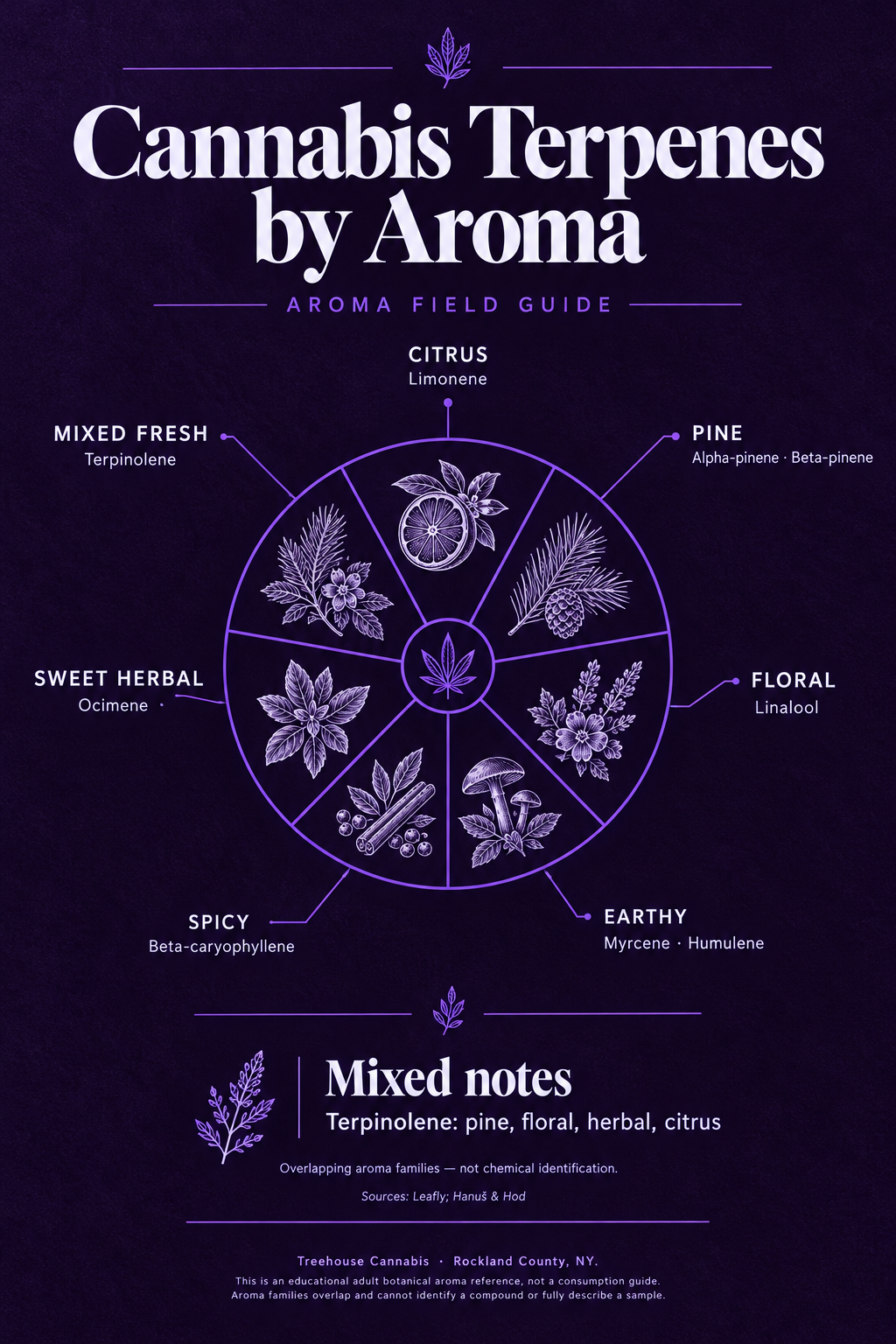
For a visual arrangement of these overlapping families, see The Cannabis Terpene Wheel: A Visual Guide to Every Common Terpene. Neither a wheel nor a table can establish which compounds are present in an individual jar.
How do myrcene vs limonene and other terpene aromas compare?
Myrcene versus limonene is an earthy-herbal versus citrus comparison. Pinene versus terpinolene contrasts a pine-like reference with a broader fresh blend, while humulene versus beta-caryophyllene separates woody-earthy notes from peppery spice. [1] [5] [7]
| Comparison | First aroma reference | Second aroma reference |
|---|---|---|
| Myrcene vs limonene | Earthy, musky, herbal | Fresh citrus peel |
| Pinene vs terpinolene | Pine-like | Pine, floral, herbal; sometimes citrus |
| Humulene vs beta-caryophyllene | Woody, earthy, spicy-herbal | Peppery, spicy |
Myrcene vs limonene
Myrcene's earthy, musky, and herbaceous descriptions differ from limonene's citrus-peel reference. Those words describe aroma rather than a predictable experience: "earthy" does not mean sedating, and "citrusy" does not establish an energizing effect. [1]
| Compound | Aroma reference |
|---|---|
| Myrcene | Earthy, musky, herbaceous |
| Limonene | Citrus peel |
The botanical parallels also have limits. Myrcene occurs in mango, but that does not make a mango-like scent proof of myrcene or make every myrcene-containing product smell like mango.
Pinene vs terpinolene
Pinene offers a straightforward pine-like reference. Terpinolene has a mixed description that can include pine, flowers, herbs, and citrus, so reducing it to "pine" leaves out much of its sensory vocabulary. [5]
| Compound | Aroma reference |
|---|---|
| Pinene | Pine-like |
| Terpinolene | Pine, floral, herbal; sometimes citrus |
Alpha-pinene and beta-pinene are separate compounds. Keep those names intact when a report distinguishes them; the sources used here do not establish a precise smell-based test for telling them apart. [2]
Humulene vs beta-caryophyllene
Humulene is described as earthy and woody with spicy-herbal notes, while beta-caryophyllene is associated with peppery spice. Both can fit a broad "spicy" description, which is why a more specific word can make an aroma preference easier to explain. [1] [7]
| Compound | Aroma reference |
|---|---|
| Humulene | Earthy, woody, spicy-herbal |
| Beta-caryophyllene | Peppery, spicy |
Several overlaps are worth remembering:
- Pine-like notes appear in both pinene and terpinolene descriptions.
- Herbal notes connect myrcene, ocimene, humulene, and terpinolene.
- Spice can refer to peppery, woody, or herbal impressions rather than one compound.
- Floral notes are not exclusive to linalool.
For broader background, A Guide to Terpenes and Their Effects explores terpenes beyond this reference chart. Here, the comparison stays focused on scent rather than guaranteed effects.
Which secondary terpenes belong in a cannabis terpene list?
A useful cannabis terpene list separates familiar core names from secondary constituents. Alpha-bisabolol, trans-nerolidol, borneol, and valencene expand the aroma vocabulary, while cedrene and isopulegol belong in a less-common appendix rather than a list of universally dominant compounds. [2] [3]
| Compound | Aroma reference | Coverage note |
|---|---|---|
| Alpha-bisabolol | Sweet, floral; German chamomile reference | Secondary [8] |
| Trans-nerolidol | Subtle floral, fruity citrus, apple, and rose | Secondary; retain the trans designation [7] |
| Borneol | Woody, balsamic | Secondary [3] |
| Valencene | Orange-like citrus | Secondary [3] |
| Cedrene | Woody, crisp; cedarwood reference | Less-common appendix [3] |
| Isopulegol | Minty | Less-common appendix [3] |
"Secondary" describes this reference's coverage, not a quality grade. Finding a name in research does not establish that it is common, abundant, or tested for in every retail product.
Keep three distinctions separate:
- Detection means an analysis identified a compound in the sample studied.
- Dominance concerns its measured amount relative to other reported compounds.
- Panel coverage describes which compounds a laboratory analysis actually included.
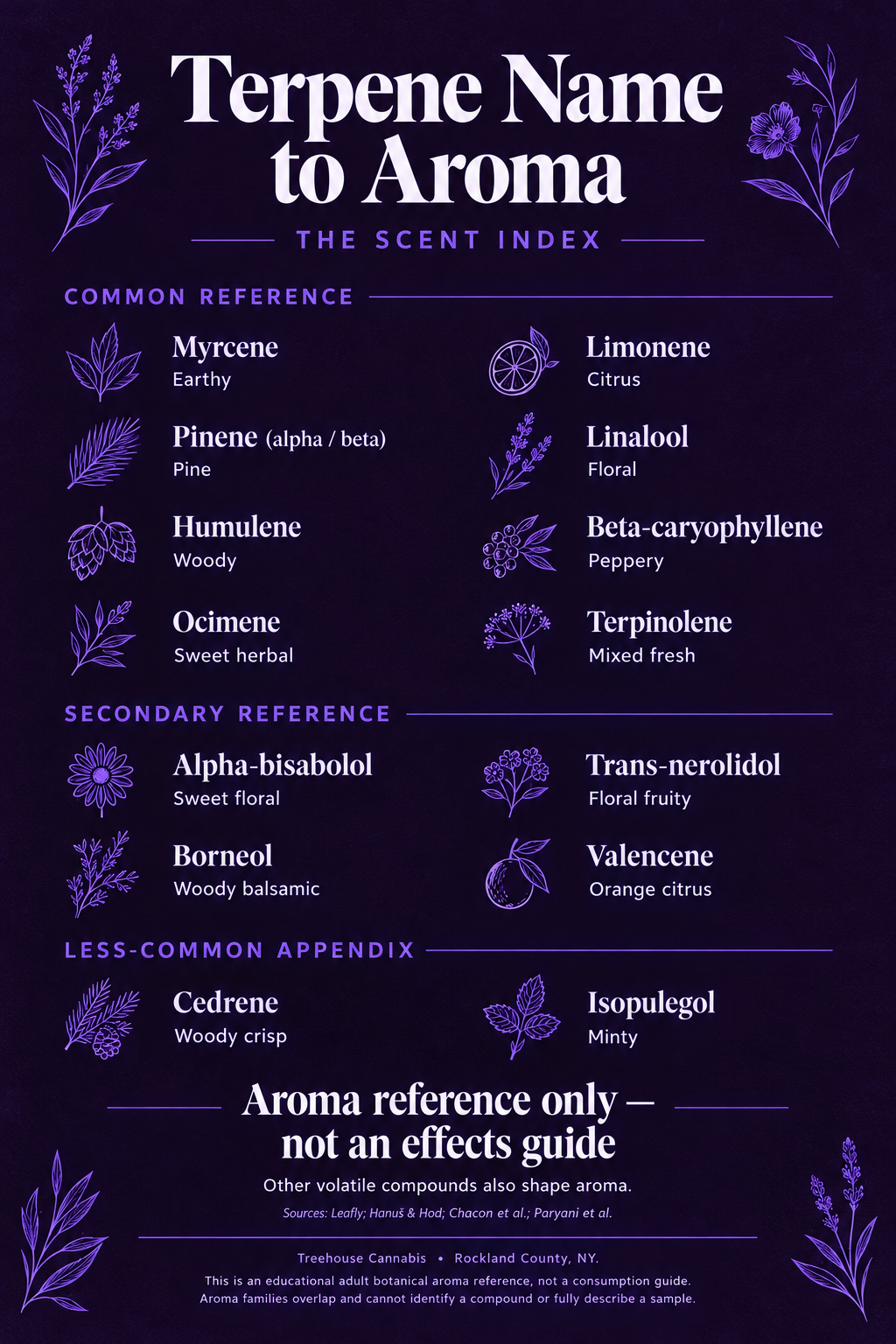
This name-to-aroma reference extends the core chart without turning every reported compound into a universal cannabis ingredient. Bisabolol's sweet floral note, nerolidol's floral-fruity description, and valencene's orange-like reference also show why one aroma family can contain several different compounds.
How do you read a terpene profile alongside the aroma chart?
A terpene profile supplies measured compound names for a particular sample; the aroma chart supplies vocabulary for discussing those names. Compare the two using available batch-specific information, rather than assuming a strain name or scent identifies the chemistry. [2]
A practical reading sequence is:
- Confirm that the report corresponds to the product and batch being considered.
- Read the compounds actually listed, rather than substituting a familiar strain description.
- Preserve alpha, beta, cis, and trans designations wherever the report supplies them.
- Check the stated units and which compounds the panel tested.
- Use the chart to describe aroma preferences without inferring potency or effects.
An unlisted compound is not automatically absent. It may fall outside the tested panel or the information shown, so the scope of the report matters before drawing conclusions.
The most abundant listed terpene also need not account for the most noticeable scent. Research on cannabis aroma shows that nonterpenoid compounds can contribute distinctive characteristics that a terpene-only summary misses. [4]
For a shopping-focused explanation of this process, read How to Shop for Cannabis by Terpene Profile. The useful question is whether batch-specific information is available, not whether a strain name usually appears on an internet chart.
Product wording is a separate issue. When browsing an accessory listing such as Terpene-Infused Blunt Cones | King Size, do not treat "terpene-infused" as a laboratory profile for flower used with it; check the item's own description for what it claims. This chart does not establish that accessory's ingredients, aroma, or performance.
Why can similar cannabis terpene profiles smell different?
Similar cannabis terpene profiles can smell different because terpene panels do not describe every aroma-active compound. The overall scent reflects a mixture, including nonterpenoid chemicals that may contribute distinctive notes. [4]
A 2024 study in ACS Omega examined chemical and sensory differences among related cannabis phenotypes using hash rosin samples. It found that nonterpenoid chemical diversity helped explain differentiated aromas; its authors included researchers affiliated with Abstrax Tech. [4]
That is evidence against treating terpenes as the whole aroma story, not proof about every flower batch. The study's specific samples and industry affiliations matter when interpreting its findings.
An aroma chart cannot establish:
- The identity of a compound from smell alone.
- The chemical source of every tropical, savory, or skunky note.
- A product's THC content or overall potency.
- A guaranteed experience based on the leading terpene.
- A medical benefit from a familiar botanical association.
When browsing Flower, compare product-specific descriptions and available batch information rather than assigning chemistry from the category name. Two products sharing a citrus or pine descriptor do not necessarily have matching compositions.
What questions come up about using a cannabis terpene chart?
The main questions concern which names belong on the chart, how their aromas overlap, and what a chart can actually establish. It is a sensory reference, not a substitute for batch-specific analysis or a guide to predictable effects.
Keep these takeaways in view:
- Match a name to a scent description, not a promised outcome.
- Separate common reference compounds from secondary entries.
- Keep full compound names when a report provides them.
- Treat browsing categories as navigation, not chemical evidence.
That last distinction applies to Small Buds Flower as well: a bud-size category alone does not establish a terpene profile.
What does a cannabis terpene chart tell you?
A cannabis terpene chart connects compounds such as limonene, myrcene, and pinene with familiar aroma descriptions. It helps customers compare citrus, earthy, piney, spicy, and floral notes. It does not identify every compound in a product or guarantee potency, a particular experience, or any health benefit. [1] [4]
Which terpenes are common in cannabis?
Commonly discussed cannabis terpenes include myrcene, limonene, pinene, beta-caryophyllene, humulene, linalool, terpinolene, and ocimene. Their relative amounts vary across products and batches. Secondary constituents such as bisabolol and nerolidol may also appear, so no single short chart describes every cannabis sample or establishes a universal ranking. [2] [3]
Which cannabis terpenes smell citrusy?
Limonene is a familiar citrus reference, while valencene is associated with orange-like notes. Terpinolene can contribute a citrus nuance alongside pine, floral, and herbal characteristics. A citrus-smelling product does not prove that limonene dominates, because its overall scent also depends on other volatile compounds and their mixture. [1] [3] [4] [5]
What is the difference between pinene and terpinolene?
Pinene is commonly described with a pine-like scent, whereas terpinolene combines pine with floral, herbal, and sometimes citrus notes. They are different compounds rather than interchangeable names. Alpha-pinene and beta-pinene are also distinct forms that a detailed laboratory report may list separately for the same cannabis batch. [2] [5]
| Compound | Aroma reference |
|---|---|
| Pinene | Pine-like |
| Terpinolene | Pine, floral, herbal; sometimes citrus |
Does a terpene's aroma predict how cannabis will feel?
An aroma descriptor is not a reliable promise of how a product will feel. Terpene chemistry is only part of a cannabis product's composition, and research on biological activity should not become guaranteed consumer outcomes. Use an aroma chart for sensory comparison, not treatment advice or effect predictions. [1] [3]
Why can products with similar terpene profiles smell different?
A terpene panel does not measure every aroma-active compound. Research on related cannabis phenotypes studied as hash rosin found that nonterpenoid chemicals also contribute to distinctive scents. Similar listed terpenes can therefore accompany different aromas, and the most abundant measured terpene need not explain the most noticeable note. [4]
How should you use a terpene chart when comparing products?
Start with aroma families you enjoy, then compare named terpenes with the product's available batch-specific laboratory information. Keep alpha, beta, or other isomer names intact when listed. Treat the chart as vocabulary for a conversation with staff, rather than proof of ingredients, quality, potency, or a guaranteed experience. [2] [4] [5]
Sources
- Leafly — Myrcene has herbaceous, spicy, earthy and musky scent notes; limonene is citrus-
- Medical Cannabis and Cannabinoids; Hanus and Hod, hosted by PubMed Central — Chemical analyses document diverse terpene and terpenoid profiles in cannabis, i
- Biomedicines; Chacon, Raup-Konsavage and Vrana, Pennsylvania State University — A review distinguishes prevalent cannabis terpenes from secondary constituents a
- ACS Omega; Paryani and colleagues, including Abstrax Tech researchers — Chemical and sensory research shows that nonterpenoid volatile compounds contrib
- Leafly — Terpinolene combines piney, floral, herbaceous and sometimes citrus notes; the a
- Leafly; sponsored by Tilray — Ocimene is described as sweet, fragrant, herbaceous and woodsy, while terpinolen
- Leafly; sponsored by Tilray — Humulene is earthy and woody with spicy herbal notes, and trans-nerolidol has a
- Leafly — Alpha-bisabolol is found in cannabis, produces a sweet floral aroma, and also oc
About Treehouse Cannabis
Treehouse Cannabis serves adult-use customers in Rockland County, NY.
- Explore current flower options and ask staff about available batch-specific terpene information.
- Use this chart to explain aroma preferences while keeping product chemistry and expected experience separate.
This article is for educational purposes only and is not medical advice. Cannabis is for adults 21 and older. Keep all cannabis products away from children and pets. Do not drive or operate machinery while impaired.
Shop our products

Shop All

Deals

Flower

Pre-rolls
Vaporizers

Edibles

Drinks

Concentrates
Tinctures

Topicals

CBD

Pet CBD

Accessories