
The Endocannabinoid System, Explained Simply
The Endocannabinoid System, Explained Simply
The endocannabinoid system is a cell-signaling network that helps the body regulate sleep, mood, appetite, memory, pain, and immune response. It works through three parts: endocannabinoid molecules the body makes on demand, the receptors those molecules bind to (mainly CB1 and CB2), and the enzymes that build them up and break them down. [1] [6]
What Is the Endocannabinoid System and Why Does It Matter?
Think of the ECS less like a single organ and more like a thermostat scattered across nearly every tissue in the body. Its job is to keep the many small variables of human physiology — hunger, sleep depth, stress response, inflammation levels — hovering near a balanced middle rather than swinging to extremes. That balanced middle has a name: homeostasis. [1]
The system gets its name from the cannabis plant, because researchers first identified it while studying how THC produces its effects. The system itself, however, belongs to everyone, cannabis consumer or not, and is active from early embryonic development onward. [2]
The three parts of the ECS, working in sequence, look like this:
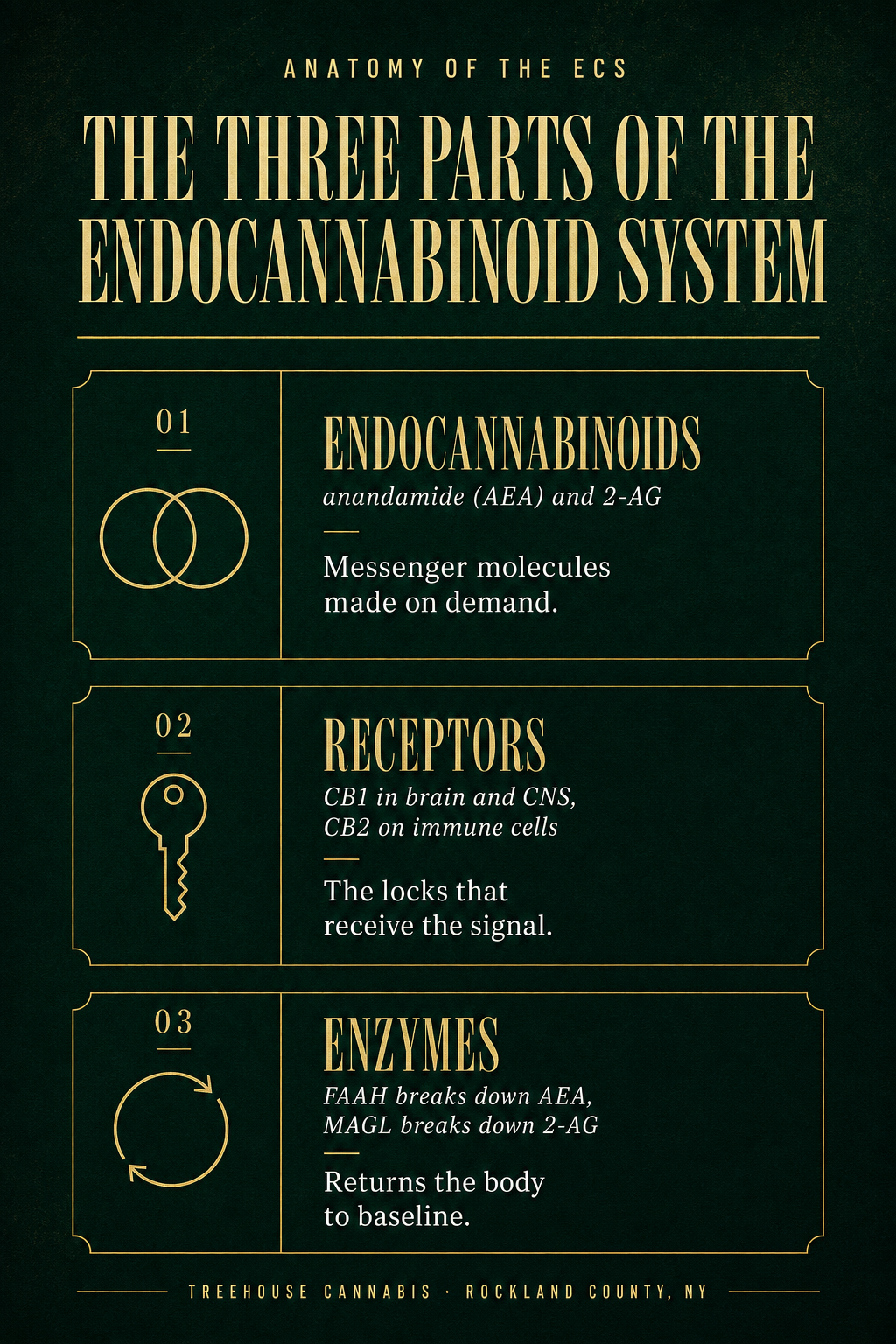
- Endocannabinoids — messenger molecules, primarily anandamide (AEA) and 2-arachidonoylglycerol (2-AG), that the body manufactures on demand rather than storing in vesicles.
- Receptors — docking sites, mainly CB1 (concentrated in the brain and central nervous system) and CB2 (concentrated on immune cells and peripheral tissues), that trigger changes inside the cell once an endocannabinoid binds.
- Metabolic enzymes — FAAH, which breaks down anandamide, and MAGL, which breaks down 2-AG, returning the system to baseline once the signal has been delivered. [6]
Researchers compare the ECS to other major regulatory networks in the body, like the endocrine or immune systems, because it touches nearly every physiological process rather than living in one place. Some scientists have gone so far as to call it the most important physiological system in the body that most people have never heard of. [1]
For a customer walking into a dispensary for the first time, the practical takeaway is that nearly every decision about strain, dose, and format ultimately comes down to how a particular product interacts with this single underlying system. The strain on the shelf you pick up is usually labeled indica, sativa, or hybrid, but that simple split doesn't fully explain the experience. To understand why two flowers with similar THC percentages can feel very different, the chemistry layered on top of the same receptor system matters too, and a good entry point into that piece of the puzzle is our Indica Vs Sativa explainer. From there, the citrus-scented compound many customers notice first on a fresh grind is the focus of our What Is Limonene? A Citrus-Scented Guide to One of Cannabis’s Most Recognizable Terpenes guide, and the deeper mechanic of what THC and CBD actually do at the receptor level is covered in our How THC and CBD Work article.
How Do CB1 and CB2 Receptors Work in the Body?
CB1 and CB2 are both G-protein-coupled receptors, which means they sit on the surface of a cell and pass a signal across the membrane when something binds to them. They share about 44% of their amino-acid sequence, but they live in very different neighborhoods of the body, and that geographic split is what gives the ECS its broad reach. [5] [3]
Where the two main receptor types show up in plain terms:
- CB1 receptors — concentrated in the brain and central nervous system, especially the cortex, hippocampus, basal ganglia, and cerebellum. This is why most of the cognitive and mood-related effects of cannabis show up so quickly when CB1 is activated.
- CB2 receptors — concentrated on immune cells, including microglia in the brain and immune cells in the spleen, thymus, and tonsils, and in peripheral tissues throughout the body. CB2 expression can climb up to 100-fold during inflammation, which is why researchers pay close attention to it in immune-related conditions. [2]
Once a molecule binds to one of these receptors, the receptor signals through Gi/o proteins and, in many cases, through beta-arrestins as well, which together adjust the cell's internal chemistry. Modern research also shows that CB1 and CB2 can pair up with other receptor types — including dopamine, hypocretin (also called orexin), and opioid receptors — to form heterodimers that respond differently than either receptor alone would. [3]
For practical purposes, the geographic split has a few predictable outcomes:
- THC binding to CB1 is what produces most of the familiar cannabis "high," including short-term memory effects, shifted perception of time, and increased appetite.
- THC and other cannabinoids binding to CB2 is what shapes the immune-modulating and anti-inflammatory responses researchers are studying most closely.
- CBD has low direct binding at either receptor but can still change how the ECS behaves indirectly, by altering how well endocannabinoids are broken down and by interacting with neighboring receptor families. [4]
A useful way to think about CB1 and CB2 in a dispensary context: every product is a delivery vehicle for getting a specific mix of molecules to one or both of these receptor types, and the mix (not just the THC percentage) is what shapes the felt experience. Much of the aromatic side of that mix comes from terpenes, which our Understanding Terpenes in Cannabis primer covers in the same receptor-system context.
What Endocannabinoids Does the Body Make on Its Own?
The two best-studied endocannabinoids are anandamide (AEA) and 2-arachidonoylglycerol (2-AG). Their names hint at where they came from: anandamide gets its name from the Sanskrit word "ananda," meaning bliss or delight, while 2-AG was named for the glycerol backbone it shares with common dietary fats. [7] [2]
Unlike most neurotransmitters, endocannabinoids aren't stored in little vesicles waiting to be released. Instead, the body builds them on demand from lipid precursors in the cell membrane, then releases them backward across the synapse to dial down the activity of the upstream neuron. This on-demand style is called retrograde signaling, and it's a signature of how the ECS works. [2]
The two main endocannabinoids, in plain terms:
- Anandamide (AEA) — a partial agonist at CB1 and a weak agonist at CB2. Often described as the "bliss molecule" because of its name, AEA's effects are generally subtle and short-lived; FAAH breaks it down quickly once it has done its job. [6]
- 2-arachidonoylglycerol (2-AG) — a full agonist at both CB1 and CB2, with much higher efficacy at CB1 than anandamide. 2-AG is more abundant in the brain and is broken down by the enzyme MAGL. [2] [4]
The breakdown enzymes matter as much as the endocannabinoids themselves. After FAAH breaks anandamide down, the system returns the cell to baseline quickly. The same goes for MAGL and 2-AG. This tight on/off cycle is part of why the ECS can fine-tune signaling without producing runaway effects in healthy individuals. [6]
For a new customer, the key thing endocannabinoids help explain is why cannabis can sometimes feel familiar rather than alien to the body, because the plant molecules happen to mimic molecules the body is already making. If you're trying to translate that familiarity into a specific starting format, our How to Choose Your First Cannabis Product: A Complete Guide for Beginners guide walks through how different product types and cannabinoid ratios tend to land for first-time buyers.
How Does THC Interact With the Endocannabinoid System?
THC, or delta-9-tetrahydrocannabinol, is the most abundant intoxicating compound in the cannabis plant and the molecule most people mean when they talk about getting high from cannabis. Mechanically, it works because its three-dimensional shape closely resembles anandamide's, so it can dock into the same CB1 and CB2 receptors the body built for endocannabinoids. [4] [8]
The practical effects of that docking, in plain language:
- Cognitive effects — short-term memory changes, shifts in time perception, and altered sensory processing come primarily from CB1 activation in the hippocampus, cortex, and cerebellum.
- Mood effects — euphoria, relaxation, or in some customers anxiety or paranoia, depend on which brain circuits THC reaches first and on the baseline tone of the consumer's own ECS.
- Appetite effects — the well-known "munchies" happen because CB1 signaling in the hypothalamus triggers the release of hunger-related hormones.
- Pain and inflammation — both CB1 and CB2 activation contribute to the analgesic and anti-inflammatory responses customers report, particularly with inhaled or sublingual formats. [1] [2]
The intensity of those effects depends on dose, route of administration, and the consumer's own ECS tone. Two customers using the same product can have noticeably different experiences, which is why knowledgeable budtenders typically ask about prior experience and goals before recommending a starting point. [4]
A starting point for many first-time THC customers is a low-potency flower in a familiar format, and our Whole Flower Flower shelf is a good reference for whole buds sold by the gram. A popular entry-level option from that same format family is the Out The Office • Flower • 70g flower from our menu, useful as a comparison point for customers weighing THC percentages across different weight options.
What Is the Difference Between Endocannabinoids and Phytocannabinoids?
The two prefixes do most of the explaining: "endo" means within, so endocannabinoids are the cannabinoid-like molecules the body makes for itself. "Phyto" means plant, so phytocannabinoids are cannabinoid-like molecules produced by the cannabis plant and a few other botanicals. [7]
The shared suffix — "cannabinoid" — is what links them. Because the molecular shape of THC and CBD is similar enough to anandamide and 2-AG, both can engage ECS receptors, but with very different outcomes.
The two molecule families at a glance:
- THC is a direct agonist at CB1 and CB2 — it activates the receptors the way anandamide does, which is why it produces the intoxicating effects customers expect from cannabis flower.
- CBD has very low direct binding at either receptor. Instead, it changes how the ECS behaves indirectly: it alters the shape of the binding pocket, inhibits FAAH (which can leave more anandamide circulating), and modulates nearby receptor families like serotonin and TRP channels. [4]
| Property | Endocannabinoids (AEA, 2-AG) | Phytocannabinoids (THC, CBD) |
|---|---|---|
| Source | Made inside the human body | Made by the cannabis plant (and a few other botanicals) |
| Direct receptor binding | AEA: partial CB1, weak CB2; 2-AG: full agonist at both | THC: direct CB1/CB2 agonist; CBD: very low direct binding |
| Primary effect | Fine-tune local cell activity, support homeostasis | Produce the cannabis "high" (THC) or modulate ECS tone (CBD) |
| Duration of action | Short — broken down quickly by FAAH and MAGL | Longer — depend on dose and route of administration |
| Example molecule | Anandamide (the body's "bliss" molecule) | THC (delta-9-tetrahydrocannabinol) |
This distinction is also why products labeled "CBD-only" don't produce a high, while products with even modest THC content can produce noticeable effects. The two molecules share a family resemblance but not a job description.
For practical purposes, this is also why whole-flower choices on the shelf behave differently from concentrate, isolate, or distillate products. If you want a format that doesn't require grinding or rolling, our Pre Ground Flower shelf offers pre-broken flower in measured weights, and it's a useful halfway point for customers curious about flower but not ready to commit to full nugs.
What Happens When the Endocannabinoid System Is Out of Balance?
Researchers sometimes describe ECS signaling as having a "tone": an overall level of endocannabinoid activity across tissues and over time. When that tone drops too low, a concept the medical literature calls Clinical Endocannabinoid Deficiency, or CECD, several conditions correlate with reduced ECS activity:
- Migraine — multiple studies have linked migraine frequency and severity to lower anandamide levels in cerebrospinal fluid. [1]
- Irritable bowel syndrome (IBS) — researchers have linked IBS symptoms to altered CB2 signaling in gut-associated immune tissue. [3]
- Fibromyalgia — patient studies have shown reduced endocannabinoid tone alongside the condition's characteristic widespread pain symptoms. [8]
CECD is not yet an officially recognized diagnosis, and researchers continue to debate whether low ECS tone is a cause or a consequence of these conditions. The correlation is strong enough, however, that lifestyle factors known to support ECS signaling — regular aerobic exercise, consistent sleep, omega-3-rich diets, and stress management — have all been studied for their indirect effect on ECS tone over time. [1]
Two practical examples of how ECS tone can shift day to day:
- After a single intense workout, anandamide levels in the bloodstream measurably rise, which is one proposed explanation for the so-called "runner's high."
- Chronic sleep disruption appears to reduce CB1 sensitivity over time, leaving the ECS less responsive to both endocannabinoids and phytocannabinoids alike. [8]
For adult-use customers, the practical takeaway is that the same product can feel meaningfully different on a well-rested day versus a sleep-deprived one. The system isn't static; it's a living signal network responding to everything from the last meal eaten to how well the previous night's sleep went. [3]
Frequently Asked Questions
What is the endocannabinoid system in simple terms? The endocannabinoid system (ECS) is a cell-signaling network in the body that helps regulate sleep, mood, appetite, memory, pain, and immune response. It works through three core parts: endocannabinoids (messenger molecules), receptors they bind to (mainly CB1 and CB2), and enzymes that build and break them down.
What does the endocannabinoid system do? The ECS keeps many body systems in balance, a state called homeostasis. It fine-tunes how hungry you feel, how well you sleep, how you process stress, how your immune cells respond, and how pain signals are dampened, by letting endocannabinoids bind to receptors and adjust local cell activity.
Where are CB1 and CB2 receptors located? CB1 receptors are concentrated in the brain and central nervous system, especially the cortex, hippocampus, basal ganglia, and cerebellum. CB2 receptors live mostly on immune cells and in peripheral tissues, with expression increasing up to 100-fold during inflammation.
What are the main endocannabinoids the body makes? The two best-studied endocannabinoids are anandamide (AEA), named from the Sanskrit word for bliss, and 2-arachidonoylglycerol (2-AG). 2-AG is a high-efficacy agonist at both CB1 and CB2, while anandamide is a partial agonist at CB1 and a weak agonist at CB2.
How does THC interact with the endocannabinoid system? THC from cannabis mimics anandamide and binds directly to CB1 and CB2 receptors. That binding is what produces the familiar cannabis high, the short-term memory effects, and the appetite stimulation most customers notice.
What is the difference between endocannabinoids and phytocannabinoids? Endocannabinoids are made inside the body (endo means within). Phytocannabinoids are made by the cannabis plant (phyto means plant). Both share a similar shape, so plant cannabinoids like THC and CBD can dock into the same ECS receptors.
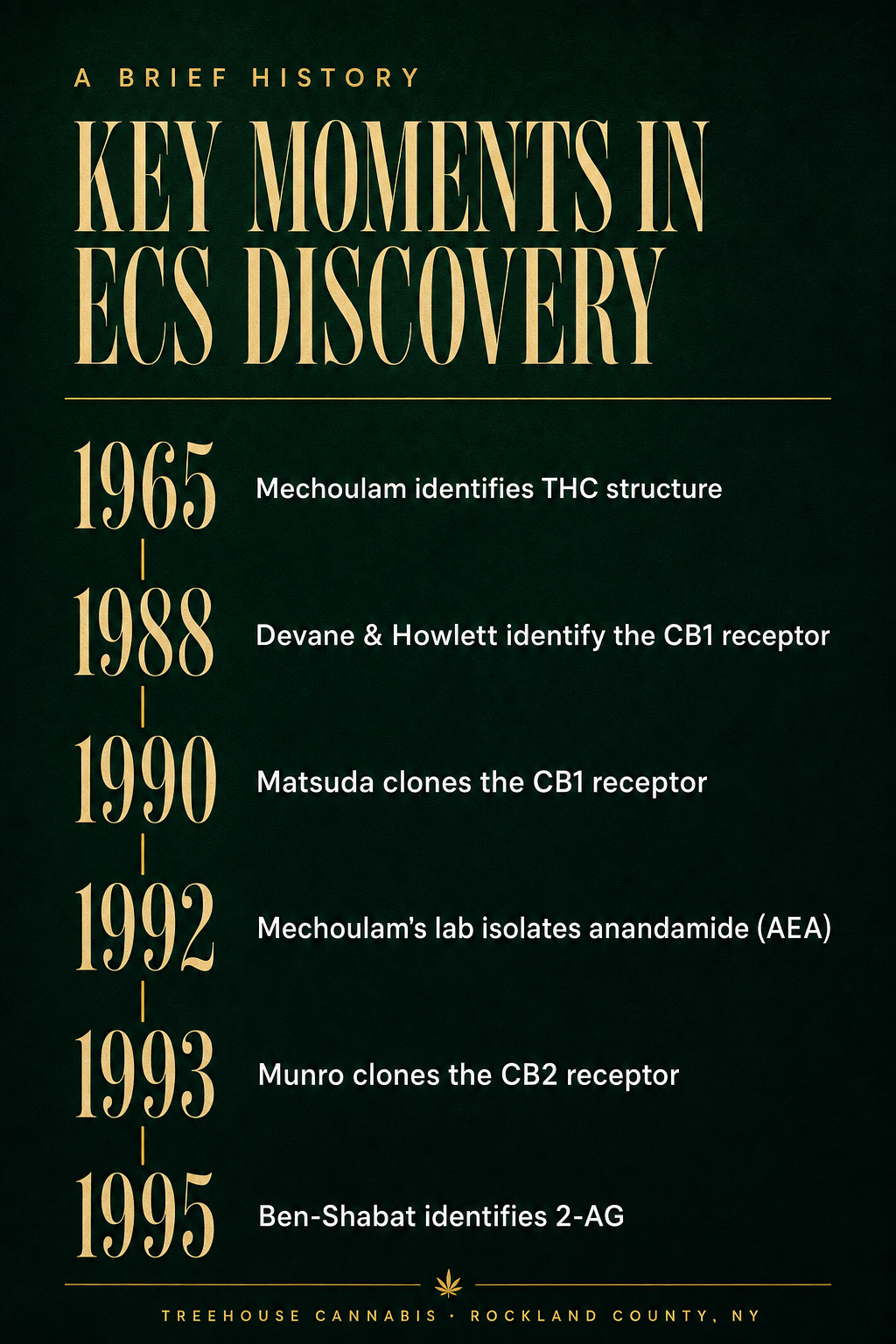
Who discovered the endocannabinoid system? Raphael Mechoulam's lab at Hebrew University identified THC structure in 1965, isolated the first endocannabinoid anandamide in 1992, and his team also discovered 2-AG in 1995. CB1 was identified by Devane, Howlett, and colleagues in 1988 and cloned in 1990.
Can the endocannabinoid system be out of balance? Yes. Researchers use the term Clinical Endocannabinoid Deficiency to describe low endocannabinoid signaling that may contribute to migraine, irritable bowel, and fibromyalgia. Lifestyle factors, exercise, sleep quality, and cannabis use can all influence ECS tone over time.
Sources
- Harvard Health Publishing — Explains the three core components of the ECS (endocannabinoids, receptors, enzy
- NIH / Biological Psychiatry (Lu & Mackie) — Academic overview identifying endocannabinoids (anandamide, 2-AG) as neuromodula
- NIH / Frontiers review — Comprehensive review covering CB1/CB2 receptor signaling through Gi/o proteins a
- NIH / Medical Cannabis and Cannabinoids review — Details how plant cannabinoids THC and CBD interact with the ECS, and the role o
- NIH / CB1 & CB2 Receptor Pharmacology — Traces CB1 discovery (Devane et al., 1988) and cloning (Matsuda et al., 1990), C
- Healthline — Plain-language guide explaining the three ECS components and the role of FAAH (b
- International League Against Epilepsy (Epigraph) — Historical account of Raphael Mechoulam's lab isolating anandamide in 1992 and B
- Wikipedia — Reference summary of the ECS components, their role as neuromodulators in motor
About Treehouse Cannabis
Treehouse Cannabis is a licensed adult-use dispensary serving Rockland County, Orange County, and Westchester County from our locations in New York. Our budtenders help customers navigate flower, vapes, edibles, pre-rolls, and concentrates with straightforward guidance grounded in current research and New York State cannabis regulations. This article is part of our ongoing educational series for adult-use customers who want a clearer picture of how cannabis and cannabinoids work in the body.
Cannabis is for adults 21 and older. Keep all cannabis products out of reach of children and pets. The content in this article is educational and does not constitute medical advice; consult a qualified clinician before using cannabis to treat any specific condition, and follow all New York State cannabis regulations when purchasing or consuming. Product availability at Treehouse Cannabis locations may vary; check our current menu at treehousecannabis.com for the latest offerings.


Shop our products

Shop All

Flower

Pre-rolls
Vaporizers

Edibles

Drinks

Concentrates

Tinctures

Topicals

CBD

Pet CBD

Accessories