
What Is the Entourage Effect—and Is It Backed by Science?
What Is the Entourage Effect—and Is It Backed by Science?
The cannabis entourage effect is the hypothesis that compounds other than THC and CBD — minor cannabinoids, terpenes, and flavonoids — work together to produce effects no single compound produces alone. The plant makes 100+ minor cannabinoids and roughly 200 terpenes. The open question is whether those compounds actually change how THC and CBD feel, or if the phrase has become a marketing catch-all.
What Is the Entourage Effect in Cannabis?
The entourage effect is a single-name hypothesis covering several possible interactions. Whole-plant cannabis extracts contain cannabinoids beyond THC and CBD, including CBG, CBN, and CBC, each with its own pharmacology. They also contain roughly 200 terpenes — the volatile aromatic compounds responsible for the plant's smell — and a third, less-studied class called flavonoids.
The "entourage" framing says that these compounds do not act in isolation. Instead, they modulate each other at cannabinoid receptors (CB1 and CB2), at other neurotransmitter targets, and through pharmacokinetic effects like absorption and metabolism. The end result, in theory, is an effect profile that no single molecule reproduces on its own [1].
The hypothesis is not fringe. It traces to a 1998 study on endocannabinoid regulation and was reframed for cannabis research by Ethan B. Russo in 2011, building on a literature that goes back further [6]. The scientific question is not whether cannabis contains these compounds — it does — but whether the combinations people consume produce measurably different effects than the isolated molecules.
The three main classes of compounds the entourage effect hypothesis covers are:
- Minor cannabinoids — CBG, CBN, CBC, and more than 100 others, each with distinct but mostly under-researched pharmacology.
- Terpenes — roughly 200 volatile aromatic compounds responsible for the plant's smell; some bind to cannabinoid receptors in animal models.
- Flavonoids — a third, less-studied class of compounds; cannaflavins A, B, and C are cannabis-specific and have anti-inflammatory research behind them.
The terpene side of this conversation is where most of the recent peer-reviewed work has landed. For a deeper dive into how aromatic compounds interact with cannabinoids at the receptor level, see The Science of Cannabis Terpenes: Beyond THC.
Where Does the Theory Come From?
The phrase "entourage effect" was first used by Ben-Shabat and colleagues in a 1998 study published in the European Journal of Pharmacology. They were not studying cannabis at all — they were describing how otherwise inactive fatty acid glycerol esters enhanced the activity of 2-AG, one of the body's own endocannabinoids [6].
Cannabis researcher Ethan B. Russo borrowed the term a decade later in a 2011 paper published in the British Journal of Pharmacology and titled "Taming THC: potential cannabis synergy and phytocannabinoid-terpenoid entourage effects." That paper proposed that whole-plant cannabis extracts might outperform isolated THC and CBD because of synergistic interactions between the two major cannabinoids and common terpenes — specifically myrcene, limonene, pinene, linalool, and caryophyllene [1].
That single paper is the source of nearly every modern entourage-effect claim. It is also worth flagging what kind of paper it is: a hypothesis paper, not a clinical trial. Russo laid out a mechanistic argument based on existing pharmacology and proposed specific interactions that should be tested.
Key milestones in the term's history:
- 1998 — Ben-Shabat et al. coin "entourage effect" in a European Journal of Pharmacology paper on endocannabinoid regulation.
- 2011 — Ethan B. Russo's "Taming THC" paper brings the term into cannabis pharmacology and proposes specific cannabinoid-terpene synergies.
- 2019–2024 — Peer-reviewed preclinical studies and reviews (Santiago 2019, Cogan 2020, LaVigne 2021, Staben 2023, MDPI 2024) start testing, supporting, and contesting the hypothesis in detail.
The proposal landed in a marketplace primed for "whole-plant" language, and the term escaped the lab. Most of what you read online about the entourage effect is downstream of that 2011 paper.
What Evidence Supports the Entourage Effect?
The strongest supportive evidence is preclinical — meaning animal and cell-culture studies, not human clinical trials. A 2021 study in Scientific Reports found that four common cannabis terpenes — humulene, geraniol, linalool, and beta-pinene — produced cannabinoid-like behavioral effects in mice and selectively enhanced cannabinoid activity at low doses [3].
The University of Arizona Health Sciences summarized the same work in plain language, noting that terpenes alone appeared to reduce pain sensation in animal models and could amplify THC's modest pain-relief effect without amplifying psychoactivity [4].
A 2020 review in Current Neuropharmacology pulled together animal research on the same terpenes and found that several displayed cannabinoid-like effects on their own, plus contributed to mood- and anxiety-related activity attributed to THC and CBD [2].
A more recent 2023 study in Frontiers in Neuroscience added another data point: CBD combined with terpene blends produced significantly greater prosocial behavioral effects in a mouse autism model than either CBD or terpenes alone [8]. A 2024 comprehensive review in MDPI Pharmaceuticals documented specific mechanisms for these interactions, including terpinolene and beta-caryophyllene producing anxiolytic effects via CB2 receptors [7].
Notable preclinical findings that support the entourage effect hypothesis:
- Four common terpenes (humulene, geraniol, linalool, beta-pinene) produced cannabinoid-like effects in mice at low doses [3].
- Terpenes alone appeared to reduce pain sensation in animal models without amplifying psychoactivity [4].
- CBD combined with terpene blends outperformed either component alone in a mouse model of autism [8].
- Specific terpenes (terpinolene, beta-caryophyllene) showed anxiolytic effects via CB2 receptors [7].
None of this is a human clinical trial. But the preclinical picture has been quietly getting stronger, not weaker, since 2020. For a more thorough primer on the most common cannabis terpenes and what research has found about each, see A Guide to Terpenes and Their Effects.
What Evidence Counters the Entourage Effect?
The strongest counterevidence is also peer-reviewed. A 2020 review by Peter S. Cogan in Expert Review of Clinical Pharmacology concluded that "no reliable scientific evidence" exists for the entourage effect at the cannabinoid-receptor level, and that the term has been used more for marketing than as a validated clinical phenomenon. The paper's title — "The 'entourage effect' or 'hodge-podge hashish'" — telegraphs its thesis [5].
A 2019 study in Cannabis and Cannabinoid Research (Santiago et al.) tested common cannabis terpenes against THC directly at human CB1 and CB2 receptors and found no modulation of THC's functional activity. That is direct counterevidence to a receptor-level entourage mechanism — if terpenes do not change THC's effect at the receptors, then any synergy has to come from somewhere else in the system [7].
The core counterarguments from the peer-reviewed literature:
- No reliable evidence at the receptor level — Cogan's 2020 review found no scientific basis for receptor-level synergy in the published human data [5].
- Terpenes did not modulate THC at CB1/CB2 — Santiago et al. (2019) found common terpenes did not change THC's functional activity at human receptors [7].
- Universal synergy is overstated — the strongest counter papers argue that whole-industry "entourage effect" claims are broader than the preclinical evidence actually supports.
The honest summary: the preclinical signal is real for some specific combinations, but the universal-synergy version of the claim is not established. The science supports a narrower, more careful version of "entourage effect" than the one most product marketing uses.
Full-Spectrum vs. Broad-Spectrum vs. Isolate — Does It Matter?
In practical product terms, the entourage effect only applies to "full-spectrum" and "broad-spectrum" products, not isolates. Full-spectrum preserves the plant's complete cannabinoid and terpene profile. Broad-spectrum preserves multiple compounds but typically removes THC. Isolate is a single purified compound, usually CBD, refined out of everything else.
The distinction matters less for the strict scientific question — does synergy exist? — than for the customer-experience question — does the extra complexity change outcomes? If the entourage effect is real even in part, full-spectrum products are the closest to what the theory describes. If it is mostly marketing, isolates give you a precisely dosed single compound with no surprises.
A quick comparison of the three product categories:
| Feature | Full-Spectrum | Broad-Spectrum | Isolate |
|---|---|---|---|
| Cannabinoids preserved | All (THC, CBD, minors) | Multiple (THC removed) | Single (usually CBD) |
| Terpenes preserved | Full terpene profile | Partial profile | None |
| Closest match to entourage hypothesis | Yes | Partially | No |
| Dose precision | Lower (whole-plant variance) | Medium | Highest |
| Best for | Customers prioritizing "whole-plant" theory | Customers avoiding THC | Customers wanting pure CBD |
If you want to evaluate the theory firsthand, the easiest starting point is Flower. Whole flower carries the plant's intact terpene profile, and the cannabinoid ratios vary by cultivar — it is the most direct full-spectrum option on the shelf. One current product that publishes its terpene report online is Animal Face | Flower | Indica | 28g, which lists dominant terpenes on its product page so you can match the chemistry to what you actually feel.
How to choose between the three, step by step:
- Start with your goal — chasing the theory means full-spectrum; avoiding THC means broad-spectrum; precision dosing means isolate.
- Check the lab report, not the label — published cannabinoid and terpene percentages matter more than the marketing category on the package.
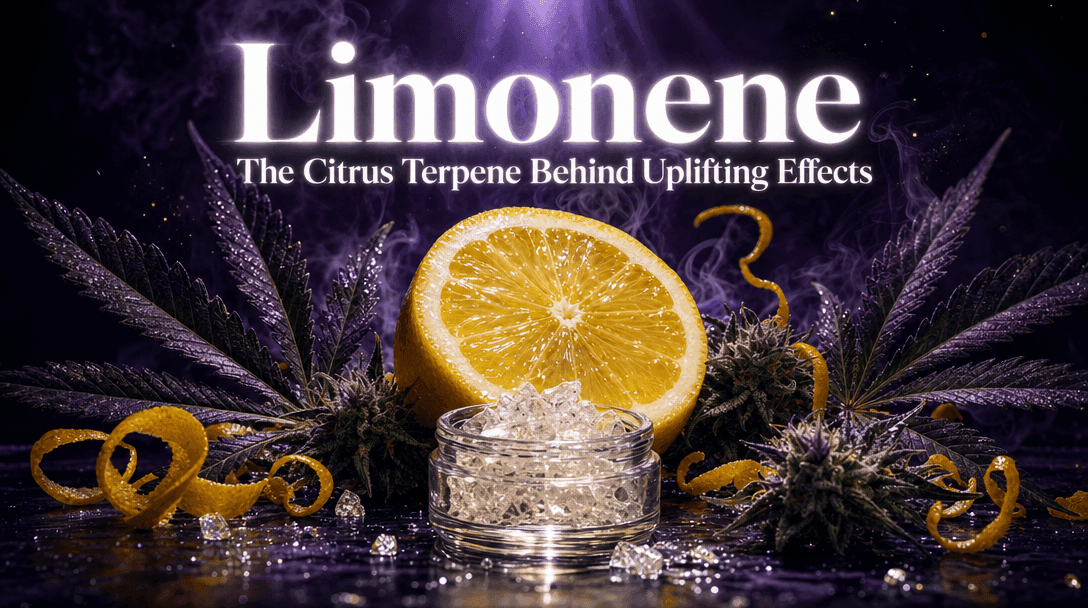
- Match the chemistry to the experience you want — sedating terpenes (myrcene, linalool) feel different from uplifting ones (limonene, pinene), independent of the entourage debate.
- Be cautious with isolates for the theory — a pure CBD or pure THC product cannot test the hypothesis because the other compounds have been removed by definition.
- Track what you actually feel — in the absence of strong human clinical trials, your own notes across cultivars are the most reliable signal.
The choice between full-spectrum and isolate ultimately depends on what you value more — chemical complexity and the chance of synergistic effects, or predictability and dose precision.
How Should You Think About the Entourage Effect as a Customer?
A few practical takeaways land the science without overselling.
Indica and sativa labels are not reliable predictors of chemical composition. A 2022 analysis cited in the Wikipedia entry on the entourage effect found that plants labeled by physical appearance were not chemically distinguishable, so choosing by the traditional category is closer to folklore than pharmacology. For a closer look at what the traditional labels actually mean in 2026 and why chemical testing has overtaken them, see Indica Vs Sativa.
Terpenes do contribute flavor and aroma — that part is settled. A small number (linalool, beta-caryophyllene, humulene, geraniol, beta-pinene) also appear to bind to cannabinoid receptors or produce cannabinoid-like effects in animal models [3]. The aroma is not just aroma.
Both THC and CBD have well-documented independent effects. CBD without THC is an FDA-approved drug (Epidiolex) for certain seizure disorders. THC alone is psychoactive and analgesic on its own. Whether the two are more effective together than the sum of their parts is exactly what the entourage effect hypothesis debates, and the honest answer today is "sometimes, in some combinations, in animals — the human data is still thin" [1].
Cannabis use happens in the context of everyday rituals. Whether that means unwinding after work, gathering with family, or a quiet evening at home, the entourage effect, where it is real, is one piece of that larger experience — not the whole story. If you are curious how adults pair the plant with shared meals and family time, see The Relationship Between Cannabis and Thanksgiving.
A practical checklist for customers evaluating entourage-effect marketing:
- Look at the lab report, not the label — published terpene and cannabinoid percentages matter more than "full-spectrum" claims.
- Treat universal-synergy claims with skepticism — the peer-reviewed evidence supports specific combinations, not blanket synergy.
- Match chemistry to your goal — sedating terpenes (myrcene, linalool) feel different from uplifting ones (limonene, pinene), independent of the entourage debate.
- Track your own response — keeping notes on what you actually feel is the most reliable signal in the absence of strong human clinical trials.
Frequently Asked Questions
What is the entourage effect in cannabis? The entourage effect is the hypothesis that cannabis compounds other than THC and CBD — such as minor cannabinoids, terpenes, and flavonoids — work together to produce different or stronger effects than any single compound alone.
Who coined the term 'entourage effect'? The term was first used in 1998 by Ben-Shabat and colleagues studying endogenous cannabinoid regulation; the modern cannabis-focused definition is attributed to researcher Ethan B. Russo's 2011 British Journal of Pharmacology paper "Taming THC".
Is the entourage effect real or just marketing? The honest answer is "partially real, partially marketed." Preclinical research supports some cannabinoid and terpene interactions, but rigorous human clinical trials are limited, and a 2019 study (Santiago et al.) found common terpenes do not modulate THC at CB1/CB2 receptors. The Cogan 2020 review called the term "mainly marketing."
What's the difference between full-spectrum, broad-spectrum, and isolate cannabis products? Full-spectrum preserves all cannabinoids and terpenes from the plant; broad-spectrum preserves multiple compounds but typically removes THC; isolate contains a single purified compound (usually CBD). The entourage effect hypothesis applies only to full- and broad-spectrum products.
Do terpenes actually do anything, or do they just provide flavor? Terpenes contribute aroma and flavor, but preclinical research shows some (notably linalool, beta-caryophyllene, humulene, geraniol, beta-pinene) also bind to cannabinoid receptors or produce cannabinoid-like effects in animal models. The clinical relevance in humans at typical exposure levels is still uncertain.
Does CBD need THC to work (and vice versa)? Both compounds have well-documented independent effects — CBD without THC is an FDA-approved drug (Epidiolex) for certain seizure disorders, and THC alone has measurable psychoactivity and pain effects. Whether they are MORE effective together than the sum of their parts is precisely what the entourage effect hypothesis debates.
Is the entourage effect the same as 'indica vs. sativa'? No. A 2022 study cited by Wikipedia found that plants labeled "indica" or "sativa" by physical appearance are not chemically distinguishable — the labels are not reliable predictors of cannabinoid or terpene content. The entourage effect, if real, is about chemical composition, not the traditional strain categories.
Sources
- British Journal of Pharmacology (via PMC) — The seminal paper that framed the modern cannabis entourage effect, proposing sy
- Current Neuropharmacology (via PMC) — Preclinical animal study review showing terpenes such as alpha-humulene, geranio
- Scientific Reports (Nature) — Found that four common cannabis terpenes (humulene, geraniol, linalool, beta-pin
- University of Arizona Health Sciences — University press release summarizing that cannabis terpenes alone can reduce pai
- Expert Review of Clinical Pharmacology — Critical 2020 review arguing that there is no reliable scientific evidence for t
- Wikipedia — Neutral encyclopedic summary defining the entourage effect, its 1999 origin (Ben
- MDPI Pharmaceuticals (peer-reviewed) — Recent comprehensive review covering both phytocannabinoid and terpene entourage
- Frontiers in Neuroscience (via PMC) — Recent (2023) preclinical study finding that CBD combined with terpene blends ha
About Treehouse Cannabis
Curious how compound profile actually changes the experience? Stop into Treehouse Cannabis in Nanuet — Rockland County's adult-use dispensary — and ask our staff about full-spectrum flower, balanced 1:1 THC:CBD edibles, and live rosin concentrates. The best way to evaluate the entourage effect is to compare products with similar cannabinoid content but different terpene profiles and see what you notice.
This content is intended for adults 21 and older. The information here is educational and does not constitute medical, legal, or professional advice. Cannabis products may affect individuals differently; consult a qualified professional if you have questions about cannabis use and your health. Always follow the manufacturer's instructions for any product you consume, and store all cannabis products securely away from children and pets.
Shop our products

Shop All

Deals
Flower

Pre-rolls
Vaporizers

Edibles
Drinks

Concentrates
Tinctures

Topicals
CBD

Pet CBD

Accessories