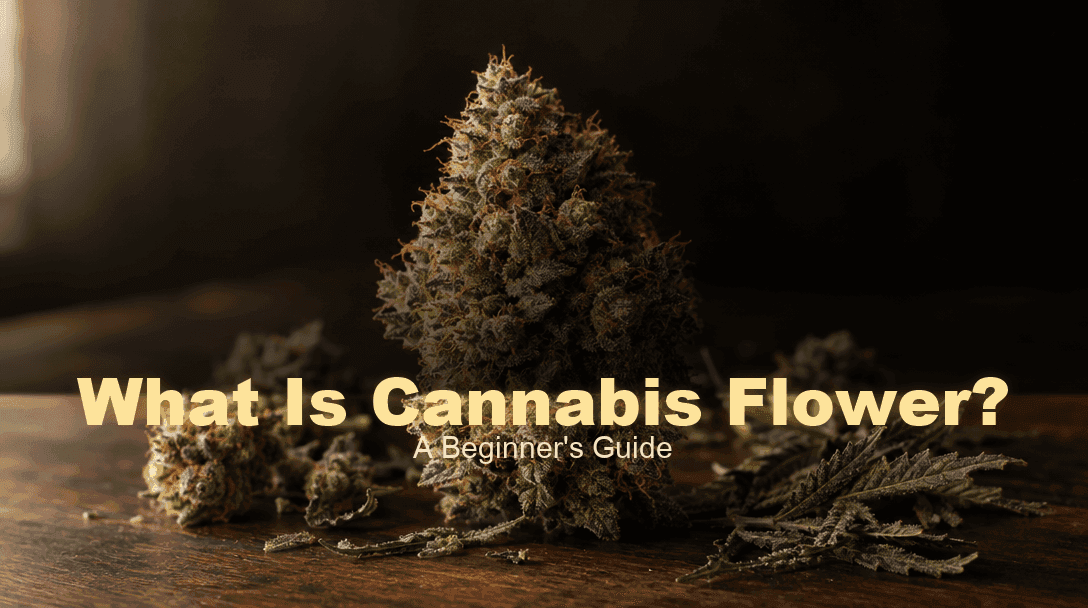
What Is Cannabis Flower? A Beginner’s Guide
What Is Cannabis Flower? A Beginner's Guide
Cannabis flower is the dried, harvested flower of the female Cannabis sativa plant — the part most people picture when they hear the word cannabis. Federal health agencies use cannabis, marijuana, and weed interchangeably to describe this plant material, and flower (also called bud) is the most familiar form sold at licensed adult-use dispensaries [1][6].
If you're just starting to explore, our Cannabis Dosing: How to Find Your Right Amount by Consumption Method Cannabis Dosing: How to Find Your Right Amount by Consumption Method covers how to pace yourself once you've chosen a strain, and the deeper question of what separates everyday flower from top-shelf jars is laid out in What Makes Premium Cannabis Flower Cost More? What Makes Premium Cannabis Flower Cost More?.
What Is Cannabis Flower?
Cannabis flower, often called bud, is the dried, harvested flower of the female Cannabis sativa plant. It is the form most commonly sold by weight at licensed dispensaries, and it is the form most people picture when they picture "weed." Federal health sources use cannabis, marijuana, and weed interchangeably to describe this plant material, and flower is the specific plant part those words point to [1][2].
Key things to know about cannabis flower at a glance:
- It is the most familiar form of cannabis and the one most often sold by weight in licensed dispensaries.
- Cannabis, marijuana, and weed are interchangeable names for this plant material.
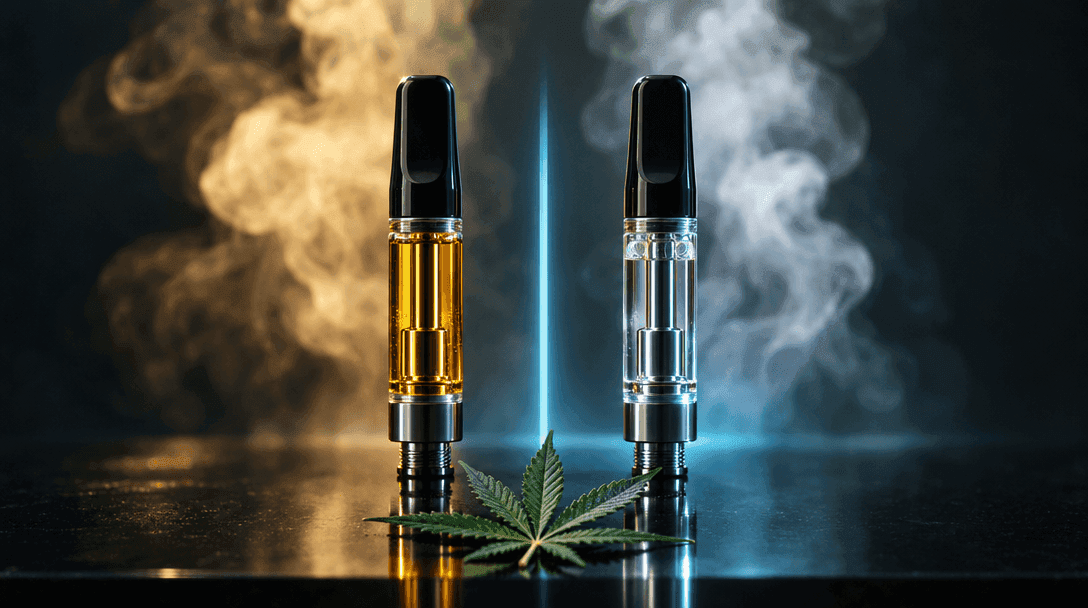
- Almost every other cannabis format — pre-rolls, vaporizer cartridges, edibles, tinctures, and concentrates — is made from flower or the compounds extracted from it.
What Parts of the Cannabis Plant Make Up the Flower?
A cannabis plant has several parts, and the flower is only one of them. The mature female flower (the bud) carries the highest concentration of cannabinoids and terpenes, while fan leaves, stems, and seeds contain far less. That is why dispensaries sell flower separately from shake, trim, or kief [6].
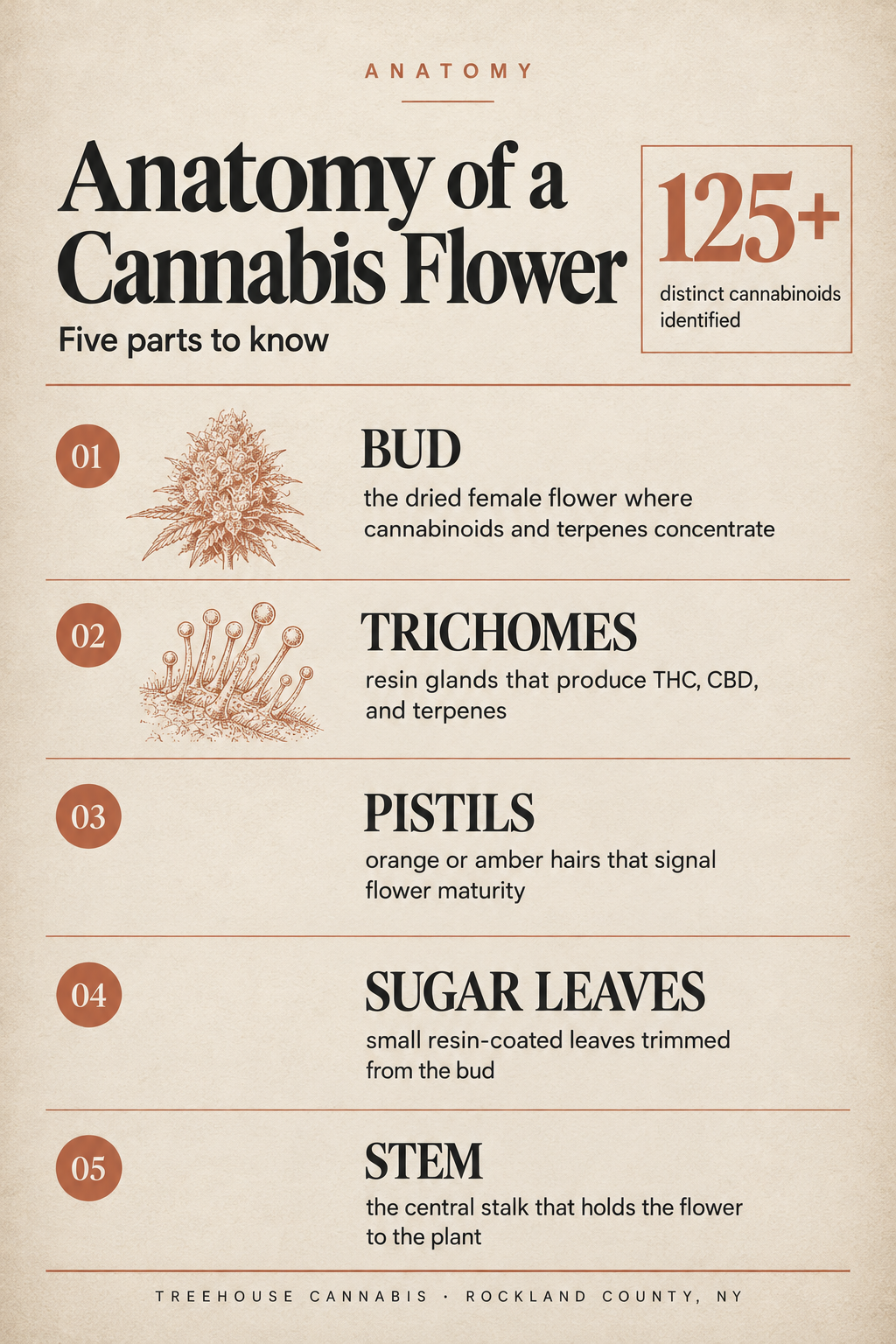
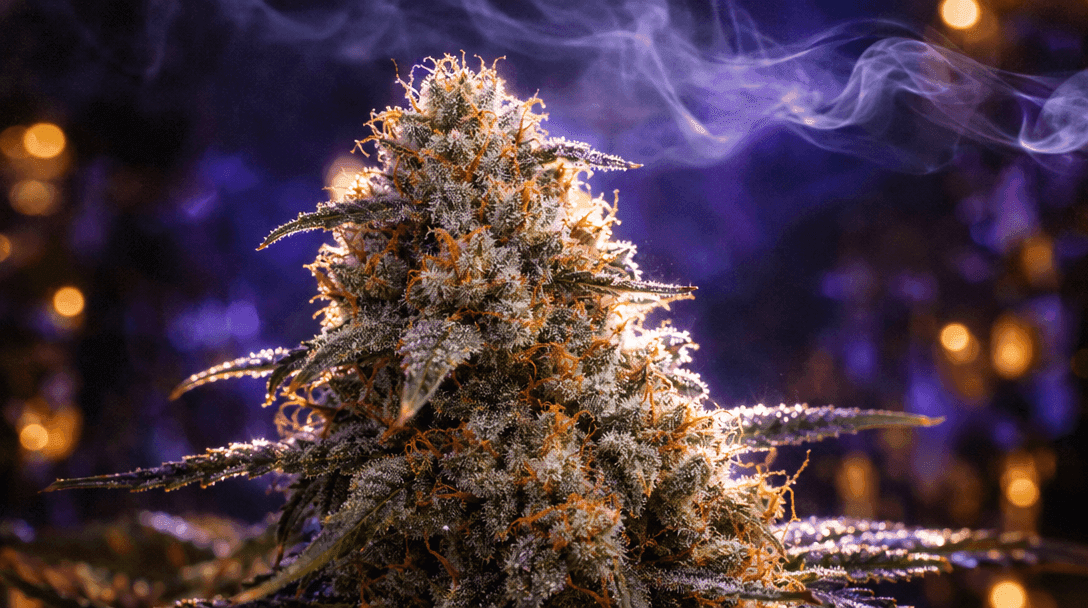
The most important structure on the flower is the trichome — the tiny, mushroom-shaped resin gland that looks like frost on a sugar leaf. Trichomes are the production and storage sites for THC, CBD, and the aromatic terpenes, and the densest trichome coverage is found on the flower bracts themselves [4]. When budtenders describe flower as "frosty" or "sugary," they are pointing at this trichome layer.
The main parts of a cannabis bud:
- Bud: the dried female flower where cannabinoids and terpenes concentrate.
- Trichomes: the resin glands that produce THC, CBD, and the strain's terpenes.
- Pistils: the orange or amber hairs that signal flower maturity, with little cannabinoid content.
- Sugar leaves: small resin-coated leaves trimmed from the bud during harvest.
- Stem: the central stalk that holds the flower to the plant, with little cannabinoid content.
Beginners often notice the orange or amber hairs on a bud too — those are pistils, not trichomes. Pistils are part of the flower's reproductive structure and signal maturity, but they don't carry meaningful amounts of cannabinoids.
What Cannabinoids and Terpenes Are in Cannabis Flower?
Cannabis flower contains more than 125 distinct cannabinoids, but two dominate the conversation: THC (tetrahydrocannabinol), the main intoxicating compound responsible for the high, and CBD (cannabidiol), a non-intoxicating cannabinoid often associated with calming or balancing effects [1][2]. In raw flower these compounds mostly exist as acids — THCA and CBDA — and they only convert to active THC and CBD when heated, a process called decarboxylation.
Terpenes are the aromatic oils that give flower its smell and flavor, and they also shape how a particular bud is experienced. They are produced and stored in the same trichomes that produce cannabinoids [4], which is why a strain's aroma is a meaningful clue about what its effects might feel like.
The two most important compounds in flower, at a glance:
- THC (tetrahydrocannabinol): the main intoxicating cannabinoid, produced as THCA in raw flower and converted to active THC when heated.
- CBD (cannabidiol): a non-intoxicating cannabinoid, produced as CBDA in raw flower and converted to active CBD when heated.
- Terpenes: aromatic oils in the trichomes that drive each strain's smell, flavor, and a meaningful share of how it feels.
For a more practical breakdown of what to look for in a jar, see How to Tell If Cannabis Flower Is Fresh How to Tell If Cannabis Flower Is Fresh — the trichome and terpene cues covered there are the same ones you can use on a dispensary shelf.
What Do Indica, Sativa, and Hybrid Labels Actually Mean?
Key points:
- Indica, sativa, and hybrid are the three labels dispensaries use to group flower, and they are the first thing most beginners learn to read.
- Traditionally, indica has been associated with relaxing body effects, sativa with uplifting cerebral effects, and hybrid with a mix of both.
- Modern evidence points to a flower's cannabinoid and terpene content as a more accurate predictor of effects .
Indica, sativa, and hybrid are the three labels dispensaries use to group flower, and they are the first thing most beginners learn to read. Traditionally, indica has been associated with relaxing body effects, sativa with uplifting cerebral effects, and hybrid with a mix of both. Modern evidence points to a flower's cannabinoid and terpene content as a more accurate predictor of effects [5].
The labels do map to real plant biology. Cannabis is a genus of flowering plants in the family Cannabaceae with three recognized species — C. sativa, C. indica, and C. ruderalis [3]. Modern cultivars are often classified by chemotype (THC-dominant, CBD-dominant, or balanced) rather than by morphology alone [7].
How the three labels compare:
| Label | Traditional association | Typical chemotype | How reliable is the label? |
|---|---|---|---|
| Indica | Relaxing, body-focused effects | Often higher CBD or balanced THC:CBD | A useful starting hint, not a guarantee |
| Sativa | Uplifting, cerebral effects | Usually THC-dominant, lower CBD | A useful starting hint, not a guarantee |
| Hybrid | Mix of both indica and sativa traits | Varies by cultivar | A useful starting hint, not a guarantee |
In practice, the indica/sativa/hybrid sticker on a jar is a rough first hint, but the THC percentage, CBD percentage, and top terpenes on the label are more reliable signals of how the flower will actually feel. To browse the full range of labeled options, the Flower Flower category page sorts the catalog at a glance.
How Do People Typically Consume Cannabis Flower?
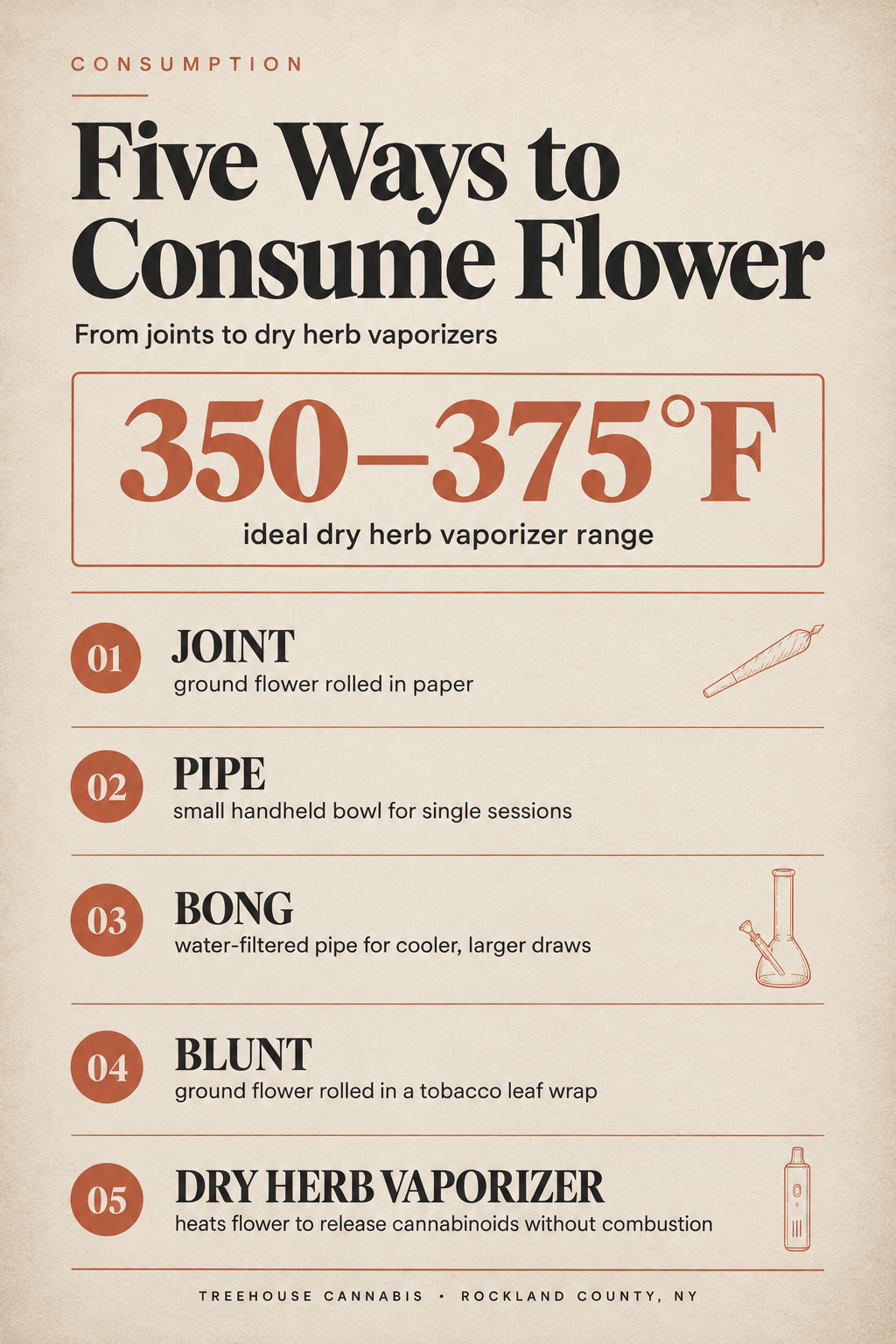
There are several common ways to use dried flower, and they break down into two broad families: smoking and vaporizing. Smoking methods include joints, blunts, pipes, and bongs, where combustion is what releases the active compounds. Vaporizing uses a dry herb vaporizer that heats flower to roughly 350–375°F — hot enough to release cannabinoids and terpenes, but below the point of combustion [2].
A few practical notes for beginners:
- Joints and blunts are portable and require only rolling papers or wraps, a grinder, and a lighter.
- Pipes and bongs are reusable and don't require rolling; bongs add water filtration for cooler, larger draws.
- Dry herb vaporizers are reusable, produce less odor than smoking, and are often the choice for adults who want to taste the strain's terpene profile more clearly.
Flower can also be decarboxylated at home and used to make edibles, but that requires careful temperature control and is generally considered an advanced technique beyond what most first-time buyers need. A good starter option if you want to compare hardware is the Vaporizers Vaporizers category, where dry herb devices sit alongside other formats.
What Should Beginners Look for When Buying Cannabis Flower?
Translating everything above into a first-purchase checklist, here's what to look at on the shelf:
- Visual cues: dense, well-trimmed buds with visible trichome coverage, intact pistils, and a fresh but not hay-like aroma.
- Label cues: THC and CBD percentages, the indica/sativa/hybrid category, the strain name, the harvest or package date, and the licensed producer.
- Source: New York's licensed dispensaries are required to test flower for potency and contaminants, so the safest first purchase is always from a licensed retailer rather than an unregulated source.
A specific strain to anchor on for a first visit is something like East Coast Sour Diesel - Premium - 3.5g East Coast Sour Diesel - Premium - 3.5g, which gives you a familiar strain name with a published potency range on the label. As a practical rule of thumb: start low, go slow, and give each session time to settle before taking more — guidance that How Long Should You Wait Before Taking More Cannabis? How Long Should You Wait Before Taking More Cannabis? breaks down in more detail.
If you'd rather skip the grinder entirely, multi-pack pre-rolls are an easy way to try small amounts of several strains. The Packs Pre_rolls Packs Pre_rolls subcategory groups those multi-packs in one place.
How Should Cannabis Flower Be Stored to Stay Fresh?
The four enemies of stored flower are heat, light, humidity, and air. All four work together to slowly degrade cannabinoids and terpenes, which is why flower left in a plastic bag on a counter loses its smell and potency far faster than flower stored properly.
The straightforward recipe is a clean, airtight glass jar kept in a cool, dark place like a cupboard or drawer. Avoid plastic bags for anything longer than a day or two, and avoid refrigeration, which can introduce moisture and raise mold risk. Optional humidity packs are a useful upgrade for adults who buy in larger quantities and want to dial in long-term storage.
Storage basics for keeping flower fresh:
- Use a clean, airtight glass jar as the default container.
- Store the jar in a cool, dark place like a cupboard or drawer.
- Skip plastic bags for long-term storage and avoid refrigeration.
- Consider humidity packs if you buy in larger quantities.
Properly stored flower keeps its cannabinoid and terpene profile for months rather than weeks, which makes a good jar a better value than a good deal on volume that won't stay fresh.
Frequently Asked Questions
What is cannabis flower exactly? Cannabis flower, often called bud or weed, is the dried, harvested flowering part of the female cannabis plant. It is the part of the plant most commonly smoked or vaped, and it carries the highest concentration of cannabinoids and terpenes compared to stems, seeds, and fan leaves.
Is cannabis flower the same as marijuana or weed? Yes. Cannabis flower, marijuana, and weed all refer to the same product: the dried flowers of the Cannabis sativa L plant. MedlinePlus and NIDA use these terms interchangeably when describing the plant material sold at licensed dispensaries.
What is the difference between THC and CBD in cannabis flower? THC (tetrahydrocannabinol) is the main intoxicating compound in cannabis and is responsible for the high. CBD (cannabidiol) is non-intoxicating and is often associated with calming or balancing effects. A flower's THC:CBD ratio is a better predictor of its effects than the indica/sativa label.
What are trichomes and why do they matter? Trichomes are the tiny, mushroom-shaped resin glands that coat cannabis flowers. They are the production and storage sites for cannabinoids like THC and CBD and for the terpenes that give each strain its aroma, flavor, and effect profile. Denser trichome coverage generally signals more potent flower.
What is the difference between indica, sativa, and hybrid flower? Indica, sativa, and hybrid are the three labels dispensaries use to group flower. Traditionally, indica has been associated with relaxing body effects, sativa with uplifting cerebral effects, and hybrid with a mix of both. Modern research suggests the cannabinoid and terpene profile of a specific strain is a more accurate predictor of how it will feel.
How do people typically consume cannabis flower? The most common methods are smoking the dried flower in a joint, blunt, pipe, or bong, or vaporizing it in a dry herb vaporizer. Flower can also be decarboxylated and used to make homemade edibles, but that requires careful temperature control to activate the cannabinoids.
How should cannabis flower be stored to stay fresh? Cannabis flower keeps best in an airtight glass jar stored in a cool, dark place. Heat, light, humidity, and air all degrade cannabinoids and terpenes over time, so a sealed jar in a cupboard or drawer is far better than leaving flower in a plastic bag on a counter.
Sources
- National Institute on Drug Abuse (NIDA) — Defines cannabis as the dried leaves, flowers, stems, and seeds of Cannabis sati
- MedlinePlus (U.S. National Library of Medicine) — Defines cannabis as a mixture of dried plant parts, identifies THC and CBD as th
- Wikipedia — Cannabis is a genus of flowering plants in the family Cannabaceae with three rec
- Frontiers in Plant Science / NIH PMC — Trichomes are the resinous glandular structures on cannabis flowers where cannab
- Leafly — Indica, sativa, and hybrid are the three common categories used in dispensaries;
- U.S. Centers for Disease Control and Prevention (CDC) — Defines cannabis (also called marijuana, weed, pot, or bud) as the dried flowers
- NIH PMC — Cannabis sativa is a versatile annual plant with uses in medicine, agriculture,
About Treehouse Cannabis
Treehouse Cannabis is a licensed adult-use dispensary serving Rockland County, Orange County, and Westchester County, New York. Our team helps customers compare flower strains, read labels with confidence, and find a starting point that matches their comfort level.
Cannabis is for adults 21 and older. Keep all cannabis products securely stored and out of reach of pets and minors, never drive under the influence, and always check local laws before purchasing or consuming. This article is intended as a general educational overview and is not medical, legal, or professional advice — consult a qualified professional for guidance specific to your situation.

Shop our products

Shop All

Deals
Flower
Pre-rolls
Vaporizers

Edibles
Drinks
Concentrates
Tinctures

Topicals
CBD

Pet CBD
Accessories